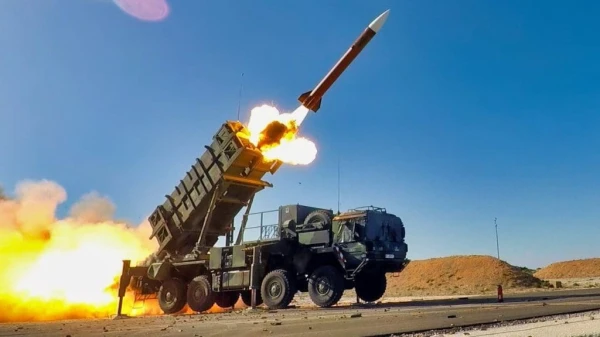
U.S. military faces a serious dilemma: effective but exorbitantly expensive defense systems must counter mass attacks from budget Iranian drones, creating a colossal financial imbalance.
The fight against Iranian drones has turned into a real financial pit for the U.S. and its allies. According to estimates from the American Enterprise Institute, by early April, America had already spent between $25 billion and $35 billion on the conflict, with the lion's share of these funds going to interceptors. The New York Times notes that the mass drone attacks have revealed vulnerabilities in the American defense strategy, which has traditionally relied on high-precision but very expensive weaponry.
Air Strikes: Fighters in Battle with Drones
In an ideal situation, an early warning aircraft detects a drone hundreds of miles from its target. Then a fighter jet, such as the F-16, is capable of using Advanced Precision Kill Weapon System (APKWS) II missiles to hit the UAV from a distance of about six miles. According to air defense protocol, each aircraft fires two or three such missiles. The cost of two APKWS II missiles and one hour of F-16 flight time is approximately $65,000. This is almost twice as expensive as the Iranian Shahed-136, which is estimated to cost $35,000.
Ground Systems: 'Coyote' on Interception
Among the ground systems developed by the U.S. and its allies for close combat with drones, the Coyote stands out. This device can intercept drones at a distance of up to nine miles. Two Coyote drones cost about $253,000, which is nearly seven times the cost of the Iranian Shahed-136. Although the Coyote is significantly more economical than many other air defense systems available to allies and has proven effective in protecting strategic facilities, the U.S. military has acquired them in relatively modest quantities in recent years.
Naval Defense: Destroyers Against Drones
Many long-range missile defense systems used by the U.S. and its partners to combat drones were originally designed to intercept aircraft and ballistic missiles, making them extremely expensive. For example, the built-in radar of a Navy destroyer can detect drones at a distance of up to 30 miles and destroy them with Standard Missiles. According to military protocol, as with air strikes, a minimum of two missiles is launched. Two SM-2 missiles cost approximately $4.2 million, which is about 120 times the cost of the Iranian Shahed-136.
'Patriot': The High Cost of Defense
The standard army air defense system is the famous 'Patriot'. It is capable of hitting drones at a distance of up to 27 miles using PAC-3 Missile Segment Enhancement interceptors. Military protocol dictates the launch of at least two missiles. Two PAC-3 MSE missiles cost about $8 million, which is 220 times more than one Shahed-136. However, despite the colossal cost, such defense may be justified when protecting particularly valuable assets that are difficult or impossible to replace. Examples include a $1.1 billion radar in Qatar and a $500 million air defense sensor in Jordan, which were damaged at the beginning of the conflict.
Ground Guns: The Last Line of Defense
As a last resort, ground guns come into play. When a drone approaches within about a mile or is less than a minute from its target, the Centurion C-RAM gun begins rapid fire to shoot it down. This weapon can fire 75 rounds per second. Five seconds of such firing costs $30,000, which is slightly less than the cost of one Iranian Shahed-136. However, the Centurion C-RAM is not considered an optimal solution due to its limited range.
Interceptor Drones: 'Merops' in the Sky
Interceptor drones, such as the Merops Surveyor, can theoretically track and destroy enemy targets at close range. The cost of one Merops drone is about $30,000, which is slightly less than the price of the Iranian Shahed-136. After the conflict began, the U.S. sent thousands of Merops drones to the Middle East, but their actual deployment remains in question.
Innovations in Defense: Lasers and the Future
In 2024, the Pentagon allocated over a billion dollars for the development of directed energy weapons, or lasers. It is expected that the cost of one shot from such a weapon will be only $3, with a range of up to 12 miles. However, these promising systems have yet to find practical application.
Lessons from the Conflict
Former CIA Director David Petraeus believes that the U.S. military must learn three key lessons from the conflict in Ukraine. Among them, he particularly emphasizes the importance of rapid adaptation to changing conditions.