

The US and Iran failed to agree on peace during the negotiations in Islamabad. The sticking point was Iran's nuclear program - Tehran refused to provide firm guarantees of abandoning the development of atomic weapons.
The peace talks between the US and Iran in the Pakistani capital ended without a significant result on Sunday, July 12. US Vice President Jay D. Vance (in the photo) told reporters that the American delegation was leaving Islamabad without reaching an agreement: Iran did not provide firm guarantees of abandoning nuclear weapons.
Tehran, in turn, accused Washington of derailing the negotiations with "unacceptable demands." Whether new negotiations will take place and when is still unknown. The Iranian Fars news agency, citing an informed source, reported that Tehran does not plan a new round of talks.
The Sticking Point - Nuclear Program
"The bad news is that we did not come to an agreement. And I think for Iran, this is much worse news than for the US," Vance said after the 21-hour negotiations. According to him, the American side presented Tehran with "the last and best offer." "Let’s see if the Iranians accept it," the vice president added before boarding Air Force Two and leaving Pakistan.
The sticking point was Iran's nuclear program. "We need an unequivocal commitment that they are not seeking to develop nuclear weapons - and in the long term as well. We have not seen that yet," Vance said. The US has long accused Iran of seeking to develop nuclear weapons. Tehran denies this, insisting that it enriches uranium solely for peaceful purposes.
Tehran's Reaction
Iranian state television reported that Tehran's delegation conducted negotiations "tirelessly and intensively," defending "the national interests of the Iranian people." According to Tehran, the "unacceptable demands" from the American side blocked any progress.
Even before the negotiations began, the Iranian Foreign Ministry warned Washington that "excessive" and "illegal" demands would jeopardize the "success of the diplomatic process." The US must accept Iran's "legitimate rights and interests," emphasized Foreign Ministry spokesman Ismail Baghaei on social media platform X.
Commenting on the outcome of the negotiations in Islamabad, Baghaei said that the parties "reached a mutual understanding on a number of issues," but disagreed on "two or three important" points. "These negotiations took place after 40 days of imposed war, in an atmosphere of distrust and suspicion. Naturally, it was not reasonable to expect an agreement to be reached in one meeting. No one expected that," he said.
Negotiations in Islamabad
The negotiations in Islamabad, mediated by Pakistan, began on April 11. The US delegation included Vance, special envoy Steve Witkoff, and Trump’s son-in-law Jared Kushner, while the Iranian delegation was represented by Parliament Speaker Mohammad Bagher Ghalibaf and Foreign Minister Abbas Araghchi. The US and Israel began military operations against Iran on February 28 - Trump justified them by citing Tehran's nuclear and missile programs. After five weeks of hostilities, the parties agreed to a two-week ceasefire, during which the current negotiations took place.
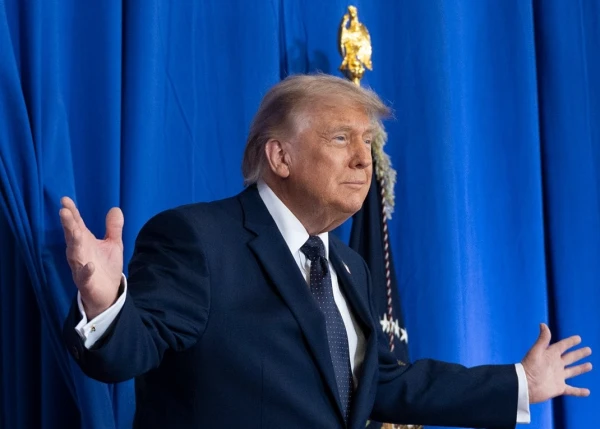
Trump downplayed the significance of the negotiations on April 11. "Whether we make a deal or not doesn’t matter to me. We won. We defeated them militarily," the president told reporters, adding that the US is conducting "very deep negotiations" with Iran, although the victory, according to him, has already been achieved.
Donald Trump also reported that two American ships passed through the Strait of Hormuz, and American minesweepers are conducting mine clearance there. "We are opening the strait," Trump stated. The Islamic Revolutionary Guard Corps (IRGC) denied this information and threatened to respond "harshly" to any attempts by military ships to pass through the strait. Since the beginning of the war, the strait, through which about one-fifth of the world's oil transit usually passes, has been effectively blocked by Iranian military forces, reports "Deutsche Welle."












Leave a comment