
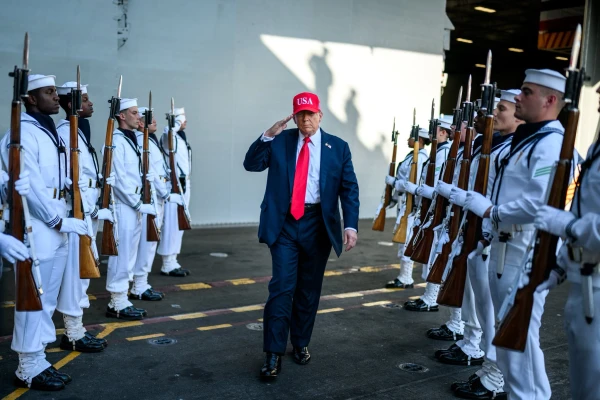
Trump supported calls to withdraw American troops from the Rota and Morón bases, labeled allies as "cowards," and ruled out any ceasefire with Iran. Spain is evacuating troops from Iraq amid a continuous rise in oil prices.
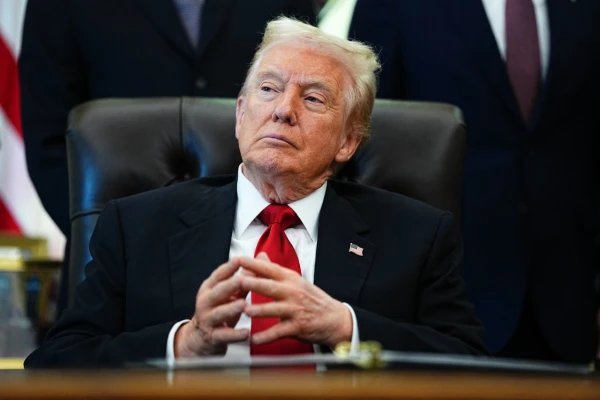
The President of the United States left little room for ambiguous interpretations. In response to a question about pressure from some congressmen demanding the withdrawal of American military bases from countries like Spain, Donald Trump stated that those who seek this are "right."
This statement came just hours after Republican Senator Lindsey Graham openly called for relocating the aircraft stationed at the Rota and Morón bases to a country "that we can truly rely on in times of serious trials."
This is not the first disagreement with Madrid. Trump has previously threatened Spain with trade measures in response to its refusal to allow the use of its military facilities in operations related to the conflict with Iran, and he had earlier expressed dissatisfaction with the unwillingness of Pedro Sánchez's government to increase defense spending to 5% of GDP, as insisted by Washington. Now the tone has changed: this is no longer a veiled threat but an open support for those calling for action.
The visit of the new U.S. ambassador to Spain, Benjamin Leon Jr., to the Rota naval base on the same day these words were spoken adds an additional, hard-to-ignore ambiguity to the situation. Leon thanked the servicemen for their "dedication and service," but his presence did not clarify whether bilateral relations are cooling or if it is merely a reassessment of agreements.
NATO Between Pressure and Division
For three weeks now, allies have been hearing the same reproach. Since February 28, when the U.S. and Israel began military actions against Iran, Trump has repeatedly urged allies to join the operation. The options are as follows: either they provide their bases or participate directly in missions to unblock the Strait of Hormuz. In most capitals, the response has been silence or outright refusal.
This Friday, Trump went further and called them "cowards" in a post on Truth Social, where he also warned that without the U.S., "NATO is a paper tiger." This phrase aptly describes the current dynamics in the alliance: Washington is pressuring, Europeans are stalling, and the cracks are becoming more noticeable with each passing week.
An exception came the same day from London. Keir Starmer's government announced a change in position and allowed the use of its bases for "defensive operations" aimed at ensuring the safety of shipping in the strait. The decision prompted an immediate reaction: Iranian Foreign Minister Abbas Araghchi accused Starmer of endangering his own citizens. This sounded like a direct, consequential warning.
Spain, for its part, maintains the line of Prime Minister Sánchez, briefly formulated as "no to war." Madrid's contribution to the situation in the region is limited to deploying the frigate Cristóbal Colón in the eastern Mediterranean as part of a European operation. France is also involved, deploying the aircraft carrier Charles de Gaulle, although this mission is not directly related to strikes against Iran.
Netanyahu Does Not Rule Out Ground Operation
While diplomatic discussions continue, bombings on the ground have not ceased. On Friday night, Israel announced a new series of strikes "at the very heart of Tehran" - on facilities that the Israel Defense Forces described as "the infrastructure of a terrorist regime." Iran responded with at least four salvos of missiles targeting Jerusalem and central Israel in less than an hour.
Earlier on Saturday, the mayor of Haifa stated that new damages had been recorded as a result of the Iranian strike on an oil refinery in the port. He described the situation as "a real game of Russian roulette when it comes to the 'game' with the lives of residents" of one of Israel's largest cities. He urged authorities to close strategic facilities near Haifa and other major cities.
Benjamin Netanyahu, who has been avoiding any promises to set a timeline for the end of the war for several weeks, indicated this week that he does not rule out a ground operation. "It is often said that you cannot win a war with air power alone," he noted, adding that there are "many options" for a ground component that he would prefer not to discuss publicly.
These words contrast with Trump's repeated promises that the offensive will end "soon" - a word that loses part of its meaning with each passing day. Trump has made it abundantly clear about his stance on a ceasefire: "You don’t sign a ceasefire when you are literally destroying the other side."
At the same time, he did not miss the opportunity to boast about the elimination of high-ranking Iranian officials - statements that left no doubt that Washington is not seeking a negotiated exit from the conflict anytime soon.
Spain Evacuates Troops as Oil Prices Soar
The conflict has both a logistical and an economic dimension that continues to complicate matters. The evacuation of Spanish servicemen stationed in Iraq is progressing slowly. According to the government, about a hundred military personnel have been evacuated, but around 200 more need to be repatriated. Spain has prepared three planes to complete the operation, which authorities describe as "complex."
At the same time, oil prices continue to rise. The effective blockade of the Strait of Hormuz, through which a significant portion of global oil supplies pass, has been pushing markets up since the onset of the offensive, and three weeks later, there are no signs of stabilization.
In addition, the Spanish government has announced a package of measures worth 5 billion euros. These include, in particular, reducing fuel prices for consumers by up to 30 cents per liter and significant savings on gas and electricity through a reduction in VAT from 21% to 10%, as well as a number of other concessions.








Leave a comment