The establishment of naval bases on the Adriatic brought a host of organizational and political problems.
The shock to the socialist camp caused by the tiny Albania's break with the Soviet Union did not happen all at once and not immediately after the 20th Congress. After dealing with the internal opposition in Albania, Stalinist Enver Hoxha tried to interest reformist Khrushchev in the idea of a naval base on the Adriatic. Such a base was even created, but it had to be evacuated very quickly and almost with a fight.
The free access from the Black Sea to the Mediterranean was a kind of "blue dream" of Russian foreign policy. In imperial times, this dream was attempted to be realized through the capture of Constantinople-Istanbul. However, at the end of World War II, this dream was unexpectedly fulfilled for the USSR – the Soviet Union gained access to the Adriatic through Hungarian and Romanian land corridors and further along the coasts of Yugoslavia and Albania.
However, the establishment of naval bases on the Adriatic brought a host of organizational and political problems. Both the Yugoslavs and the Albanians were eager to acquire their own naval forces with Soviet assistance, but they wanted to negotiate some preferences for the admission and servicing of Soviet ships. After the quarrel between Tito and Stalin, Albania's land connection with other countries of the Soviet bloc was cut off. At the end of May 1954, a squadron of the Black Sea Fleet, commanded by Admiral Sergei Gorshkov, visited the Albanian port of Durres, taking Hoxha, who was heading to Moscow, with them. It was then that Gorshkov proposed to organize a permanent naval base in Albania. However, this idea was only revisited in October 1957, when Defense Minister Marshal Georgy Zhukov went to the Balkans to strengthen the recently restored relations with Tito.
Along the way, Zhukov also visited Albania. In a telegram to Khrushchev, he noted that Hoxha himself suggested the port of Vlorë as a base, insisting that "The first line of defense of Odessa and Sevastopol should pass here, along our Adriatic coast. A positive decision to turn Vlorë into a powerful naval base is the dream of our entire Albanian people, and it will be accepted with enthusiasm."
Zhukov added that such a base would also be a good means of pressure on Tito in case of his flirtations with NATO. However, upon Zhukov's return, he was removed from his position, but this had no bearing on Albanian affairs. The base was to be – Khrushchev decided firmly...
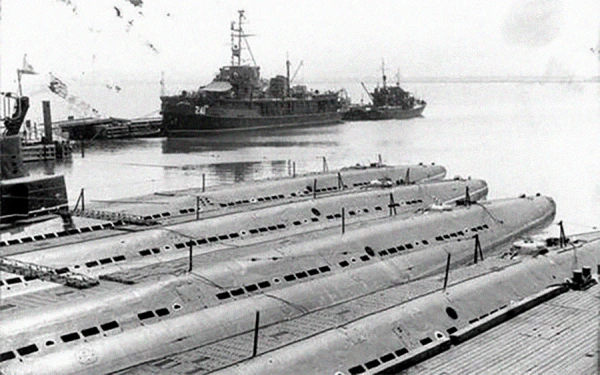
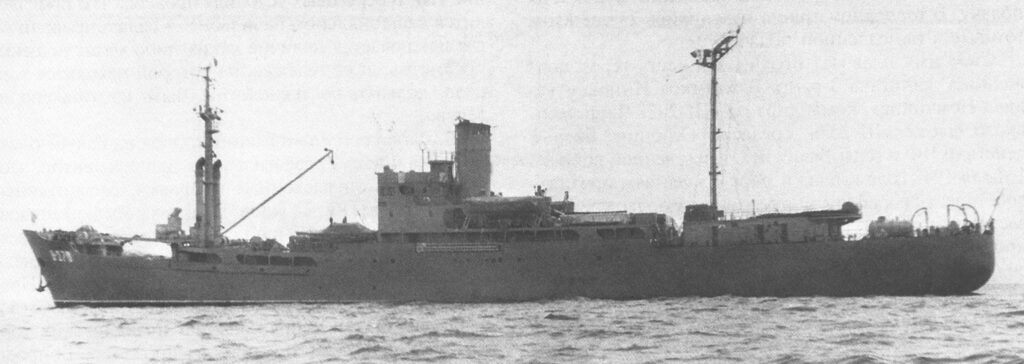
To begin with, a division of hydrographic support from the Black Sea Fleet was deployed on the coast of the Pasha-Liman Bay of the Vlorë Gulf. In the summer of 1958, four submarines and the floating base "Nemchinov" appeared.
As payment for the lease, the Soviet side committed to training Albanian military sailors and transferring these submarines to the Albanians. The next echelon arrived in early 1959 with eight more submarines, a division of minesweepers, combat boats, and auxiliary vessels.
The submarines were consolidated into the 40th separate brigade. The 46th naval special forces detachment, which conducted radio technical reconnaissance, was stationed on Sazan Island.
On the shore, a settlement was built with single-story residential houses, warehouses, service buildings, and fuel storage facilities. Underground tunnels were drilled into the rocks. Docks were arranged. Plans were made to also set up an airfield for a regiment of Tu-16 bombers and to station the 17th separate coastal missile regiment of the Black Sea Fleet with the "Sopka" missile system.
On May 30, 1959, at the end of his visit to Albania, Khrushchev visited Vlorë. Together with Hoxha, he marched along the crews of submarines lined up on the pier and talked to the captains.
Khrushchev was in a good mood. "If we deploy a powerful fleet here, the entire Mediterranean from the Bosporus to Gibraltar will be in our hands! We can squeeze anyone in our fist... if we place medium-range missiles or even short-range missiles in Albania, they can cover all of Italy."
Hoxha was interested in what he would get for such a wonderful base, but here Nikita Sergeyevich demonstrated stinginess, promising to build only a Palace of Culture and two small radio stations for free. And this for the opportunity to "squeeze NATO in our fist"?
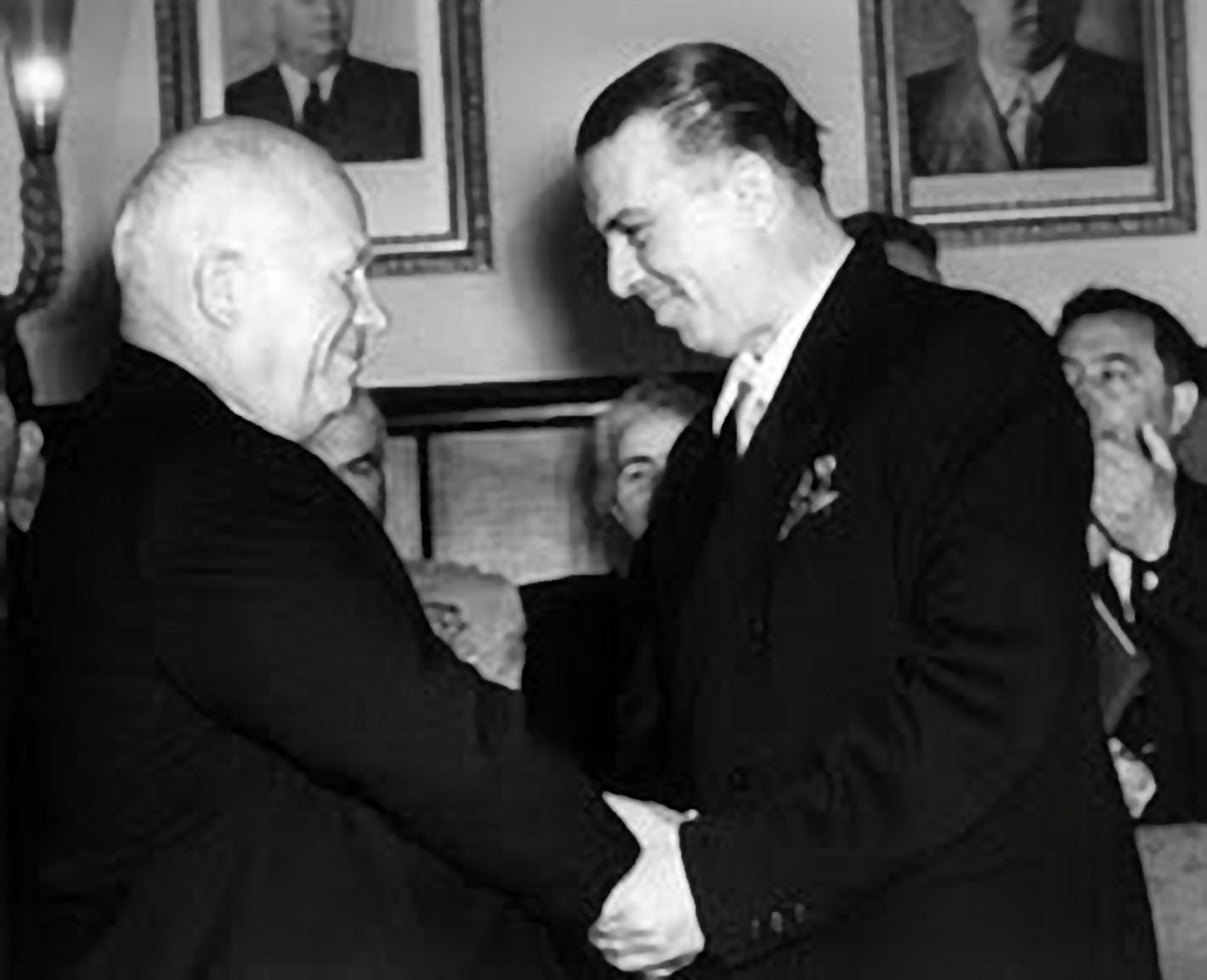
As with Mao Zedong, Khrushchev again failed to "feel" his partner. During the visit of the Soviet leader, Hoxha and his comrades refrained from escapades towards the Yugoslavs, but it turned out that their efforts were not appreciated. And in general, so to speak, they are not respected, treated like subordinates.
Not wanting to reduce everything to personal animosity, Hoxha began to demonstrate his independence, cloaking it in the form of ideological disagreements. Albania maintained a reverence for Stalin, and the grumbling from the Kremlin on this matter was demonstratively ignored.
In Vlorë, the growing political tension was not initially felt. In 1960, four submarines ("S-241", "S-242", "S-358", "S-360") were ceremoniously handed over to the Albanians, and later as a bonus, six combat boats and several support vessels, including the floating base "Nemchinov".
Conflicts began in the spring of 1961. In one case, an Albanian sailor threw a cigarette butt onto the deck of a mooring Soviet boat, in another – a waiter in a café told a Soviet officer, "I am the master here, not you." But the most nervous reaction was caused by an episode when a boy relieved himself, either small or even large, in front of the Soviet headquarters. These incidents were reported in reports and even in the memories of Hoxha himself.
In March 1961, at a meeting of the command of the Warsaw Pact Organization (WPO) countries, Marshal Andrei Grechko demanded that the base in Vlorë be placed under his "immediate command." The Albanians refused, and in early May, while inspecting the transport ship "Chiaturi," they targeted coastal artillery.
This was the last straw. The WPO command feared that by using coastal artillery and ground forces, the Albanians would try to seize all the equipment and weapons located in Vlorë. Admittedly, the forces to repel such an attack were sufficient, but this would mean conducting full-scale hostilities, much to the delight of the capitalists.
To organize the evacuation from Sevastopol, a mini-squadron consisting of a cruiser, two destroyers, and the tanker "Golden Horn" set out under the command of the commander of the Black Sea Fleet, Admiral Vladimir Kasatonov. The Albanians stated that they would only allow the tanker into the bay, and they had to resign themselves to this.
The floating base "Kotelnikov" anchored in the middle of the bay, with eight submarines positioned alongside it. Then, as the equipment was loaded, the tanker, the water carrier, and tugboats were brought in. Maneuvers were conducted under the gaze of former Soviet, now Albanian, artillery.
The evacuation took a week. Hoxha wrote indignantly that Soviet sailors "broke the tanks, smashed the bunks, broke the windows in the buildings where they lived and worked, etc. They tried to take everything with them, down to the last bolt, but they did not succeed."
Hoxha feared that Soviet sailors would attempt to reclaim the ships that had already been handed over, and these fears were probably not unfounded. But Kasatonov understood that seizing the four submarines that had been transferred could only be done by boarding, and he limited himself to the mandatory program.
Hoping to reduce the degree of conflict, the Soviet admiral tried to make personal contact with the commander of the Albanian Navy, Temi Seiko. Meetings did not happen, supposedly because "Comrade Seiko is very busy." In reality, he had been arrested a year earlier and was executed along with three other officers on May 31, 1961, just at the height of the evacuation from Vlorë.
On June 4, the Soviet squadron with the personnel of the base on board left Vlorë Bay. Fortunately, it did not come to armed conflict. Hoxha tried to find scapegoats, placing the blame for igniting the conflict on the WPO representative in Albania, Colonel General Andrei Andreev, and the base commander, Rear Admiral Grigory Egorov.
But Khrushchev did not accept such explanations and in October 1961 declared the Albanian Communist Party hostile to the Soviet Union. By that time, Hoxha had already found a new ally in China and announced the severance of diplomatic relations with Moscow in December.
The country began to turn into a fortress. And from the sea, it was protected by the ships gifted by Khrushchev.