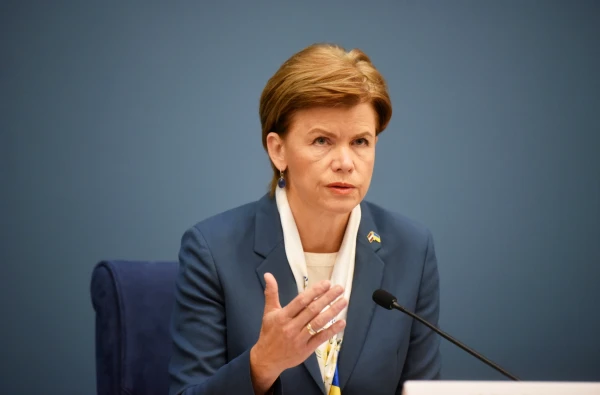
Iran's asymmetric capabilities to influence the world still remain, and this is what should be focused on now, emphasized Foreign Minister Baiba Braže in an interview with the Latvian Television program "Morning Panorama," LETA reports.
The minister explained that a regime change in Iran has already occurred. The country still retains certain capabilities in the field of ballistic missiles, which, in her opinion, the United States and Israel will continue to try to destroy. At the same time, the nuclear program in its previous form will no longer exist, as she characterized the goals of this war.
She noted that Iran's asymmetric capabilities to influence the security of the region and global processes remain, including its influence on shipping, oil and gas production, their prices, and availability worldwide.
Therefore, it is also in the interest to unblock the Strait of Hormuz, to equalize access to oil and gas in the world, to ensure that prices for mineral fertilizers do not rise, and that access to food in various regions is not complicated, as a significant portion of global supplies passes through these maritime routes, emphasized Braže. This was confirmed to her by her Indian colleague at a meeting on Monday.
The minister noted that if the United States approaches Latvia or NATO regarding the Strait of Hormuz, it will be considered "through a positive lens" in terms of how to help allies.
She added that the United Kingdom has already provided certain air support, and other countries in the region have ships. "These can be various actions," said the minister, allowing that this could be related to electronic intelligence or other measures.
"Currently, there is one request from the United States that we have already assisted with. This is not related to military presence. We provided this," the minister revealed.
It was previously reported that the war between the United States and Israel against Iran has led to a de facto blockade of the Strait of Hormuz, through which about one-fifth of the world's oil production passes, causing a sharp rise in prices.
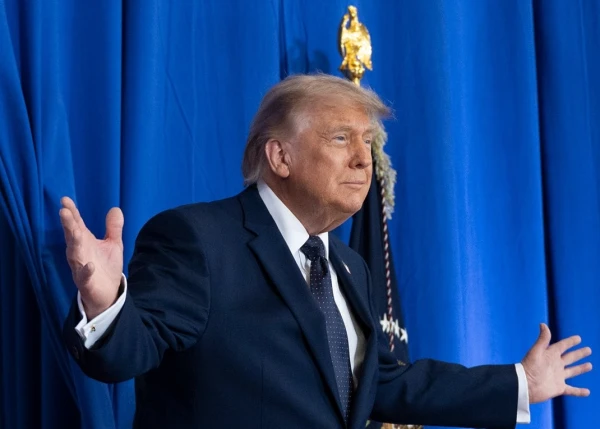
U.S. President Donald Trump warned on Sunday that NATO faces a "very bleak" future if allies do not help unblock the Strait of Hormuz. On Monday, Trump also stated that he expects assistance from France and the United Kingdom in ensuring shipping through the strait, which Iran is currently trying to blockade.
British Prime Minister Keir Starmer expressed the opinion that restoring free navigation in the Strait of Hormuz is not NATO's task. According to him, this requires the involvement of a broad coalition, including partners from the Persian Gulf, as well as European countries and the United States.
"We are working with other countries to create a reliable plan for the Strait of Hormuz that will restore navigation and passage. Let me be clear — this is not and was never intended to be a NATO mission," Starmer stated to reporters on Downing Street.
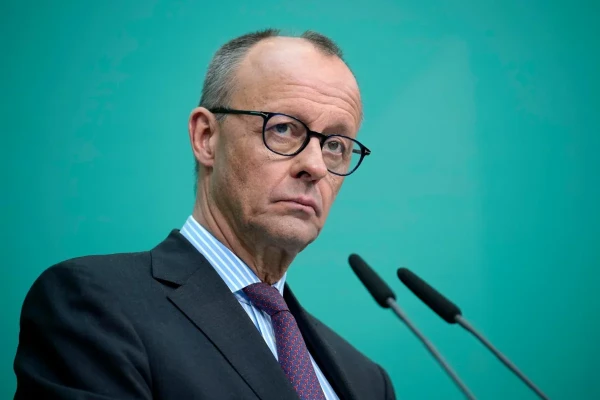
Meanwhile, a representative of German Chancellor Friedrich Merz stated on Monday that the war in the Middle East, caused by U.S. and Israeli strikes on Iran, has nothing to do with NATO and is not a NATO war.