Gas supplies to the region were carried out under a temporary scheme.
Transnistria has introduced a strict economy regime due to critical disruptions in the gas supply mechanism to the region, caused by the escalation in the Middle East. This explanation was provided by the so-called Ministry of Economic Development of the unrecognized Transnistrian Moldovan Republic (PMR).
In the region, all boiler houses have been shut down ahead of schedule, the Moldovan (Kuchurgan) GRES has switched to coal generation by decision of the authorities, and only social facilities, hospitals, and kindergartens are being heated. Classes in schools have been reduced to 30 minutes due to the cold. The head of the Moldovan National Agency for Energy Regulation (ANRE), Alexei Taran, warned that Transnistria is supplied with gas only until the end of the current week, and the current payment mechanism does not guarantee long-term stability.
Dubai firms cannot pay for the "Hungarian scheme"
Gas supplies to Transnistria since February 11, 2025, have been carried out under a temporary scheme involving the Hungarian company MET Gas and Energy Marketing and Dubai firms, which pay for fuel with money for which the PMR authorities thanked Russia. The Hungarian supplier delivered 3.2 million cubic meters per day at the border of Moldova to the company "Moldovagaz," which redirected it to Tiraspol.
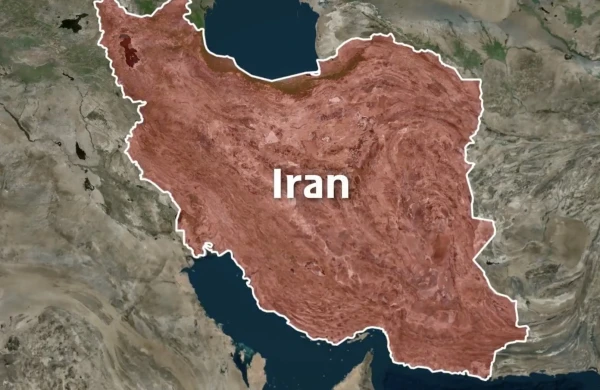
The situation sharply worsened after Iran's strikes on Dubai. The war provoked a sharp rise in energy resource prices, which the Russian sponsors of Transnistria were likely unprepared for, notes energy expert from the WatchDog community, former member of the supervisory board of "Moldovagaz," Sergey Tofilat. If previously 25-30 million euros were spent per month, now the same volume of gas requires more money, he explains.
Moreover, it is known that Iran struck data centers in the UAE, causing massive disruptions in the region and the shutdown of several banks. However, the "Hungarian scheme" had been unstable throughout the previous year. Even before the start of the war between the USA and Israel in Iran, the procurement process was carried out in two or three batches per month, and the companies through which Russia pays for supplies were under close scrutiny from European banks.
Transactions of intermediary firms from the UAE were blocked after a certain number of operations, after which it was necessary to create a new Dubai firm each time and start over. And such control has not gone away, the expert notes.
The war in Iran and the rhythm of payments to Transnistria
The head of "Moldovagaz," Vadim Cheban, stated in the media about the impact of the crisis in the Middle East on the rhythm of gas payments. According to him, the "payment agent" is located precisely in that region, which is why Transnistria faced a fuel shortage problem.
After the bombings, he explained, there are problems with transactions, and payments in dollars go through American correspondent banks. Additionally, there was a moment when traders' offers due to high market volatility lasted from 30 seconds to one minute, and decisions had to be made in such a short time.
At the same time, Vadim Cheban noted that there are no obstacles from the official Chisinau. The leader of the unrecognized PMR, Vadim Krasnoselsky, even thanked the Moldovan authorities "for understanding the situation." Meanwhile, ANRE, at the request of the Ministry of Energy, extended the status of "Moldovagaz" as a gas supplier to Transnistria for another three months - until June 30, 2026. The previous permit was valid until March 31.
In Tiraspol, people are used to the crisis
Human rights activist Stepan Popovsky, living in Tiraspol, notes that the warm weather has currently saved people in the region: thermometers show 16-18 degrees Celsius during the day, and at night the temperature does not drop below zero. There is no freedom of speech in the PMR, he claims, people listen to what the authorities say through controlled media and remain silent.
"The authorities explain the problems with the war in the Persian Gulf, and the Transnistrians believe it, as this is an obvious reason," says Stepan Popovsky. A year ago, he recalls, after Gazprom stopped supplies, the crisis was even harsher, so people have become accustomed to surviving in a situation of instability. They are more frightened by uncertainty about the future.
According to his observations, a more resonant event was the face-to-face meeting at the end of February between Moldovan Deputy Prime Minister for Reintegration Valeriu Kiver and the "foreign minister of the PMR" Vitaly Ignatiev. A direct dialogue between political representatives in the "1+1" format was organized at the OSCE office in Tiraspol. "If five years ago Chisinau was more eager for reintegration than Tiraspol, now it is the opposite - there is a feeling that Moldova is in no hurry," notes Stepan Popovsky.
<iframe width="560" height="315" src="https://www.youtube.com/embed/h3UGKzpdTwE?si=7Le9-jTKCPGexIOm" title="YouTube video player" frameborder="0" allow="accelerometer; autoplay; clipboard-write; encrypted-media; gyroscope; picture-in-picture; web-share" referrerpolicy="strict-origin-when-cross-origin" allowfullscreen></iframe>