The process on the Island of Aphrodite can now develop in two scenarios.
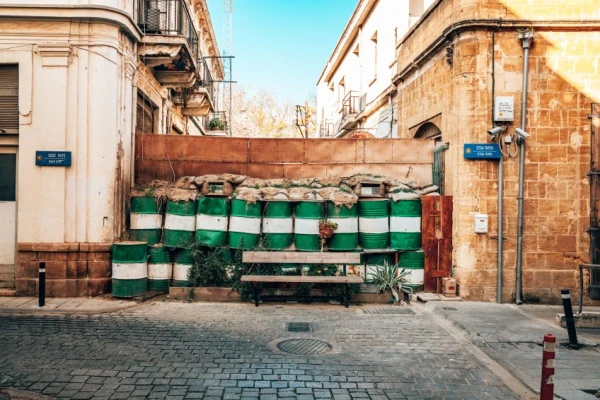
Recently, a meeting took place in the buffer zone of Nicosia between the President of the Republic of Cyprus, Nikos Christodoulides, and the leader of the Turkish Cypriots, Tufan Erhürman. The very fact of this meeting became a notable event for the island, which has remained divided for over half a century. Formally, the negotiations lasted only one and a half hours and did not yield concrete results. However, from a political standpoint, the meeting was an attempt to restart the negotiation process, which had effectively stalled after the failure of the international conference in Crans-Montana in 2017.
One of the main changes is the format. The dialogue took place without direct mediation from major players, although it was on the territory of the peacekeeping mission – the United Nations Peacekeeping Force in Cyprus (UNFICYP). For the Cypriot process, which has been under tight international control for decades, this is an unusual step. For the first time in a long time, the parties attempted to discuss the prospects for resolution directly.
The Cyprus issue remains one of the most protracted territorial-political conflicts in Europe. The roots of the problem trace back to the decolonization period. After gaining independence from the United Kingdom in 1960, a complex system of power-sharing was established between the Greek Cypriot and Turkish Cypriot communities on the island.
However, by the 1960s, intercommunal tensions escalated into violence. The climax was the crisis of 1974, when, following a coup by Greek nationalists, Turkey deployed troops to the north of the island, resulting in the island being effectively divided.
In 1983, the Turkish Republic of Northern Cyprus was proclaimed – a state recognized only by Turkey. The international community, including the UN and the European Union, recognizes the Republic of Cyprus as the only legitimate state.
Attempts at resolution have been made repeatedly. The most famous was the initiative of UN Secretary-General Kofi Annan – the so-called "Annan Plan." In 2004, Turkish Cypriots supported the plan in a referendum, but the majority of Greek Cypriots rejected it. In the same year, the Republic of Cyprus joined the EU, which further complicated the political configuration.
In February 2026, Nikos Christodoulides and Tufan Erhürman met in the buffer zone of Nicosia. At the conclusion, the parties did not announce any major agreements. They only agreed to continue communication and tasked their negotiators with practical steps – to consider opening new crossings across the "Green Line" and to revisit the confidence-building measures that had been discussed earlier.
At first glance, nothing revolutionary happened. But looking at the broader context, the situation has indeed changed. The main event occurred back in 2025: Turkish Cypriots elected Tufan Erhürman as their new leader. He succeeded Ersin Tatar, who had insisted on a model of "two separate states" for five years. Erhürman has always advocated for a federal option, which has been promoted by the UN for decades.
On the southern part of the island, President Christodoulides has consistently stated since the beginning of his term that he is ready to return to the negotiating table, but only within the framework of UN Security Council resolutions and with an eye toward a bi-zonal, bi-communal federation. This means a model where both communities will have equal status within a single state.
As a result, it turns out that for the first time in many years, leaders on both sides of the dividing line are at least verbally discussing the same thing – a federal solution in the UN format. Previously, there was no such coincidence, as one side would pull towards "two states," while the other would block any dialogue. Now, a moment has arrived when it is possible to move towards compromise, provided that no one begins to sabotage the process, but, of course, without any guarantees of success.
For Greece, the Cyprus issue has been one of the main priorities of its foreign policy for many years. Athens has always been and remains the closest and most reliable ally of the Republic of Cyprus. The Greek government consistently advocates for the resumption of negotiations and firmly insists that any solution must comply with UN Security Council resolutions and European law standards. No deviations from this line.
But the connection between Greece and Cyprus is deeper than mere political solidarity. Athens sees Cyprus as a key element of security throughout the Eastern Mediterranean. This is particularly evident in the trilateral cooperation between Greece, Cyprus, and Israel. At the end of 2025, the leaders of the three countries held their tenth summit in Jerusalem and subsequently signed a military cooperation plan for 2026, which includes enhanced joint air and naval exercises, training, and strategic dialogue.
At the same time, Athens maintains the position that normal, full-fledged relations with Ankara are impossible until the Cyprus problem is resolved. Any movement towards recognizing two states or weakening the sovereignty of the Republic of Cyprus is an absolute red line for Greece.
The United Kingdom occupies a special, rather complicated position in Cyprus, unlike Greece, which simply and openly supports the southern part of the island.
London remains one of the three guarantors of Cyprus's independence under the agreements of 1960 (along with Greece and Turkey). This means that theoretically, Britain has the right to intervene in the island's affairs if independence or constitutional order is under threat. However, in practice, this role has long become more symbolic. Much more important is that the UK still fully controls two large sovereign military bases – Akrotiri in the southwest and Dhekelia in the east. These territories are not part of the Republic of Cyprus, but British land, where airfields, radars, and warehouses are located, and thousands of military personnel are stationed.
Due to these bases, London is simultaneously a participant in regional security and a potential mediator in the Cyprus conflict. The Republic of Cyprus hopes that Britain will help resume negotiations and pressure all participants at the table – in the UN or the EU. After all, London has a permanent seat on the Security Council and old connections.
Theoretically, this plan could become a reality, but the British military presence on the island constantly provokes disputes. This was particularly evident in early March 2026, when the Akrotiri base was attacked by a drone (of the Shahed type, likely of Iranian manufacture or from proxies like Hezbollah). The drone struck the runway or a hangar where American U-2 reconnaissance planes were stationed – the damage was minor, there were no casualties, but the incident marked the first direct strike on a British military base in decades. Following this, there were further attempts to attack with drones, but they were intercepted. In this context, the Cypriot authorities expressed dissatisfaction that London did not warn the island in advance, failed to effectively protect the base, and dragged Cyprus into the conflict in the Middle East. In response, Britain sent Defense Minister John Healey to Cyprus and evacuated some families from the bases.
For London, Cyprus is a strategic point in the Eastern Mediterranean and approaches to the Middle East. The bases are used for operations against ISIS, the Houthis in Yemen, as well as for reconnaissance and logistics.
The European Factor
But Cyprus is not united solely by the United Kingdom. The Republic of Cyprus has been a full member of the European Union since 2004, with all rights and obligations. Accordingly, the northern part of the island remains completely outside the European legal space: neither the single market, nor Schengen, nor European laws apply there.
Brussels has long considered the resolution of the Cyprus conflict one of its priorities in the region and actively tries to influence the process. In May 2025, the European Commission appointed a special envoy to Cyprus – former EU Commissioner Johannes Hahn. His task is to assist in the resumption of negotiations, coordinate efforts with the UN, and support both communities. Hahn has already visited the island several times, met with leaders, and emphasized that the EU is ready to provide financial and political support for a united Cyprus, but only within the framework of a single state – no two states.
The European Union does not remain on the sidelines here. Thanks to the membership of southern Cyprus in the EU, Nicosia has significant influence in Brussels, while the north receives economic support from the EU amounting to tens of millions of euros annually, as well as programs to strengthen trust. However, Brussels categorically rejects any attempts to recognize the division of the island. For the EU, Cyprus must remain united to fully integrate into the European community.
Is a Breakthrough Possible?
Despite the cautious optimism following the meeting in February 2026, the peace process for the Cyprus resolution still hangs by a thread, although the chances for a breakthrough remain. The main contradictions between the parties have not gone anywhere – they are the same as they were ten or twenty years ago.
Firstly, the model of the future state. Greek Cypriots and the international community insist on a single bi-zonal, bi-communal federation with equal rights for the communities. Turkish Cypriots, under Erhürman’s leadership, are formally ready to discuss this option, but Ankara stubbornly promotes the idea of two separate sovereign states, and this position does not change. President Erdoğan stated in November 2025 that the most realistic option is two states on the island, and Turkey continues to repeat this thesis in 2026, including statements from the Foreign Ministry regarding the extension of the UN peacekeepers' mandate.
Secondly, security and guarantees. Greek Cypriots demand the withdrawal of Turkish troops (about 40,000 personnel) and the replacement of the old guarantee system (from 1960) with a more modern one, possibly involving the EU. The north and Turkey see this as a threat and insist on maintaining the right to intervene.
Thirdly, the distribution of power. How exactly to divide the presidency, parliament, and ministries so that both communities feel equal, but without the threat of potential sabotage of decisions.
Fourthly, territorial and property disputes. Who will return which lands, how to compensate the refugees of 1974, what to do with lost property – these are thousands of cases that have been lying in courts for years.
The key to everything is Turkey's position. As long as Ankara officially holds onto the two-state solution, Erhürman, even being a supporter of federation, cannot go beyond words without Ankara's agreement. The north is heavily dependent on Turkey – economically, militarily, and politically. Without a change of course in Ankara, any compromise remains theoretical.
Therefore, the process can now develop in two scenarios.
In the best case, direct meetings between leaders will gradually restore at least minimal trust. The parties will agree on small but visible steps – new crossings across the "Green Line," joint projects – and this will create an atmosphere in which it will be possible to return to a large international conference under the auspices of the UN. Then the federal model will have a real chance.
In the worst case, everything will descend into the familiar farce: endless meetings, statements about "productive dialogue," and the elaboration of confidence-building measures that are then stalled by all parties. Without pressure on Turkey (from the EU, the US, or through other leverage) and without the willingness of the parties to make painful concessions, negotiations will simply drag on for several more years without real movement towards reunification.
For now, February 2026 is not a breakthrough, but merely a cautious step forward. But even such a step is better than a complete freeze, which lasted nine years after Crans-Montana. The question is whether there is enough will among all parties, especially Turkey, to turn this step into a real path to resolution.