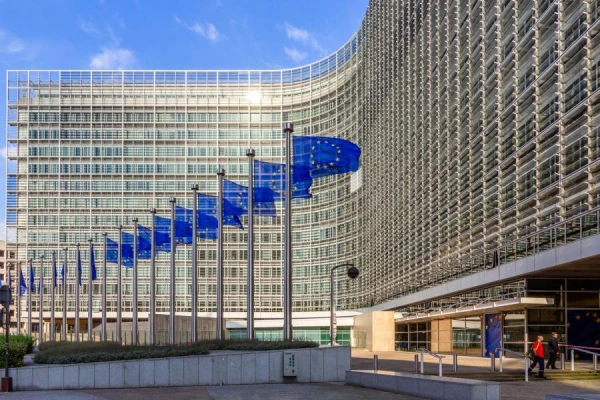
The European Union (EU) agreed on Saturday to extend sanctions against Russia for another six months, the LETA agency was informed by the Ministry of Foreign Affairs.
The ministry informs that the EU Council unanimously decided on Saturday to extend the restrictive measures against individuals responsible for undermining or threatening the territorial integrity, sovereignty, and independence of Ukraine for six months. Thus, the sanctions are extended until September 15, 2026.
"Once again, as a result of intensive negotiations, a unified position of the EU has been achieved, which does not allow for the weakening of the sanctions imposed against Russia. The sanctions list retains over 2,700 sanctioned entities," the ministry notes, adding that Latvia actively opposed any politically motivated attempts to exclude individuals from the sanctions list.
The ministry notes that as part of the regular review of each sanctions regime, the Legal Service of the EU Council assesses the legal justification of the evidence against the sanctioned entities, after which the EU Council evaluates the situation during discussions and makes the appropriate decision regarding the extension of sanctions. As before, the process of extending the EU's individual sanctions against Russia was complex; however, EU member states managed to maintain unity and a common position — no individual was excluded from the sanctions for political reasons.
A number of individuals subject to EU sanctions are also under sanctions from other countries, including the USA, Canada, Ukraine, the UK, Switzerland, Australia, and New Zealand.
Latvia's position is based on the statements of the Saeima from February 24 and April 21, 2022, regarding Ukraine, which call for the application of the maximum possible sanctions, as well as on the decisions of the Cabinet of Ministers, reaffirmed by an information report approved at the government meeting on February 17, 2026, regarding the issues discussed at the EU Foreign Affairs Council meeting on February 23, 2026.
The position of the Latvian government stipulates that the current sanctions should be extended until Russia ceases its aggression, fully restores the territorial integrity of Ukraine within its internationally recognized borders, and compensates Ukraine for the damage caused. Latvia also advocates for the timely extension of EU sanctions against Russia, which is part of the EU's support for Ukraine. It is important for Latvia to maintain the regime of individual sanctions for actions that undermine or threaten the territorial integrity, sovereignty, and independence of Ukraine. Latvia categorically opposes any attempts to weaken the sanctions, including politically motivated attempts to achieve the exclusion of individuals from the sanctions list.
Considering Latvia's national interests and the overall EU sanctions policy, Latvia consistently advocates for further strengthening of sanctions, actively participating in the work on new sanction packages and proposing to include additional individuals and legal entities, as well as vessels of the "shadow fleet," in the sanctions list, in order to reduce Russia's capabilities, its budget revenues, and to achieve the cessation of aggression in cooperation with allies and partners.
The ministry notes that since 2014, EU individual sanctions have been applied to individuals and legal entities for actions that undermine or threaten the territorial integrity, sovereignty, and independence of Ukraine. Among the individuals subject to EU sanctions are the President of Russia, the Prime Minister, the Minister of Foreign Affairs, other members of the government and the presidential administration, high-ranking officials and military personnel, representatives of the judiciary, significant companies and their leaders important to the Kremlin regime, oligarchs, propagandists, media, and other individuals supporting the aggressive policies of the Kremlin.
Sectoral and individual EU sanctions against Russia must be extended every six months. This requires unanimity among all 27 EU member states. If EU states do not reach an agreement within the established timeframe, the sanctions regime would not be extended and would cease to apply to all individuals and legal entities included in the sanctions list. Member states had to agree on the extension of individual sanctions by March 15, 2026.