Neighboring countries to Russia are noting an increase in Portuguese imports that have been sanctioned due to the war in Ukraine. Lisbon has begun an investigation.
Portuguese exports to countries close to Russia have significantly increased since the beginning of the full-scale war in Ukraine, writes the newspaper Público, noting that this trend has attracted the attention of the Ministry of Finance and regulatory authorities.
The publication reports that after the EU sanctions against Moscow came into effect, shipments from Portugal to Russia fell from over 26 million euros in 2021 to negligible figures. At the same time, data on international trade published by the National Institute of Statistics (INE) and cited by Público show that Portuguese exports have increased to Kyrgyzstan, Kazakhstan, Azerbaijan, Turkey, and the United Arab Emirates.
Among the mentioned countries, Kyrgyzstan stands out. Shipments there from Portugal surged from approximately 200,000 euros in 2021 to nearly six million euros in 2025. Although this figure is not significant in the global panorama of Portuguese international trade, in recent years, this direction has seen the largest growth in national exports.
The five countries with the highest increase in imports from Portugal share their proximity to Russia and normal trade relations with Vladimir Putin's regime amid the ongoing war. The publication questions whether this is a case of businesses circumventing sanctions against Moscow.
In practice, Portuguese companies, like companies from other EU countries, can export products to third countries, which then supply them to Russia.
Among the goods whose exports to Russia are prohibited by sanctions are microchips, semiconductors, electronic equipment, drones, industrial components, and other materials that can be used in the military industry. The restrictions are aimed at narrowing the capabilities of the Russian industry, especially military, in obtaining Western technologies. In categories such as engines and generators, there has also been a sharp decline in direct exports to Russia and a parallel increase in other markets.
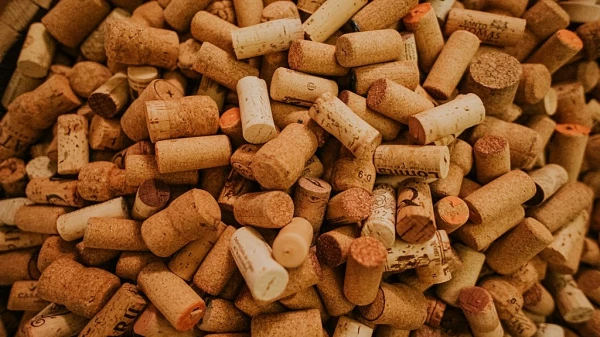
Corks to Neighbors One of the products that has seen the most obvious changes is cork, in the production of which Portugal is a world leader. Previously, Moscow was a regular customer of Portuguese corks, which were used in wineries. However, with the onset of the large war in Ukraine, this product fell under sanctions, as it can also be used for military purposes.
Thus, while sales of cork to Russia have sharply declined, since mid-2022, its shipments to Turkey, the United Arab Emirates, Kyrgyzstan, and Kazakhstan have increased.
Earlier, the European Anti-Fraud Office (OLAF) investigated a scheme for transferring used cars from the European Union to the Russian Federation circumventing sanctions.
This led to criminal cases being initiated in several EU member states that attempted to violate the restrictions, and to increased scrutiny of this type of export.
In Portugal, oversight of compliance with sanctions imposed on exports to Russia is the responsibility of the Tax and Customs Authority, which confirmed to Público that it is investigating possible violations. According to the authorities, changes in trade structure are not automatic evidence of non-compliance with restrictions but may only serve as risk indicators.