This right is enshrined in the 14th Amendment of the Constitution, which was adopted primarily to integrate the descendants of slaves.
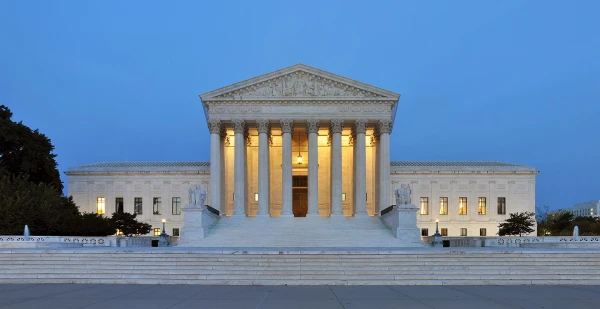
A hearing in the U.S. Supreme Court for the case Trump v. Barbara is scheduled for April 1, 2026. This lawsuit has the potential to shake one of the constitutional pillars of the state — the right to U.S. citizenship by territorial birthright.
Of course, in light of the scale of the potential effect, as well as the fact that immigration and naturalization issues have become part of the everyday narrative over the past year, everyone on social media has become an expert in constitutional law, boldly expressing opinions on the rights of naturalized citizens. However, there are things in American law that seem surprisingly simple, but only until you start reading the fine print. U.S. citizenship is one of those phenomena.
America is one of the countries that recognizes citizenship by birth or 'by right of soil' (jus soli). At first glance, everything is clear: born in the U.S. — a citizen. That's what the Constitution says. But how did it happen that one of the first decrees of the current president was precisely the decree of January 20, 2025, on the revocation of birthright citizenship: the very decree that is now being challenged in the Supreme Court? To begin with, it makes sense to look at the mechanism that the president plans to use to implement his intention to limit the right to obtain American citizenship for those born in the U.S. to immigrant parents.
The right to issue executive orders, that is, directives of the executive branch, is enshrined in Article II (not to be confused with the 'Second Amendment') of the Constitution, which empowers the president to ensure the faithful execution of laws. In fact, this is why the president is the representative of the executive branch. Among the most notorious directives that provide insight into how this mechanism works is the so-called travel ban — restrictions on entry into the country for citizens of certain countries (predominantly Muslim) that the president identified as supporters of terrorism. There is already a law in the immigration code that restricts the entry of certain categories of foreigners into the U.S. Accordingly, the president directed the enforcement of this law in a manner consistent with his political agenda through his directive. Constitutionally, the president is within his rights to issue such a directive.
However, the directive revoking U.S. citizenship by birthright is not so straightforward. This right is enshrined in the 14th Amendment of the Constitution, which was adopted primarily to integrate the descendants of slaves into democratic American society and subsequently regained relevance in the 20th century when Indian reservations were placed under federal jurisdiction. This amendment is notable in that its 'constitutionality' and application practice are established by the Supreme Court's precedent in 1898 in the case United States v. Wong Kim Ark. Only a new Supreme Court decision can change the Supreme Court's ruling, overturning the existing precedent. This is essentially the essence of the principle of separation of powers. The president cannot revoke an existing judicial precedent through any directives.
But even the Supreme Court cannot repeal an existing article of the Constitution — the court can only explain that we have misinterpreted it and offer a new interpretation. That is, for the desired changes to occur, the court must say that the term 'born in territories under U.S. jurisdiction' does not include the children of illegal immigrants because illegal immigrants technically do not fall under U.S. jurisdiction since they do not comply with U.S. laws. Whether the court is prepared to issue such a ruling remains to be seen this year.
The next option remains — to amend the Constitution through Congress. Currently, Republicans control both chambers of the U.S. Congress. For a constitutional amendment to be adopted, the consent of two-thirds of the entire Congress is first required. If Congress approves the amendment, 75% of the states must ratify it for it to become law. In light of current ratings illustrating approval of the president's actions, such unanimity seems unlikely.
Finally, there is a way to reform the Constitution through a so-called 'Convention.' The fifth article of the Constitution states that if two-thirds of the states (34 states as of today) petition for constitutional reform through their local legislative body, the issue may be put to a vote. How this works in practice is unknown, as the last 'convention' took place in 1787, and since then there have been no attempts to approach changing the law from this side. It is unlikely that this process can be revived in the short term.
Accordingly, the revocation of birthright citizenship is only possible with the Supreme Court's decision in the case Trump v. Barbara, the hearing for which will take place in April, and a decision will be issued in the second half of 2026. The scale of the practical effect of revoking birthright citizenship is difficult to predict, as there are no provisions in U.S. law describing what immigration status a child of immigrants born in America acquires. Does he inherit the status of his parents? Will he be issued a visa? For now, it is only clear that in the event of the repeal of jus soli, time will be needed to develop a separate body of laws and regulations.
However, even in light of the uncertainty surrounding birthright citizenship status, some rather mysterious legal concepts of citizenship remain constant. For example, the concept of 'dual citizenship,' which is often mistakenly applied to situations involving two citizenships.
The U.S. is one of the countries that allows citizens to hold two or more citizenships simultaneously. This also applies to naturalized Americans. That is, when taking the oath of citizenship in the U.S., the newly minted citizen is not required to renounce any existing citizenships.
At the same time, the U.S. considers a person exclusively as its citizen on its territory and abroad if he traveled specifically with an American passport, and all obligations to the U.S. (such as taxes or military service) remain in full force. It is the tax component that often shocks holders of multiple passports, who are surprised to find that a U.S. citizen is required to pay taxes to the U.S. treasury on income worldwide, even if he resides permanently in the country of his second citizenship.
The term 'dual citizenship' has an international legal meaning and implies an agreement between states on mutual recognition of status. The U.S. has no such agreements with other states. An example of such an agreement could be a bilateral treaty between Russia and Tajikistan, which directly recognizes dual citizenship. Citizens can retain both passports, and issues of military service and fiscal responsibility are regulated by intergovernmental agreements.
A similar regime operates between Spain and several Latin American countries. Nevertheless, most states today prefer the model of allowing multiple citizenships without entering into special treaties.
Despite the political turbulence, the American passport remains a desirable asset, and birthright citizenship attracts not as a privilege but as a legally enshrined status that arises with the first breath on the territory of the country. This status is associated with the freedom of visa-free movement, access to the financial system, educational opportunities, and the protection of rights guaranteed by the Constitution. However, when discussing the opportunities that the 'blue passport' opens up, it is important to remember: discussions around birthright citizenship and changing economic and political realities may complicate administrative procedures over time and intensify requirements for those who hold this status.