A contentious point in the negotiations will be the war in Ukraine.
The negotiations are dedicated to trade issues between the leading economy of the EU and the Asian giant. But it is also an attempt to feel out and assert Germany's subject significance. So that no one thinks that the leaders of Europe can only make vassal trips to world capitals.
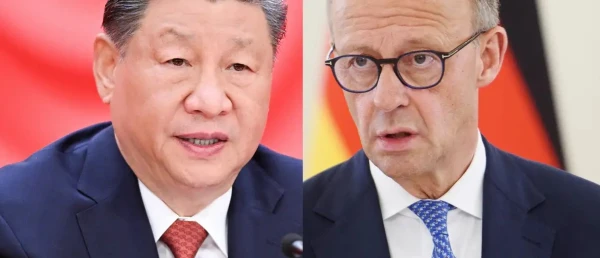
This visit, the first to China for the conservative leader since taking office last May, will take place immediately after the celebration of the Lunar New Year, his press secretary Sebastian Hille noted on Friday, calling it a "good omen."
Last week, Chinese Foreign Minister Wang Yi told Merz at the Munich Security Conference that Beijing hopes to elevate relations "to a new level" and wants Germany to become a "stabilizing anchor for strategic relations." Whatever that means.
Merz is leaving Berlin on Tuesday, and according to Hille, he will be greeted with military honors in Beijing on Wednesday by Prime Minister Li Qiang, after which he will meet with Xi Jinping for talks and dinner.
During the two-day visit, Merz will also visit the Purple Forbidden City in Beijing (the former residence of emperors) and the office of the German automotive company Mercedes-Benz. He will then head to Hangzhou to visit the Chinese robotics company Unitree and the German turbine manufacturer Siemens Energy.
Hille stated that Merz will embark on the trip with a delegation of business leaders, but has not yet named the companies included in the delegation.
Economic Frictions
Negotiations between the leaders of China, the world's second-largest economy, and Germany, the third-largest, are taking place at a critically important moment for Germany, as automakers and other companies are increasingly suffering from fierce competition from China.
Traditionally strong economic ties between the countries have weakened in recent years due to issues ranging from accusations of unfair trade practices to protectionism and the supply of critical raw materials.
No Illusions
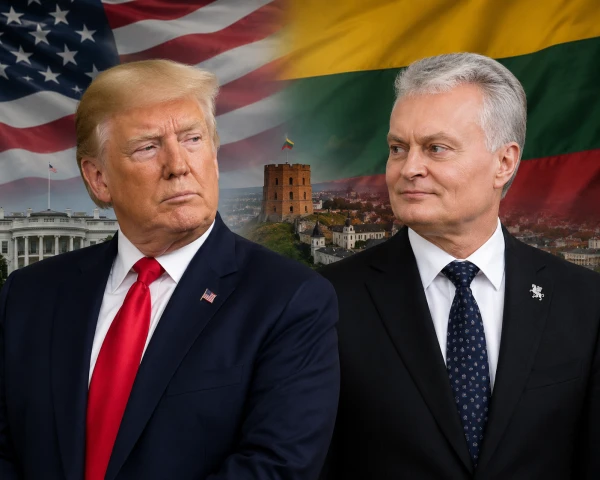
This visit comes against the backdrop of U.S. President Trump’s unpredictable foreign policy and trade maneuvers that have alienated traditional allies and threatened to undermine the international order.
Recently, Merz stated that he is going to China partly because Germany, which is dependent on exports, needs "economic ties around the world." Especially, of course, at a time of Trump’s tariffs, which the U.S. Supreme Court has just overturned, but what will happen next?
"But we should not harbor any illusions," he added, noting that the one-party state of the PRC has its own global ambitions and political beliefs.
"Today, China sees itself in stark contrast to the U.S. and asserts its right to define a new multilateral order according to its own rules," Merz said at his party's congress.
He reminded that when it comes to freedom of opinion, religion, and the press, Beijing views the protection of human rights "as interference in its internal affairs."
Hille, responding earlier to a question about whether sensitive issues regarding human rights would be discussed, said that it can be assumed that Merz "will certainly discuss the full range of issues."
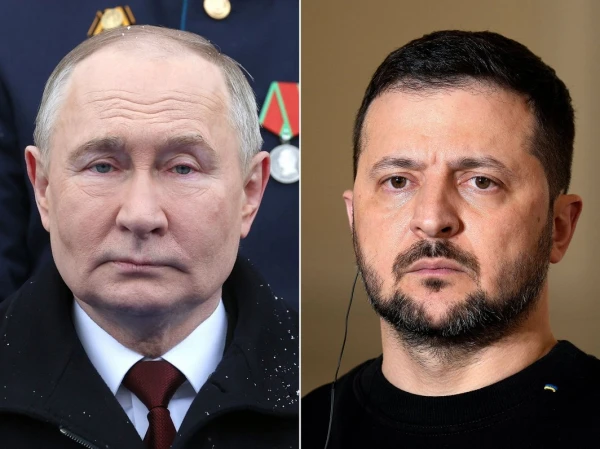
Another contentious point will be the war in Ukraine, where Germany has been providing decisive support to Kyiv since the full-scale invasion by Russia four years ago, next week.
China and Russia are close partners, and although Beijing claims a neutral position regarding the war in Ukraine, it has never condemned the invasion. And do we believe China is neutral?
In December, German Foreign Minister Johann Wadephul visited Beijing, where he urged Chinese officials to use their influence to promote an end to the war in Ukraine. To no avail...