
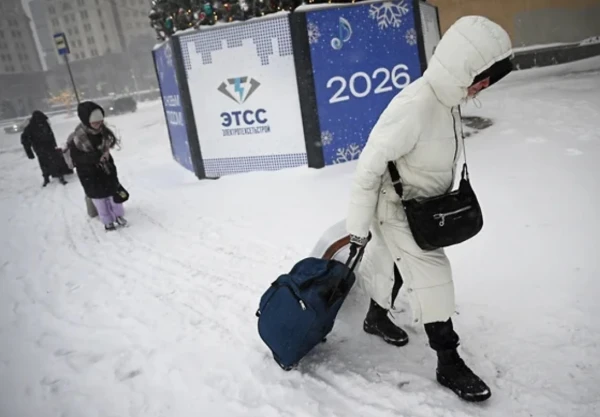
A separate category of repatriates has appeared among program participants, granting special rights.
In 2025, 26,700 people moved to Russia under the voluntary resettlement program for compatriots, marking the lowest figure in the last 15 years. The largest number of people resettled from Kazakhstan, while Tajikistan sharply dropped from second to fifth place. Experts attribute the decline in interest in the program to several factors: the war, the economic situation in Russia, and the tightening of language requirements for participants.
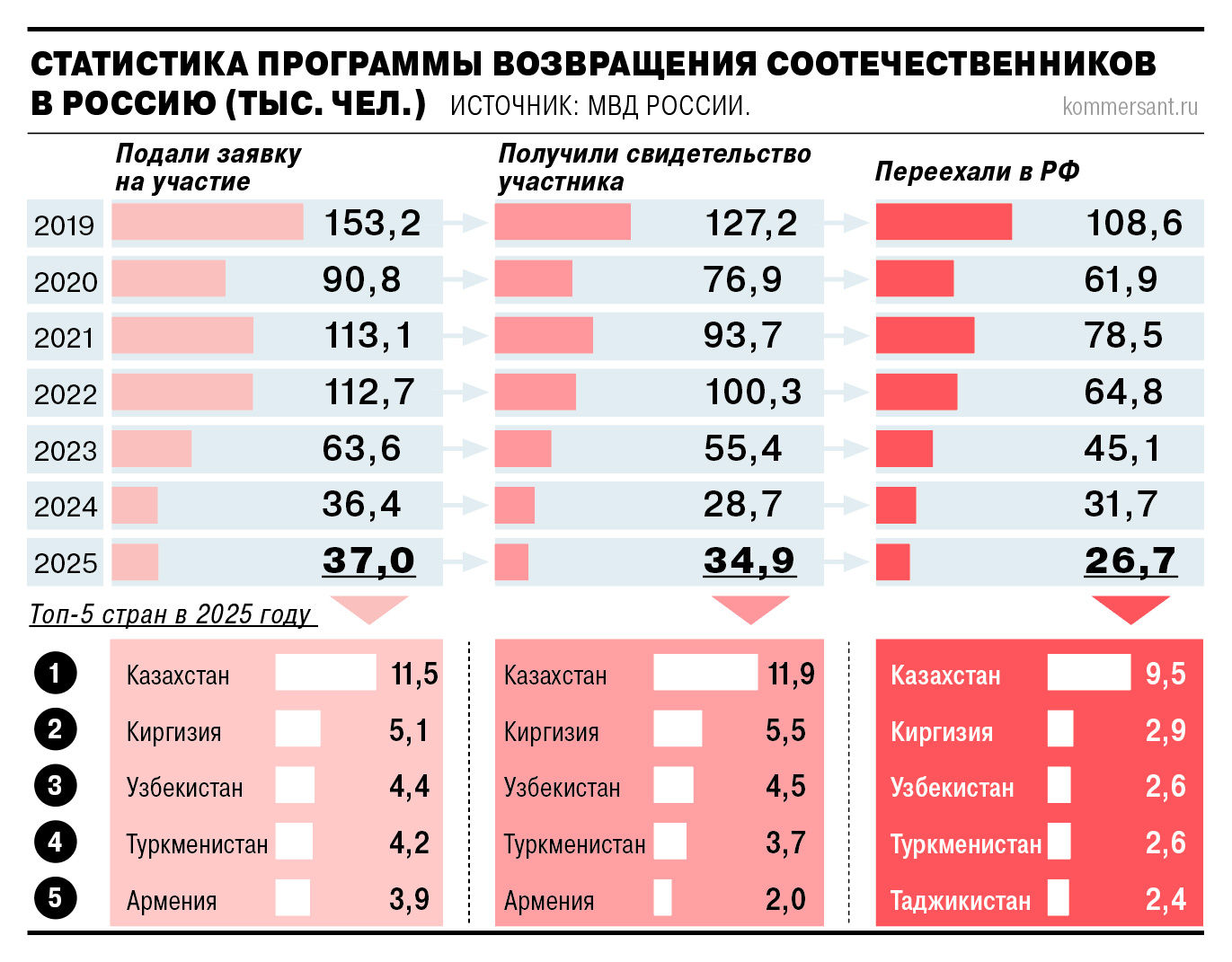
In 2025, government agencies received applications from 37,000 people to participate in the voluntary resettlement program, according to calculations by "Kommersant" based on data from the Ministry of Internal Affairs. In the same year, 26,700 people moved to Russia and registered (the period between receiving the participant certificate and actual relocation can vary, sometimes exceeding a year). This became a new minimum since 2011, when 61,100 applications were submitted, and 31,400 people arrived. Interest was even higher in 2022: 112,700 applications and 64,800 entries.
Alexander Dokuchaev, Deputy Director of the Institute of CIS Countries, believes that the annual decline in the number of resettlers is primarily related to the war in Ukraine. "Russia is in a difficult situation, and of course, people are simply not in a hurry to go to war," the expert explained, "The economic situation is also complicated. Life in Russia has become more difficult in recent years, political life is not easy, and foreign policy is also unstable."
Andrei Yakimov, an expert at the PSP Foundation for Migration and Interethnic Relations, believes that "very many who wanted to have already moved to Russia as compatriots. The so-called social base of the resettlement program is gradually being exhausted," the expert adds: "The program was primarily designed for people born in the USSR and who lived there for some time. Now, those who were 20 years old at the time of the collapse of the Union are already 55 years old. And only people of working age can participate in the resettlement program."
In 2024, the Ministry of Internal Affairs explained the decline in interest in the program by the introduction of a new requirement. According to a presidential decree, resettlers (except for citizens of Belarus, Kazakhstan, Moldova, and Ukraine) must confirm their proficiency in the Russian language at a level "sufficient for communication in oral and written form in a language environment." That year, foreigners submitted 8,400 applications for recognition of their Russian language proficiency, but only 3,600 were approved. In 2025, out of 6,000 applications, only 2,500 were approved.
Such low figures are explained by Alexander Dokuchaev as a shortcoming on the part of the authorities: "The fact that these tests are not passed by Russian-speaking people indicates that the tests are poor. The tightening of our legislation does not give people confidence that they will come and be accepted here as desired compatriots. There is also no confidence that their Russian-speaking children will be able to pass completely absurd tests and get into school."
In terms of the number of people expressing a desire to live in Russia and the number of those who actually moved in 2025, Kazakhstan led with 35.5% of all resettlers.
It should be noted that Kazakhstan topped the list of countries of origin in 2024 as well. However, that time it was followed by Tajikistan, while in 2025, the republic dropped to fifth place in terms of actual entries, yielding to Kyrgyzstan, Uzbekistan, and Turkmenistan. Andrei Yakimov believes that the large number of program participants from Kazakhstan is primarily due to the higher number of ethnic Russians there. Additionally, the republic has well-established information dissemination about the program through the Ministry of Foreign Affairs, the expert notes. The decrease in the number of resettlers from Tajikistan is primarily linked by Mr. Yakimov to changes in the conditions of the maternity capital program. Since 2024, only women who have obtained Russian citizenship and given birth on the territory of the country are entitled to such capital.
In 2025, about 7,000 people entered Russia as repatriates, while the year before, the number was significantly lower — 1,800. It is worth noting that since January 2024, a separate category of repatriates has been introduced among program participants, which grants special rights. Repatriates include citizens of the USSR who were born and lived in the RSFSR; people who have direct ascending relatives born in the RSFSR or the Russian Empire; citizens who had permanently resided abroad as of February 24, 2022; and those who voluntarily renounced their Russian citizenship. They can settle in any region (not just in the one specified by the government, as is the case for other resettlers) and do not need to confirm their knowledge of the Russian language. However, they have fewer benefits (for example, they are not entitled to reimbursement of relocation expenses). The increase in the number of repatriates was expected, says Alexander Dokuchaev: "They can go to regions that are not accessible under the general program — both to Moscow and St. Petersburg, where it is easier to find work than in other cities, in the hinterland. People are given greater freedom of choice.






Leave a comment