Business representatives urged Berlin to "act as a driving force" in the EU.
The largest economy in the EU is seeking to diversify its key trade and energy partnerships. In a turbulent world where U.S. President Trump has undermined long-standing transatlantic ties in security and economics, Germany is striving to strengthen alternative relationships around the globe. At least in the economy. However, the monarchies of the Persian Gulf are also seen as a zone of political stability amid threats to the world order from Iran and Russia. Should the issue of human rights in this region be dismissed in this context?
Diversification
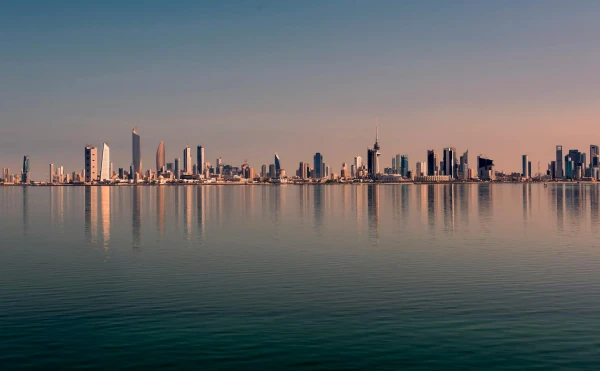
Accompanied by a business delegation, Chancellor Merz is meeting with Saudi Arabia's Crown Prince Mohammed bin Salman, and then heading to Qatar and the United Arab Emirates as part of his short trip, which will last until Friday.
"In the geopolitical situation we are operating in, we must intensify partnerships with important and influential states in the world. These include the countries of the Persian Gulf," a senior German official stated ahead of Merz's trip.
A second official stated that Germany wants to "strengthen trade and export opportunities, increase and stimulate foreign investments" and "diversify our supply chains... especially in the energy sector."
Germany has long been exporting defense products and making large infrastructure deals in the Persian Gulf region, whose wealthy monarchies, in turn, use their energy resources to invest in German corporate giants, from Volkswagen to Deutsche Bank.
When Russia's invasion of Ukraine in 2022 led to a sharp reduction in energy supplies from Russia, Berlin turned to Doha for increased imports of liquefied natural gas, which allowed it to survive the following winter. In turn, Saudi Arabia and other Gulf states are seeking to diversify their economies by reducing dependence on oil and gas and actively investing in sectors such as renewable energy, tourism, logistics, and artificial intelligence.
Berlin has intensified efforts to reduce dependence on American LNG and intends to increasingly rely on green hydrogen produced by the Saudis using renewable energy sources to achieve its climate goals.
When Stability is Fraying, Allies are Needed
Last month, Merz visited India shortly before the EU and the South Asian giant concluded a trade agreement, which was met with approval in Berlin, which is also eager to expedite an agreement with the South American bloc Mercosur.
"In the context of geopolitical tension and global restructuring, further strengthening relations with the Gulf states sends an important signal," stated the Federation of German Industries.
Business representatives urged Berlin to "act as a driving force" in ongoing negotiations for a free trade agreement between the EU and the UAE, and ultimately with the Gulf Cooperation Council.
Andreas Lenz, an expert on economic and energy policy from Merz's parliamentary group, stated that the Persian Gulf region has significant potential for German business.
"The region shows great interest in German technologies," including in the automotive, chemical, engineering, and medical sectors, Lenz told Phoenix TV.
For Germany, as an export-oriented economy, stability in the Middle East is of great importance, partly to ensure the security of key maritime routes.
The Sensitive Issue of Human Rights Seems Not to Be a Priority
Will Merz also address human rights issues in the region? Lenz noted that any open displays of "moral superiority" would be "quite counterproductive." He is likely hinting at the rhetoric of former Foreign Minister Annalena Baerbock. This is characteristic pragmatism bordering on business cynicism. Germany has behaved similarly in recent times with Putin's regime, which has been destroying the sprouts of democracy in Russia.
On Wednesday, a government representative stated only that "issues on which we have differing opinions will certainly be considered." Some ritual phrases will likely be uttered, but it is hard to hope for any significant changes in the area of human rights in authoritarian Eastern states.
In any case, it cannot be said that there the authorities are at war with the people, as is the case in Iran. Or that the regimes there are aggressively attacking other countries. Merz is visiting Riyadh, Doha, and Abu Dhabi during a period of high political tension caused by Iran due to the bloody suppression of the uprising.
Merz has not hesitated to express his contempt for the leadership in Tehran, condemning last week "a regime that can only maintain power through violence and terror against its own population."
Everything is understood in comparison. The monarchies of the Middle East do not appear demonic against the backdrop of the ayatollahs or the belligerent Kremlin brethren. However, this does not negate the problem.
<iframe width="560" height="315" src="https://www.youtube.com/embed/uJKx4VYG6E4?si=9sTh0sdHd9uvzyy3" title="YouTube video player" frameborder="0" allow="accelerometer; autoplay; clipboard-write; encrypted-media; gyroscope; picture-in-picture; web-share" referrerpolicy="strict-origin-when-cross-origin" allowfullscreen></iframe>