The released documents from the U.S. Department of Justice indicate years of attempts by the financier to make contact with the Russian elite.
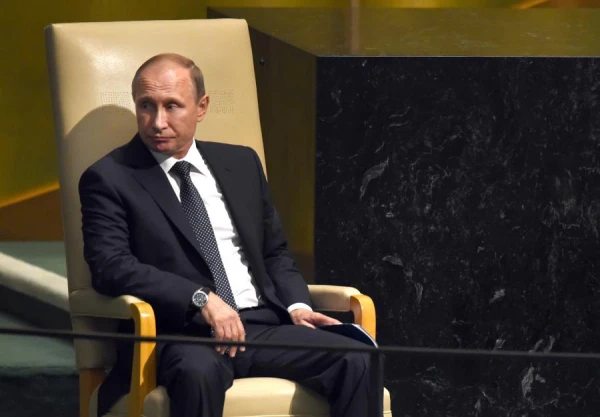
Documents released by the U.S. Department of Justice indicate that financier Jeffrey Epstein sought to connect with high-ranking officials in Russia for many years, particularly with ruler Vladimir Putin, Foreign Minister Sergey Lavrov, and other members of the Russian elite, CNN reports.
Correspondence with Russian Diplomats
According to the materials, Epstein maintained regular contact with the then-Russian ambassador to the UN, Vitaly Churkin, until his death in 2017. The documents note that Churkin met with Epstein in New York, and the financier offered to assist his son with employment in the financial sector.
In June 2018, Epstein sent an email to then-Secretary General of the Council of Europe Thorbjørn Jagland, suggesting that he convey a signal to Vladimir Putin about readiness for contact through Sergey Lavrov.
"I think you could suggest to Putin that Lavrov could get information by talking to me. Vitaly Churkin used to do this, but he died?!" Epstein wrote.
Jagland replied that he would meet with Lavrov's assistant and raise the issue.
Attempts to Reach Putin
The documents also contain correspondence from 2013–2014 in which Epstein repeatedly expressed a desire to meet with Putin in person. He claimed that he "could be helpful" in attracting Western investments to Russia and insisted on confidential, lengthy negotiations.
In letters to former Israeli Prime Minister Ehud Barak, Epstein wrote that Jagland was planning a meeting with Putin in Sochi and allegedly offered to convey a message about his "helpfulness" to the Russian leader. At the same time, the documents do not confirm that such a meeting ever took place.
Against the backdrop of the released materials, the Norwegian investigative agency Økokrim announced the start of an investigation into Thorbjørn Jagland. His lawyer stated that the politician would cooperate with the investigation and denies any wrongdoing.
Reaction and International Suspicions
The publication of new documents has sparked speculation about Epstein's possible motives. Polish Prime Minister Donald Tusk stated that Warsaw would begin an investigation into potential connections between Epstein and Russian intelligence services.
"Increasing information points to the suspicion that this unprecedented pedophilia scandal could have been organized by Russian intelligence services," Tusk stated.
The Kremlin dismissed these assumptions. The press secretary of the President of the Russian Federation, Dmitry Peskov, called the version of Epstein's collaboration with Russian intelligence "not serious" and urged journalists "not to waste time" on such investigations.
Analysts interviewed by CNN note that the documents are more indicative of Epstein's desire to position himself as an influential international mediator than they are evidence of his actual connections with the Kremlin.
Contacts with People Linked to the FSB
The documents also mention Epstein's close relationship with Sergey Belyakov – a Russian official who, according to TASS, is a graduate of the FSB Academy. Epstein referred to him as "a very good friend" and offered to introduce him to Western investors.
The correspondence indicates that Epstein consulted Belyakov on attracting investments to Russian projects and even sought his assistance in conflict situations involving Russian citizens in the U.S.
Trips to Russia
Flight logs confirm that Epstein, along with Ghislaine Maxwell, visited Russia at least in 2002 and also submitted documents for obtaining or transferring a Russian visa in 2018–2019 – shortly before his arrest on federal charges of trafficking minors.
The documents also mention a photograph of Epstein in the closed Russian city of Sarov, associated with nuclear research, which only heightened interest in his contacts with the Russian environment.