The EU's chief diplomat discouraged Europeans from renewing direct relations with the Kremlin, an idea publicly supported by Emmanuel Macron and Giorgia Meloni.
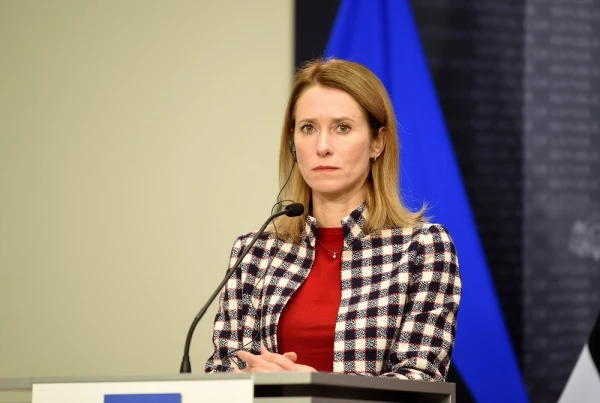
Russian President Vladimir Putin must make significant concessions before the European Union picks up the phone to restore direct contacts. This was stated on Thursday by the EU's High Representative for Foreign Affairs Kaja Kallas, despite increasing calls from European leaders for direct engagement with the Kremlin as part of the peace process between Russia and Ukraine, which is currently being mediated by the White House.
"We cannot be here as supplicants, you know, going to Russia (and saying) 'talk to us,'" Kallas said on Thursday after a meeting of foreign ministers in Brussels.
"The concessions that the Americans are offering Ukraine are quite strong," she added, referring to reports that Washington is asking Kyiv to give up areas of Donbas still under Ukrainian control in exchange for security guarantees. "I don’t think we can offer Russia anything beyond what they have already received in the agreement with the Americans, so why would they talk to us? Because they are getting what they want in these relations."
According to Kallas, instead of focusing on who should talk to Putin, European countries should direct their efforts towards further undermining his military machine, which is causing Ukrainians to suffer from power outages in freezing temperatures. Brussels intends to approve a new package of sanctions against Russia by the fourth anniversary of the war on February 24.
"We are working to exert more pressure on Russia to move from pretending to negotiate to real negotiations, and also to take into account the concerns we have regarding Russia, that this war will not continue and will not spread to other territories," Kallas said in response to a question from Euronews. "I think it’s important to understand this."
To Talk or Not to Talk?
The contentious issue of renewing relations with Russia occupies a prominent place on the agenda following public support from French President Emmanuel Macron and Italian Prime Minister Giorgia Meloni, who stated that the EU needs to present a united front regarding Putin.
"I believe it is time for Europe to reach out to Russia," Meloni said. "If Europe decides to participate in this phase of negotiations by only talking to one of the two sides, I fear that ultimately the positive contribution it can make will be limited."
The Italian leader suggested that the EU appoint a special envoy to negotiate on behalf of all 27 member states, although she did not name a specific individual.
The European Commission, a long-time advocate of a strategy of diplomatic isolation, later acknowledged that direct negotiations would take place "at some point," but not now.
On Thursday, before heading to the ministerial meeting chaired by Kallas, Luxembourg's Foreign Minister Xavier Bettel told Euronews that talks with the Kremlin should not be excluded from the agenda.
"We need to talk to them if we want to find a solution," Bettel said in an interview with Euronews' morning program "Europe Today." "And if I am too small for this, then President Macron or someone else (should) represent Europe, because they do not want to talk to Kaja Kallas."
Bettel, who met with Putin in Moscow in 2015 while serving as Prime Minister of Luxembourg, said he has no "ego" to claim that he is the "right person" to serve as the EU's envoy.
"But if people are convinced that I can be helpful, I will do it in any capacity," he explained. "And I don’t necessarily have to be at the forefront. I can do this from the rear."
Nevertheless, the idea of renewing relations with Putin remains unacceptable to some capitals, which fear that the EU will fall into a trap and legitimize a president accused of war crimes.