
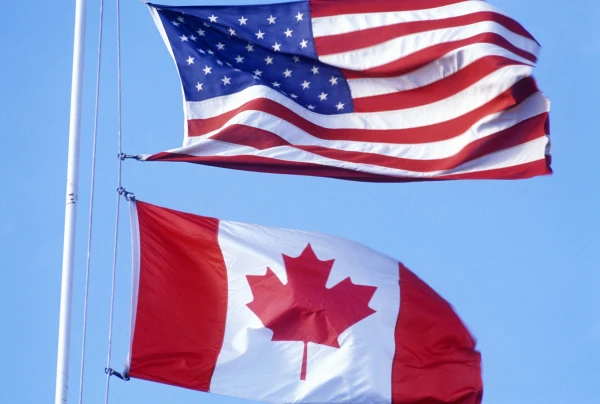
Canadian Prime Minister Mark Carney stated that Ottawa has no intention of entering into a free trade agreement with China after U.S. President Donald Trump threatened to impose 100% tariffs on Canadian goods if such a move occurs.
The statement came against the backdrop of a sharp escalation in Washington's rhetoric regarding Canada's contacts with Beijing and U.S. concerns that Canadian territory could become a bypass route for Chinese exports to the American market.
According to Reuters, Carney emphasized that Canada is adhering to its commitments under the United States-Mexico-Canada Agreement, which restricts the ability to enter into trade deals with so-called non-market economies without agreed procedures. He added that discussions about free trade with China are not taking place, and current contacts with Beijing concern specific trade issues and targeted measures, rather than a full-fledged agreement.
The new round of tension was triggered by reports of agreements between Canada and China on specific tariff issues, including areas related to electric vehicles and agricultural products. Earlier, Reuters reported on Ottawa's attempts to partially restart trade dialogue with China after a prolonged period of cooling relations. Against this backdrop, Trump publicly warned that any steps by Canada towards a large-scale deal with Beijing would lead to harsh retaliatory measures, including 100% tariffs on imports from Canada.
In the U.S. administration, the topic was supported by U.S. Treasury Secretary Scott Bessen, who linked potential measures to the risk of redirecting Chinese goods through Canada and possible pressure on the American market. In Canada, efforts were made to ease tensions by clarifying that this is not about free trade with China, but rather a narrower set of solutions to contentious issues.
The situation quickly took on a political hue, as the U.S. market remains key for Canada, and any threats of large-scale tariffs could impact exports and supply chains in the industrial and agricultural sectors. At the same time, Ottawa seeks to maintain space for trade maneuvering and working with major partners in Asia without crossing the red lines that Washington interprets as threats to its own interests.










Leave a comment