The U.S. is moving an aircraft carrier and other ships from the South China Sea to the Middle East amid deteriorating relations with Iran, writes The New York Times. The Pentagon has not yet confirmed this information.
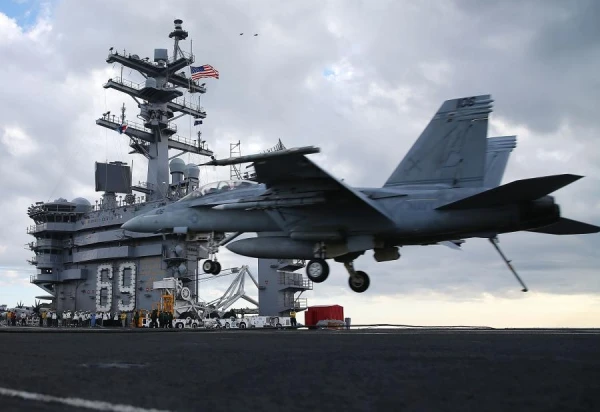
The U.S. is increasing its military presence in the Middle East amid escalating rhetoric from President Donald Trump towards Iran. According to The New York Times and the news portal Axios on Thursday, January 15, the aircraft carrier USS Abraham Lincoln, which was deployed in the South China Sea, along with other accompanying ships, is being moved to the region.
Their arrival in the Middle East is expected to take about a week. According to the NYT, additional weapons and military equipment are also being delivered there.
The Pentagon has not officially confirmed the deployment of the aircraft carrier group to the Middle East.
U.S. envoy threatens Iran with military escalation
During a United Nations Security Council meeting in New York, U.S. envoy Mike Walts warned Iran that Trump is considering all options "to end the bloodshed," referring to the harsh suppression of protests by Iranian authorities. "President Trump is a man of action, not endless talk," Walts stated.
Trump to protesters in Iran: Help is on the way
Earlier, Donald Trump, commenting on the ongoing mass protests in Iran, urged demonstrators to seize government institutions and keep track of the "names of the killers and rapists." "Help is on the way," said the White House chief. The U.S. president also noted that Washington is considering several "very tough" options for action against Tehran.
Protests in Iran have been ongoing since late December
Anti-government protests in Iran have been ongoing since December 28, 2025. Initially, the residents of the country protested against the financial crisis amid the devaluation of the local currency, but soon the economic demands of the demonstrators shifted to political ones.
The protests have spread to more than 60 cities in 25 provinces of the country. The largest demonstrations took place in Tehran, as well as in the cities of Malekshahi, Kermanshah, and Lordegan in the west and southwest of Iran. Authorities have begun to suppress the protests, but there is no reliable information about what is happening - the internet has been down in the country for several days. According to the human rights organization Iran Human Rights (IHR), based in Norway, at least 3,428 people have died during the protests, and more than 10,000 have been detained.