
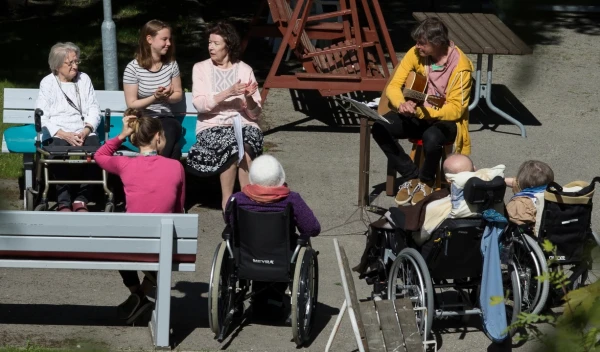
It is difficult to explain to the elderly and frail where the money has gone.
Services for the elderly and disabled are expected to face significant cuts in 2026, as welfare regions and the city of Helsinki plan to reduce spending on them by a total of more than 200 million euros. Following an official inquiry, the Finnish publication Yle found that about 140 million euros will be saved on services for the elderly and more than 60 million euros on services for the disabled.
Most regions provided data on the amounts of savings. In Helsinki, Eastern Uusimaa, and Kainuu, it was reported that the exact amount of savings has not been determined, but there are still plans for budget cuts.
The greatest savings are planned by the welfare region of Kanta-Häme, which aims to save 28 million euros on services for the elderly and 10 million euros on services for the disabled. The region plans to "reduce the number of residential care places and focus on lighter forms of cohabitation."
"We believe that spending cuts for the next year can only be reduced if the welfare region is given additional time to cover the deficit," said the head of the Kanta-Häme welfare region, Olli Naukkarinen.
Professor and care researcher Teppo Kröger finds these cuts alarming, as services for the elderly are already insufficient.
"It is quite possible that we will soon find ourselves in a crisis situation again, as in 2019, in the field of care. Serious problems with the quality of services may arise again," warns Kröger.
According to him, the cuts will inevitably lead to access to both round-the-clock care and home care becoming increasingly difficult. The number of people receiving publicly organized home care has been declining for the third consecutive year in Finland, despite the growing number of elderly people.
Kröger is also concerned about the increase in cohabitation. He states that elderly people who actually need much more intensive assistance are already being placed in this service.
Sonia Miettinен, head of research at the Association for the Protection of the Rights of People with Mental Disabilities, is also worried about the cuts in services for the disabled.
"Can these measures be implemented without jeopardizing the living conditions of people with disabilities?" Miettinен questions.
Organizations have previously stated that welfare regions seem to be interpreting the new law on services for the disabled too strictly in order to achieve savings. Miettinен notes that very few people with mental disabilities can manage in their daily lives solely with services provided under general laws.
As cost-saving measures, welfare regions mention, among other things, streamlining the service structure, developing home services, and reducing purchased services. In addition, regions plan to increase remote services, take measures regarding staff, and review staffing schedules.
Regarding services for the disabled, some regions plan to close day activity centers. Many regions also refer to the new law on services for the disabled and the opportunities it provides within the framework of cost-saving measures.
The welfare region of Pohjanmaa reports that in the future, services will be provided based on needs assessment and client service plans, primarily in accordance with general laws.
The financial situation of welfare regions is characterized by a significant deficit, so savings are being sought by cutting various services.
Significant cuts in services for the elderly were already planned for 2025.














Leave a comment