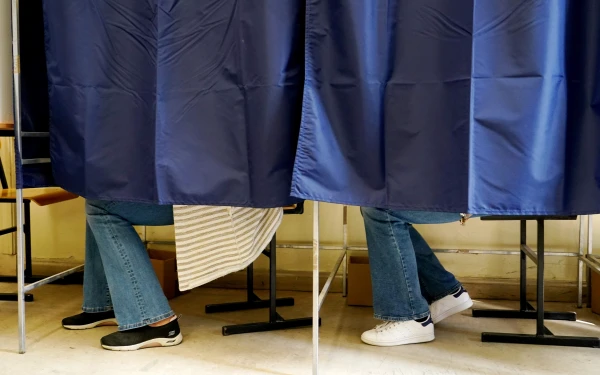
The coming year brings serious political changes for Europeans due to the upcoming elections. Euronews examines the key electoral campaigns awaiting Europeans.
2025 became a year of serious political changes. Snap elections for the Bundestag in Germany, presidential elections in Romania and Poland, a series of municipal elections in several countries... What awaits Europeans in 2026?
Hungary: The End of Orbán's Era?
Hungarians will head to parliamentary elections in April. The main intrigue is whether Prime Minister Viktor Orbán, who has been in power with his right-conservative party Fidesz since 2010, will keep his seat.
Orbán first took the post of head of the government back in 1998-2002. In the race for a sixth term, he faces a serious opponent - Péter Márki-Zay, a former Fidesz insider who later became the leader of the opposition.
Orbán and Márki-Zay do not have fundamental disagreements on social issues such as LGBTQ+ rights or migration, but Márki-Zay is firmly advocating for increasing the purchasing power of Hungarians, which is currently one of the lowest in Europe, and for improving relations with Brussels, which continues to tie multi-million payments from the cohesion fund to the rule of law.
Márki-Zay's campaign seems to resonate with voters: according to the latest polls, his party Tisza is ahead of Fidesz by 13 points. But whatever the outcome of the vote, it will have consequences not only for Hungary.
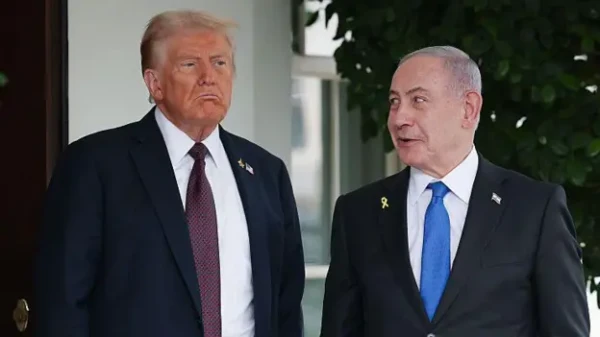
Orbán occupies a central place in the national-conservative camp of Europe, aligned in worldview with U.S. President Donald Trump, openly challenging the EU's core positions on migration, democratic standards, and, in particular, the war in Ukraine.
Budapest's reluctance to impose sanctions against Moscow or support Kyiv has deepened divisions within the bloc. A change in leadership could alter the power dynamics in the European Council at a crucial moment for Ukraine's future.
Spain, Germany, France, and Italy: Testing on the Ground
The four largest EU powers are preparing for regional and municipal elections that will show how strong the far-right positions are there and allow for an assessment of the dynamics of trust in the authorities. Elections will take place in Madrid, Berlin, Paris, and Rome.
In Spain, the Socialist Party PSOE of Prime Minister Pedro Sánchez suffered a defeat in the regional elections in Extremadura on December 21, showing its worst result in its history in its traditionally strong region.
In Madrid, Sánchez's coalition remains under pressure after several corruption scandals and has been trying to pass a budget for the third consecutive year.
The upcoming regional elections in Aragon in February, Castile and León in March, and in Andalusia, the largest region by area and population, in June will be crucial tests not only for PSOE but also for the opposition center-right People's Party (PP).
The intrigue lies in whether the PP can secure a majority before the general elections in 2027 without relying on the support of the far-right Vox party.
Marine Le Pen Found Guilty of Misappropriating European Parliament Funds
The French will go to elect their mayors on March 15 and 22. Like in Spain, these local elections will be an important indicator ahead of the presidential elections in 2027.
Today, France is experiencing a political crisis related to prolonged government instability, record-low approval ratings for President Emmanuel Macron, and the ongoing rise of the far-right National Rally (RN).
In Italy, municipal elections in major cities - Rome, Milan, Bologna, and Turin - were postponed due to the pandemic and moved to spring 2027. In 2026, Italians will only go to the polls in a small number of cities such as Venice, Reggio Calabria, Arezzo, Andria, and Pistoia.
Italians will also vote in a referendum on constitutional reform of the justice system, the date of which has not yet been set. It is seen as a kind of test of public support for Meloni's coalition ahead of the general elections in 2027.
Finally, several German states are preparing for regional elections: Baden-Württemberg and Rhineland-Palatinate in March, and Saxony-Anhalt, Berlin, and Mecklenburg-Vorpommern in September. They will also allow for an assessment of the popularity of Chancellor Friedrich Merz and the dynamics of the far-right's rise.
Sweden: The Shadow of Foreign Interference
Ahead of the September general elections, Prime Minister Ulf Kristersson wrote on platform X: "When Sweden goes to the polls next year, we will find ourselves in a serious security situation that must be taken into account."
Kristersson leads a coalition of centrists, socialists, liberals, and Christian democrats, and its level of support today is comparable to the situation in 2023. However, since then, Sweden has faced a rise in crime, fueling anti-immigrant rhetoric from the right.
But the "serious security situation" that concerns the Prime Minister primarily relates to the threat of foreign interference.
In November, the Ministry of Defense stated that it had strengthened cybersecurity measures and is on alert for election interference - similar to Germany, which this year stated that Russia would "pay" for its "hybrid attacks" on electoral infrastructure.
Such foreign interference operations are likely to benefit parties that criticize immigration, are skeptical of the EU, and take a more ambiguous stance towards Moscow - for example, the "Sweden Democrats".
The elections in Sweden are expected to be a test of the resilience of democracy in the EU following the implementation of the Digital Services Act (DSA) and the unveiling of the "Democracy Shield" initiative. They aim to block Kremlin interference.
Denmark: Under Pressure, at Home and Abroad
Having lost control of the capital for the first time since 1938, Mette Frederiksen and her Social Democratic Party now face a nationwide vote.
Analysts believe that Frederiksen's tough stance on immigration has not paid off. Polls show that the Prime Minister, who has been in power since 2019, may lose her position, and the ruling coalition, which includes partners from both left-leaning and right-leaning camps, seems increasingly fragile.
Denmark is also concerned about its territorial integrity. Earlier this month, Trump confirmed his expansionist intentions regarding Greenland, an autonomous territory of the Kingdom. Voting is expected to take place before October 2026, but the date has not yet been confirmed.
Bulgaria: No Government, but Euro Soon
As of January 1, 2026, Bulgaria will officially enter the eurozone. Since November, the country has experienced significant political instability after the government resigned amid large-scale street protests triggered by corruption and the influence of oligarchs.
Presidential elections in the country are scheduled for November 8; early parliamentary elections are expected to help Bulgarians break the political deadlock.
Latvia and Slovenia: Possible New Heads of State
Parliamentary elections in Slovenia and Latvia will take place in March and October, respectively.
In Slovenia, according to polls, the center-right opposition Democratic Party slightly leads the ruling Freedom Movement, a left-center party led by Prime Minister Robert Golob. Analysts estimate that forming a government after the elections may be difficult as several new and smaller parties enter the race.
In Latvia, the elections will determine who will succeed the current center-right coalition led by Prime Minister Evika Silina. Her party is currently in second place in the polls.
Earlier, in 2025, local elections revealed shortcomings in the IT voting system, but the Central Election Commission of Latvia stated that it had addressed them before the October voting.
USA, Brazil, Israel, and Russia: Elections with Consequences for the EU
The EU is under the influence of not only its own voters. In November 2026, Americans will head to the midterm elections for Congress, which will determine the composition of the House of Representatives and one-third of the seats in the U.S. Senate.
The outcome will show how stable the power of Trump's team is domestically and abroad.
Europeans will be closely watching the developments. Earlier this month, the U.S. administration released the National Security Strategy, promising to "cultivate resistance to the current trajectory of development in Europe in European countries" to stop its "civilizational decline".
Brazilians will also head to the polls in October 2026. The current president Luiz Inácio Lula da Silva, the favorite in the polls, will seek re-election.
The outcome of this vote will determine the future of the Mercosur agreement - a free trade deal with the EU that has been in the works for over two decades.
Parliamentary elections will also take place in Israel. They could potentially change the dynamics of power in the country, affecting the region as a whole.
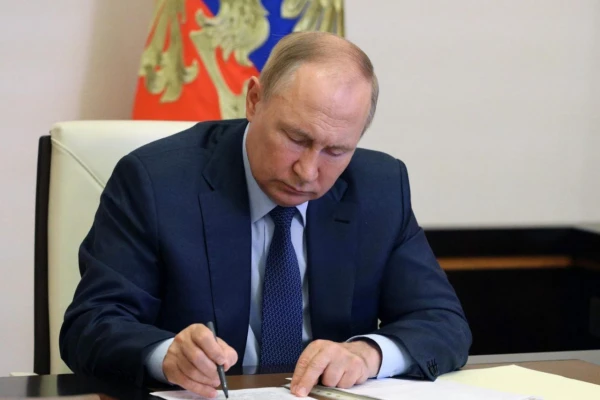
Finally, Russians will participate in the State Duma elections in September 2026. Their results are expected to be falsified again in favor of Vladimir Putin.