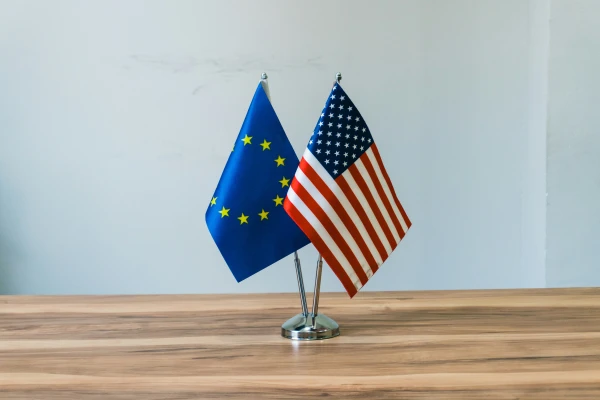
There is a high probability that in 2026, relations between the US and the European Union will become cooler, and the trend observed this year will continue, said Maris Anžans, director of the Center for Geopolitical Studies and associate professor at the University of Stradiņš, to the LETA agency.
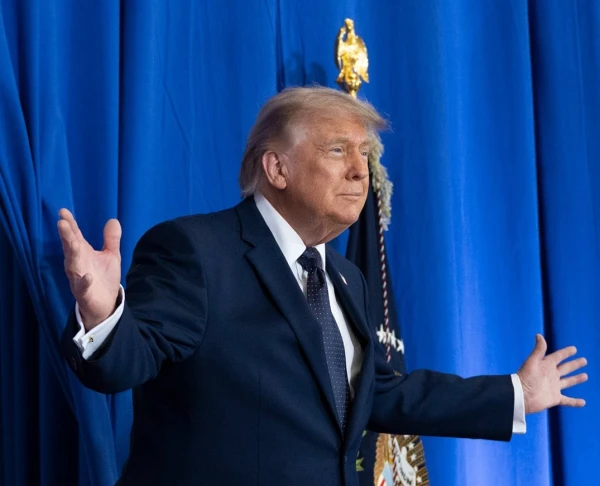
According to him, these changes are related not only to the personality of US President Donald Trump but also to broader changes in American politics as a whole. Anžans referred to the opinion of political scientist Francis Fukuyama, who noted that it was not the first Trump administration that was the exception, but rather the administration of former President Joe Biden, and that the US will no longer be the same. With these changes, Anžans stated, both Europe as a whole and Latvia will have to take them into account.
The expert pointed out that this trend is also reflected in the National Security Strategy of the Trump administration, which he believes is unfavorable for Europe, including the Baltic states. Anžans noted that in the strategic documents of the Biden administration, Russia is clearly named a threat, whereas in Trump's strategy, greater emphasis is placed on restoring strategic stability in relations with Russia. This, in his opinion, may indicate the US's desire to "reset" relations with Moscow.
As a possible precursor to such an approach, he mentioned events in Belarus, including several waves of political prisoner releases and the easing of certain sanctions. Anžans emphasized that Trump views international relations more as a businessman, using tariffs as a tool of pressure, while making little distinction between allies and "non-allies."
He also noted that the Trump National Security Strategy reaffirms the Monroe Doctrine, emphasizing that the presence of other world powers in the Western Hemisphere — North and South America — is undesirable. The strategy focuses on China, while Europe is mentioned later and criticized for its migration policy. According to Anžans, this criticism has been heard in Europe, and several countries have already significantly tightened their immigration policies.
The expert added that Europe still holds great importance for the US as a market, especially in the services sector. According to him, US technology companies view the EU as a crucial market since Europe remains a solvent consumer despite Trump's critical attitude towards the EU. Anžans believes that American entrepreneurs are well aware of the significance of the European market, as the US domestic market is insufficient, and other potential markets — such as China and India — pose additional challenges.
At the same time, he noted that the US is dissatisfied that EU regulations and sanctions periodically affect American technology companies, and also criticizes Europe on issues of freedom of speech — although, in the expert's opinion, these claims are unfounded. According to him, without the European market, it would be significantly more difficult for the US to maintain its global influence.