
Decisions on strategic strike systems may be put on hold.
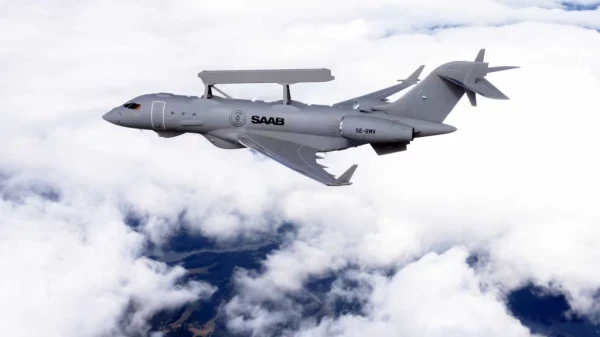
The combat aviation of Ukraine will be strengthened. Most likely, in the near future, European partners will be able to equip the country with SAAB long-range radar detection aircraft, which will tighten the country's air defense and allow for early warning of threats, such as Shahed attacks, as well as neutralize them even on enemy territory.
What does Ukraine need most to counter enemy aviation? First of all, long-range air-to-air missiles with a range of over 200 km.
Could Ukraine face problems with military assistance from allies? The transfer of strategic strike systems may be put on hold. Europe is objectively unable to fully meet all Ukrainian needs. Moreover, there is a threat that the U.S. will significantly reduce the PURL program. At the same time, despite this, Ukraine has already created its strike capabilities – its own long-range drones, naval drones, and precision systems that operate over hundreds of kilometers and change the rules of the game.
This opinion was expressed in an exclusive interview with OBOZ.UA by aviation expert Anatoliy Khrapchynskyi.
– President Zelensky announced the strengthening of Ukraine's combat aviation. Of course, he did not disclose the details. In your opinion, in which direction should the strengthening occur today? What do we need most today, particularly in the context of air defense?
– When it comes to air defense, the key is the strengthening with SAAB long-range radar detection aircraft. They will allow for a significantly wider and denser radar field with greater coverage of the territory. Such platforms allow for early warning of threats, particularly the launch of Shaheds, by obtaining precise target coordinates. This would enable intercepting them even with interceptor drones while they are still approaching, including over enemy territory. This is just one example, but it is very indicative.
As for the aviation component as a whole, the priority is affordable means of destruction and quality detection of aerial targets. This includes, in particular, inexpensive missiles for F-16s and a possible increase in supplies of other aviation armaments.
At the same time, when talking about air defense, one cannot overlook the Russian aviation dropping KABs. For example, on the night of December 11, Russian planes struck Sumy region, flying almost close to the border. They rely on the absence of air defense systems in this area capable of hitting them.
Therefore, if we are talking about countering enemy aviation, Ukraine needs long-range air-to-air missiles that operate beyond the horizon – over 200 km. These include the MBDA Meteor missile (a Franco-British-Italian-Swedish development). However, it is only compatible with Gripen and Rafale aircraft. The F-16 cannot use it, but it has AIM-120 D series missiles with a range of up to 185 km.
In any case, for effective defense, a high-quality radar system is needed. And of all the realistic options we can obtain in the near future, the first candidates remain long-range radar detection aircraft.
– Should we also discuss with partners the means to strike enemy aviation directly at enemy airfields?
– That is already another level; we are talking about long-range weapons and means of preemptive strikes. Essentially, we are discussing strikes on military airfields with surface-to-surface or air-to-surface missiles with extended range. For example, the Midstrike missile, capable of operating at depths of up to 600 km.
This category also includes TAURUS, Storm Shadow, and ATACMS. Additionally, European partners are discussing the possibility of transferring additional means of destruction to expand Ukraine's long-range capabilities.
However, in the current political situation, where a conditional peace plan is actively debated, it should be understood that decisions on strategic strike systems may be put on hold.
– The winter period is traditionally especially difficult. In your opinion, what could partners provide us now to strengthen our air defense, particularly possibly in aviation components, to survive this winter?
– First and foremost, we are talking about additional air defense systems, especially in the ballistic countermeasure segment. But it is important to distinguish what we want to receive and what can realistically be provided to us. If we talk about what is possible, the options are quite limited.
As for aviation, the virtually only realistic option is 14 decommissioned Gripen aircraft from Sweden. When it comes to air defense, despite existing decisions, systems are produced significantly less than needed. Even if we receive SAMP/T or Patriot, systems capable of intercepting ballistic threats, it should be noted that missiles for them are produced in extremely insufficient volumes.
Europe is limited in its ability to provide certain types of weapons because its military-industrial complex has not yet transitioned to large-scale production. Accordingly, it is difficult to expect a significant increase in the number of air defense systems, as there will not be enough interceptors. This creates a very painful gap between needs and capabilities.
Trump may deprive Ukraine of assistance, but our strike capabilities are already changing the rules of the game. Interview with Khrapchynskyi
We must honestly admit that Europe cannot fully supply us until it expands its own production capacities. A unified strategy for the development of the defense industry is needed to increase production rates.
Therefore, we need to be realistic and talk about what is possible right now. This includes partial strengthening of the aviation fleet through old platforms, potential Gripen or Mirage, as well as the transfer of MiG-29s, which is currently being discussed in Poland.
It is also important to understand whether Ukrainian infrastructure is ready to accept new types of aircraft and whether there are enough trained pilots. Here, parallel programs, pilot and engineer training, preparation of aviation specialists, and increasing the capabilities of using guided aerial bombs JDAM, Hammer, and others are critically important. Potentially, this could be a very broad package.
Therefore, right now, in my opinion, several different tracks are being discussed. Most likely, it will be about a comprehensive strengthening of Ukraine with the specification of already existing agreements. For example, in cooperation with France, more concrete decisions regarding SAMP/T systems or Rafale aircraft can be expected. That is, these are no longer just memorandums, but steps indicating real intentions.
– The last question – regarding the United States. How much does the current hard stance of the Trump administration affect our aviation component?
– Most likely, the next step from the Trump administration could be further restrictions on assistance to Ukraine. The United States has already effectively minimized support; a significant portion of weapons for Ukraine is procured by Europe from the U.S. under the PURL program, and this program may be significantly reduced. We must honestly admit that the current pressure from Trump is directed not only at Ukraine but also at Europe itself.
At the same time, it is important to understand another dimension. Despite the political fluctuations in Washington, Ukraine has already created strike capabilities that no one in the world expected. We are talking about our own long-range drones, naval drones, and precision systems that operate over hundreds of kilometers and change the rules of the game. This is particularly contrasted with the fact that in the 1990s, we lost our nuclear arsenal, strategic aviation, air-launched cruise missiles, and key technologies, effectively depriving us of a deterrence strategy.
Today, Ukraine demonstrates that it is capable of restoring and even rethinking its potential – creating a new class of precision weapons that deter Russia and simultaneously cause certain concerns in the world, as this is already another level of autonomous strike systems.












Leave a comment