

The Prime Minister of Hungary strongly condemned the EU's decision to indefinitely immobilize the assets of the Russian Central Bank, which many see as a way to bypass Budapest's veto.
Hungarian Prime Minister Viktor Orban criticized the European Union, which announced on Thursday the indefinite immobilization of the Russian Central Bank's assets - a central element of the reparations loan to Ukraine.
"Brussels is crossing the Rubicon today," Orban wrote in a post published on Friday on social media. "The subject of the vote is the frozen Russian assets, for which EU member states have voted every six months, making unanimous decisions. With today’s procedure, Brussels cancels the requirement for unanimity with a single stroke of the pen, in an obviously illegal manner."
Creative solutions against creative vetoes
The long-term immobilization was agreed upon by ambassadors on Thursday afternoon under Article 122 of the EU treaties, which requires only a qualified majority from member states and bypasses the European Parliament.
The law prohibits the transfer of assets amounting to €210 billion back to the Russian Central Bank. The bulk of the assets, €185 billion, is held in Euroclear, the central securities depository in Brussels. The remaining €25 billion is held in private banks.
Until now, these funds had been immobilized under the standard sanctions regime, which depends on the unanimity of all 27 countries and is subject to the risk of individual vetoes.
But last week, the European Commission decided to apply Article 122 to keep the assets away from Russia in the foreseeable future. Article 122 had previously been used in emergency economic situations, such as the COVID-19 pandemic and the energy crisis.
The Commission argued that the shocks caused by Russia's full-scale invasion of Ukraine had a "serious economic impact" on the EU as a whole, causing "serious supply disruptions, increased uncertainty, rising risk premiums, and decreased investment and consumer spending."
The bloc also pointed to a number of hybrid attacks in the form of drone incursions, sabotage, and disinformation campaigns.
"Today’s decision will end the rule of law in the European Union, and European leaders will place themselves above the rules," Orban wrote. "Instead of ensuring compliance with EU treaties, the European Commission systematically violates European law."
Since 2018, Hungary has been under a procedure under Article 7 - a process aimed at addressing serious and systematic violations of the fundamental values of the European Union, including the rule of law.
A significant portion of EU funds has also been withheld under the budget conditionality mechanism, launched in 2022, which links access to billions of EU funds to reforms aimed at addressing rule of law violations. Hungary, under Orban's leadership, has systematically used the unanimity voting to obstruct decision-making in the EU or to use it as a bargaining chip.
"We are the sand in the mechanism, a stick in the spokes, a thorn under the nail," Orban said in 2024, speaking about his country’s role in EU decision-making.
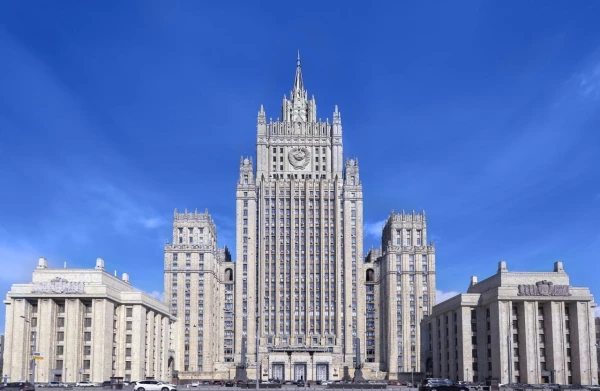
Russia also condemned this move. In a brief statement released on Friday morning, the Russian Central Bank announced the initiation of legal proceedings for "damages" and accused Euroclear of obstructing the release of assets.
Later on Friday, the European Commission dismissed this claim, calling it "speculative" and unfounded.













Leave a comment