
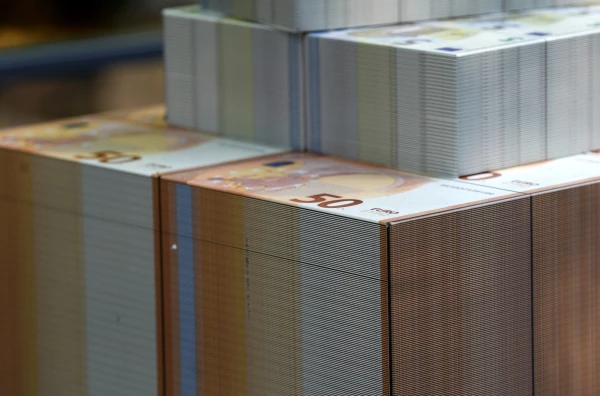
EU countries have agreed on a legal basis for the use of Russian state assets in the interests of Ukraine. The first step will be an indefinite ban on their return to Russia, the Danish government reported.
Germany and other European Union countries have reached an agreement to adopt a decision by a majority vote to create a legal framework for the use of Russian state assets in the interests of Ukraine. At the first stage, a decision is planned to be made on an indefinite ban on the return of frozen Russian funds in the EU, the rotating presidency of the EU, Denmark, reported on Thursday, December 11.
The aim is primarily to exclude the possibility that any EU country, such as Hungary, could use a veto on EU sanction decisions to achieve the unblocking of Russian assets. Currently, the funds of the Central Bank of Russia are frozen by EU sanctions, which must be unanimously extended every six months.
Condition for the Return of Funds
This arrangement is seen as an obstacle to the plan to allocate long-term loans to Ukraine from the income generated by Russian assets and to allow the return of these funds to Russia only if it pays reparations to Ukraine after the end of its aggression. To freeze Russian assets indefinitely, Germany and other EU countries are relying on Article 122 of the Treaty on the Functioning of the European Union. This article provides for measures to be adopted by a qualified majority in the event of serious economic difficulties.
The draft EU legal act states that Russia's war against Ukraine continues to create serious economic challenges, and the transfer of funds to Russia must be prevented with the utmost urgency to limit damage to the EU economy. This document is planned to be adopted before the EU summit scheduled for next week.
Belgium's Position
By this time, German Chancellor Friedrich Merz and other supporters of the initiative hope to convince Belgian Prime Minister Bart De Wever to join the plan to use the assets for loans to Ukraine. Without Belgium's support, implementation is considered extremely difficult, as the overwhelming majority of the Russian funds intended for use are managed by the Belgian company Euroclear. This concerns approximately €185 billion out of €210 billion held in the EU.
The Belgian government is currently blocking the plan, citing legal and financial risks. Among other things, it fears that Russia may retaliate and expropriate European individuals and companies. Prime Minister De Wever previously set three conditions under which Belgium would be willing to support the initiative despite potential risks. He demanded guarantees of collective responsibility from all EU countries for possible risks and ensured that sufficient financial guarantees are in place from day one of the plan's implementation to meet potential obligations.
Furthermore, he insists on comprehensive protection of liquidity and risks for all citizens and companies affected by the plan, as well as the participation of all EU states where the Central Bank of Russia's frozen assets are located. According to the European Commission, in addition to Germany, they are located in France, Sweden, and Cyprus.









Leave a comment