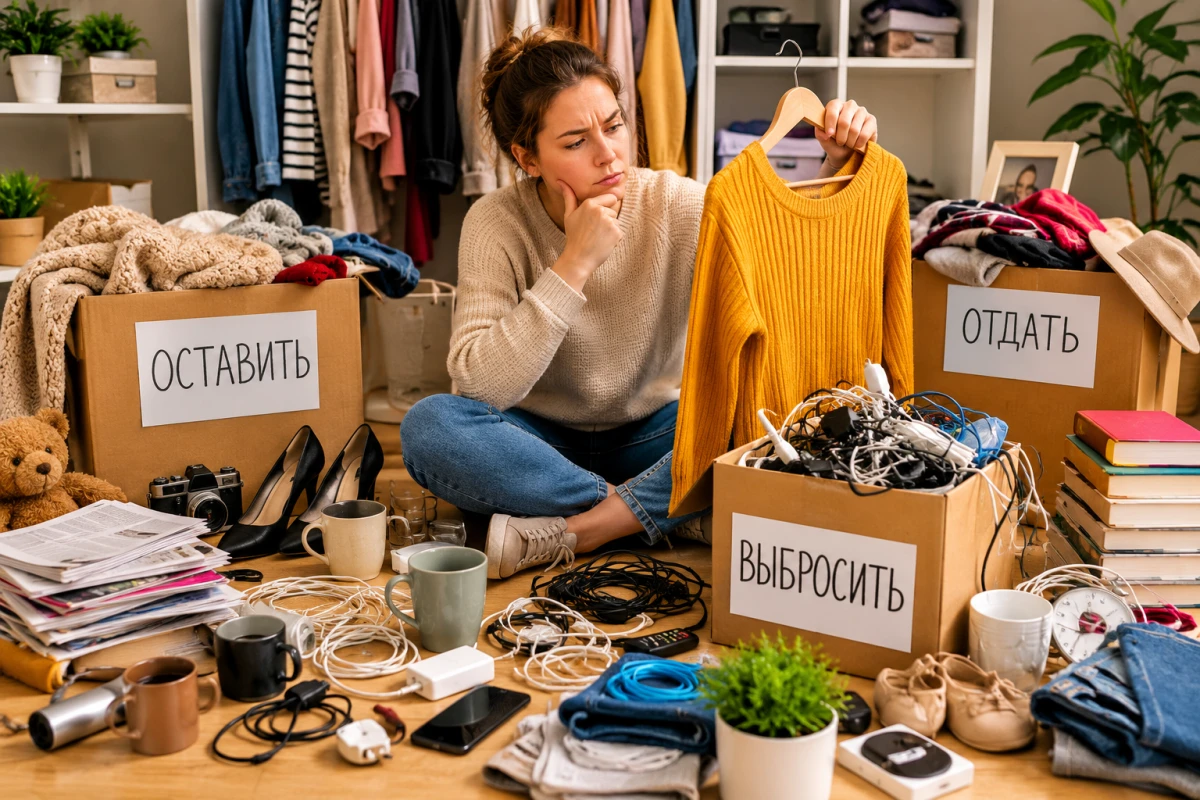
Every home has items that take up space for years under the pretext of "just in case." Old cables, ill-fitting clothes, appliance boxes, and broken items gradually take over closets, balconies, and storage rooms. Space organization experts are convinced that most of these items will never be used and only create a sense of disorder and psychological overload.
“People often keep things not because of their actual value, but because of the emotions associated with them. But memory does not live in objects — it stays with us regardless of whether an old vase is sitting on the shelf,” note space organization specialists.
Cables Whose Purpose No One Remembers
Almost every apartment has a box of chargers, adapters, and cables from long-discarded devices. If you can’t remember what device a cable is for, it’s likely you won’t need it anymore.
Clothes “for the Future”
Jeans two sizes smaller, a dress from a decade ago, or a suit that no longer fits rarely serve as motivation for change.
“Clothes that a person cannot wear now often evoke feelings of guilt and disappointment rather than motivate them to achieve their goals,” psychologists believe.
Boxes from Household Appliances
After the warranty period ends, boxes from televisions, microwaves, and other appliances usually lose their practical value but continue to take up useful space.
Old Instructions and Unnecessary Documents
Today, most instructions can be easily found online. Paper manuals, old warranty slips, and receipts from years ago often just gather dust.
Broken Items Waiting for Repair for Years
Lamps, clocks, furniture, and appliances that have been lying around waiting for repair for months or even years most often remain broken.
“If you haven’t found the time to fix something in the last few months, the likelihood that it will happen later is extremely low,” say household organization specialists.
Gifts That Don’t Bring Joy
Vases, figurines, and souvenirs given with the best intentions don’t have to be kept forever if you don’t like them and don’t use them.
Expired Cosmetics and Medications
This is not only useless but also potentially dangerous clutter. Expired medications can lose their effectiveness, and cosmetics can become a source of bacteria.
Old Magazines and Newspapers
Stacks of printed publications are rarely reread but are great at collecting dust and taking up space.
A Bag of Bags
A familiar symbol of hoarding for many. If the number of bags keeps growing, it’s worth keeping only a small supply for household needs.
Dishes “for Special Occasions”
Sets that are used once every few years often turn out to be a useless burden.
“A special occasion may never come. If you like something, use it now instead of putting life off for later,” experts advise.
Sports Equipment of Unfulfilled Plans
Dumbbells, exercise machines, and yoga mats that haven’t been used in over six months usually remain unwanted.
Outdated Electronics
Old phones, cameras, and laptops rarely acquire collectible value, yet they take up space and gradually turn into electronic waste.
Children’s Things That Have Long Been Outgrown
Keeping a few sentimental items is quite enough. The rest of the clothes and toys can be passed on to those who will truly benefit from them.
How to Know When It’s Time to Throw Something Away
Experts suggest a simple test: if an item hasn’t been used in over a year and has no special practical value, it’s likely you no longer need it. It’s also helpful to ask yourself: would you take this item with you if you moved?
The fear of the phrase “what if it comes in handy” causes people to keep dozens of unnecessary items. However, cluttered space does not make life more convenient — on the contrary, it creates additional stress and a sense of disorder.
“Every unnecessary item requires attention, space, and energy. By freeing the home from excess, a person frees up space not only around them but also in their own mind,” specialists note.
Sometimes the best way to tidy up is to honestly admit that the so-called “just in case” never actually happened.