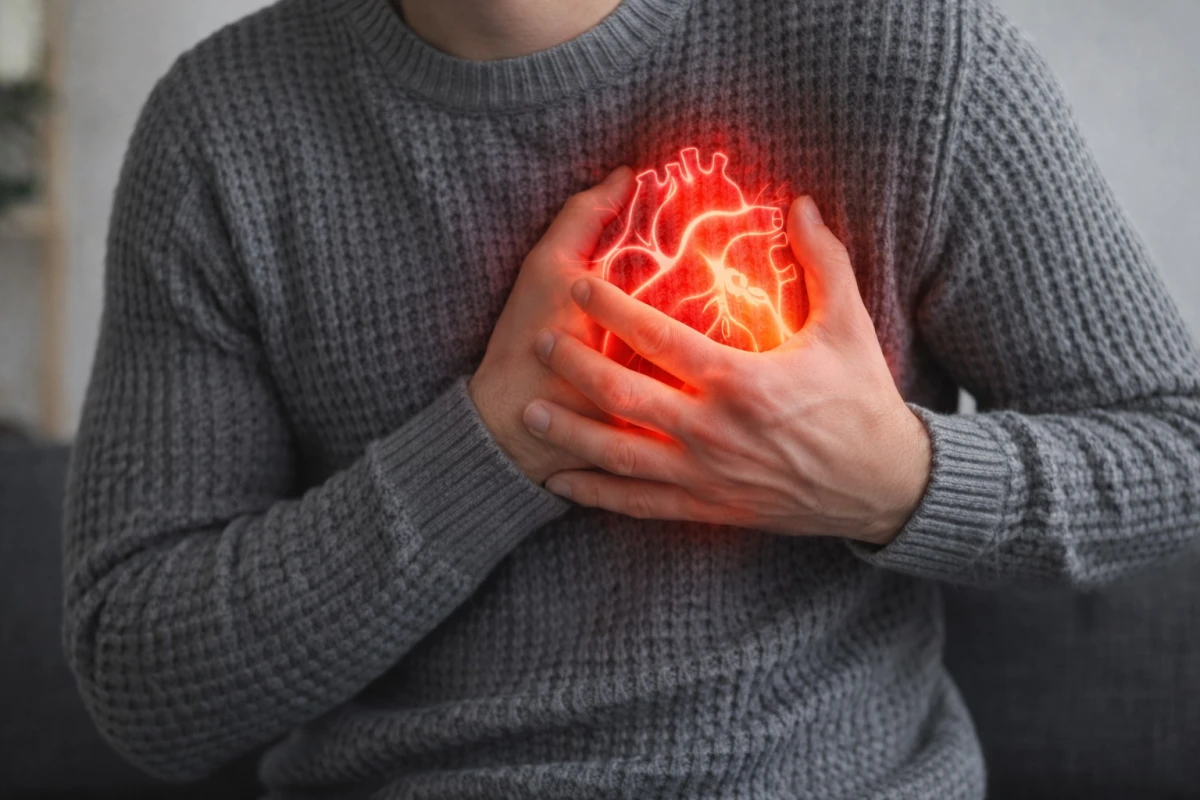
When it comes to myocardial infarction, most people envision a sharp pain in the chest radiating to the left arm or shoulder. However, in practice, a heart attack does not always manifest this way. Sometimes its symptoms are so atypical that a person mistakes them for stomach issues, an asthma attack, or even ordinary fatigue.
Classic and Hidden Symptoms
Besides pain behind the sternum, a heart attack can be accompanied by sudden weakness, dizziness, cold sweat, shortness of breath, nausea, or vomiting. Some people experience intense anxiety and unexplained fear.
The classic variant of a heart attack with pronounced chest pain is indeed the most common, especially among young and middle-aged individuals. However, the absence of severe pain does not mean that a heart attack is not occurring.
"Many patients are convinced that a heart attack must be accompanied by severe chest pain. In fact, up to one-third of cases can present with atypical symptoms, causing people to seek help too late," notes cardiologist Anton Rodionov.
Why a Heart Attack Sometimes Occurs with Little or No Pain
In some cases, pain sensations may be weak or absent altogether. This can happen after a previous heart attack, when part of the heart muscle has already been replaced by connective tissue and sensitivity decreases.
Additionally, pain perception may be impaired in diabetes and some other conditions affecting the nervous system.
In women, a heart attack often manifests less typically than in men. Instead of pain, there may be pronounced fatigue, weakness, shortness of breath, and a feeling of lack of strength even for usual tasks.
"People with diabetes should pay particular attention to their well-being. They often develop what is known as a silent heart attack, where heart damage occurs almost without characteristic sensations," explains cardiologist and medical science candidate Yaroslav Ashikhmin.
A Heart Attack That Can Be Mistaken for Heartburn
Sometimes the symptoms resemble digestive issues.
If the pain behind the sternum is mild, a person may mistake it for heartburn, gastritis, or the effects of overeating. Additional confusion is caused by nausea, vomiting, and general malaise, which can also accompany a heart attack.
"If usual heartburn medications do not help, and the discomfort is accompanied by weakness, cold sweat, or shortness of breath, it is necessary to rule out heart pathology. Sometimes this is how a myocardial infarction manifests itself," warns cardiologist Herman Gandelman.
When a Heart Attack Resembles Arrhythmia
During a heart attack, heart rhythm disturbances often occur.
A person may feel a strong heartbeat, irregular heartbeats, weakness, dizziness, and cold sweat. Occasionally, fainting occurs. If there is no pronounced chest pain, this variant of a heart attack can easily be confused with a typical episode of arrhythmia.
An Attack That Resembles Asthma
In some cases, the main symptom becomes severe shortness of breath.
This occurs with the development of acute heart failure, when the heart cannot pump blood effectively. There may be a feeling of suffocation, choking episodes, and cough, sometimes with frothy sputum.
Due to the similarity of symptoms, this condition can be mistaken for bronchial asthma or a severe allergic reaction.
"Shortness of breath, a feeling of lack of air, and cough can be symptoms not only of lung disease. Sometimes this is how heart failure develops against the background of a myocardial infarction," says professor-cardiologist Simon Matzkeplishvili.
Symptoms Similar to Stroke
Sometimes a heart attack is accompanied by sudden severe headache, dizziness, and elevated blood pressure.
Some patients experience photophobia, weakness, and malaise resembling neurological diseases. Therefore, this form of heart attack can be mistakenly taken for a stroke or hypertensive crisis.
A Heart Attack Disguised as Fainting
With extensive damage to the heart muscle, cardiogenic shock can develop — one of the most dangerous complications of a heart attack.
In this case, blood pressure drops sharply, the skin becomes pale, hands and feet feel cold, and there is pronounced weakness. Sometimes a person loses consciousness, and those around may think it is just a common fainting spell.
However, this condition requires immediate medical assistance.
Can a Heart Attack Occur Without Symptoms?
Yes. Doctors identify what is known as a silent heart attack, which can occur almost unnoticed.
A person does not experience pronounced pain and continues to lead a normal life, unaware of damage to the heart muscle. Such cases are often discovered accidentally during an electrocardiogram or other examinations.
Despite the absence of symptoms, the risk of serious complications and recurrent heart attacks remains high.
When to Call Emergency Services Immediately
Seek medical help immediately if you experience:
- pain or discomfort in the chest;
- sudden severe weakness;
- shortness of breath or a feeling of lack of air;
- cold, clammy sweat;
- heart rhythm disturbances;
- dizziness or loss of consciousness;
- a sudden deterioration in well-being without an obvious cause.
"The golden rule of cardiology is simple: it is better to call for an ambulance ten times unnecessarily than to miss a heart attack once. In the first hours after an attack, the chances of preserving heart muscle are maximized," emphasizes academician and cardiologist Evgeny Shlyakhto.
Even if you are unsure whether it is a heart attack, it is better to err on the side of caution and call for an ambulance. In the case of a heart attack, every minute counts, and timely treatment can save a life and significantly reduce the risk of severe complications.