
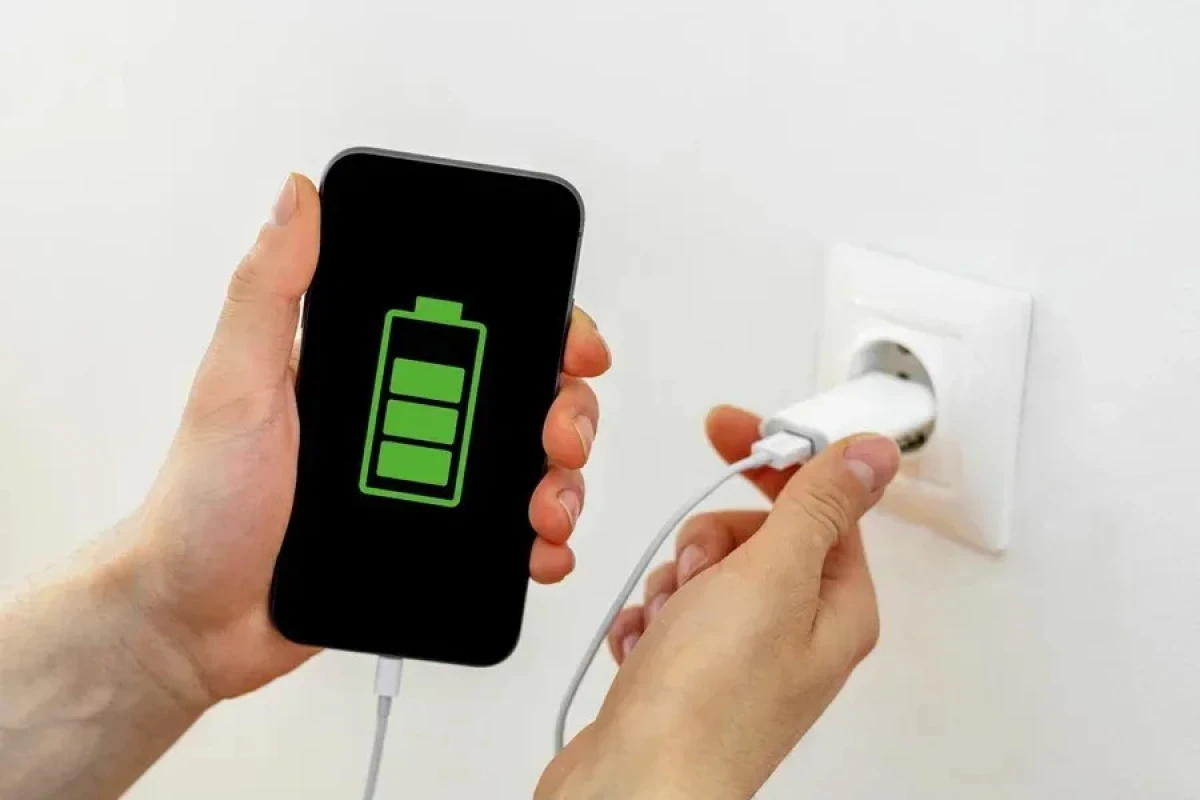
Even such a familiar procedure as charging a smartphone has its nuances. Experts explained why the order of connecting the charger can affect the electronics' performance and what mistakes most often shorten the battery's lifespan.
Most people automatically plug their phone into the charger without thinking about the order of actions. However, experts claim that the correct connection sequence can help reduce the load on the device's electronics and extend the battery's lifespan.
What Experts Recommend
According to specialists, you should first connect the charger to the outlet and only then connect the cable to the smartphone.
The reason is that when the power adapter is plugged into the socket, a brief voltage spike can occur. If the phone is already connected to the charger, this impulse passes through its electronic components and battery.
When the adapter is connected to the outlet first, it has time to stabilize the power supply before energy starts flowing to the smartphone.
What Order is Considered Correct
Manufacturers typically recommend the following sequence:
-
connect the adapter to the outlet;
-
connect the cable to the adapter;
-
connect the cable to the phone.
This algorithm minimizes the potential impact of voltage spikes on the device's power controller.
At the same time, experts note that an occasional violation of this rule will not lead to immediate smartphone failure. However, with regular repetition, the load on the electronic components can gradually accumulate.
The Main Danger — Not the Connection Order
Experts emphasize that the battery suffers much more from the use of low-quality chargers than from connection errors.
Cheap adapters of unknown origin often lack adequate protection against overheating, short circuits, and voltage fluctuations. As a result, the device may heat up more, and the battery may lose its capacity faster.
Don’t Forget to Check the Cable
The condition of the charging cable also plays an important role. Damaged insulation, worn contacts, or wire breaks can cause unstable power supply.
Constant micro-failures during charging create additional stress on the battery and can accelerate its wear.
What Really Helps Extend Battery Life
Experts recommend using original or certified chargers, avoiding overheating of the smartphone, and monitoring the condition of the cable.
Moreover, recent studies show that for lithium-ion batteries, maintaining a charge in the range of approximately 20 to 80 percent, without regular deep discharges, is considered most favorable.
The order of connecting the charger does matter, but the quality of accessories, the device's temperature, and overall charging habits have a much stronger impact on battery lifespan. Using a reliable charger and a functional cable remains the simplest way to keep the battery in good condition for many years.
















Leave a comment