
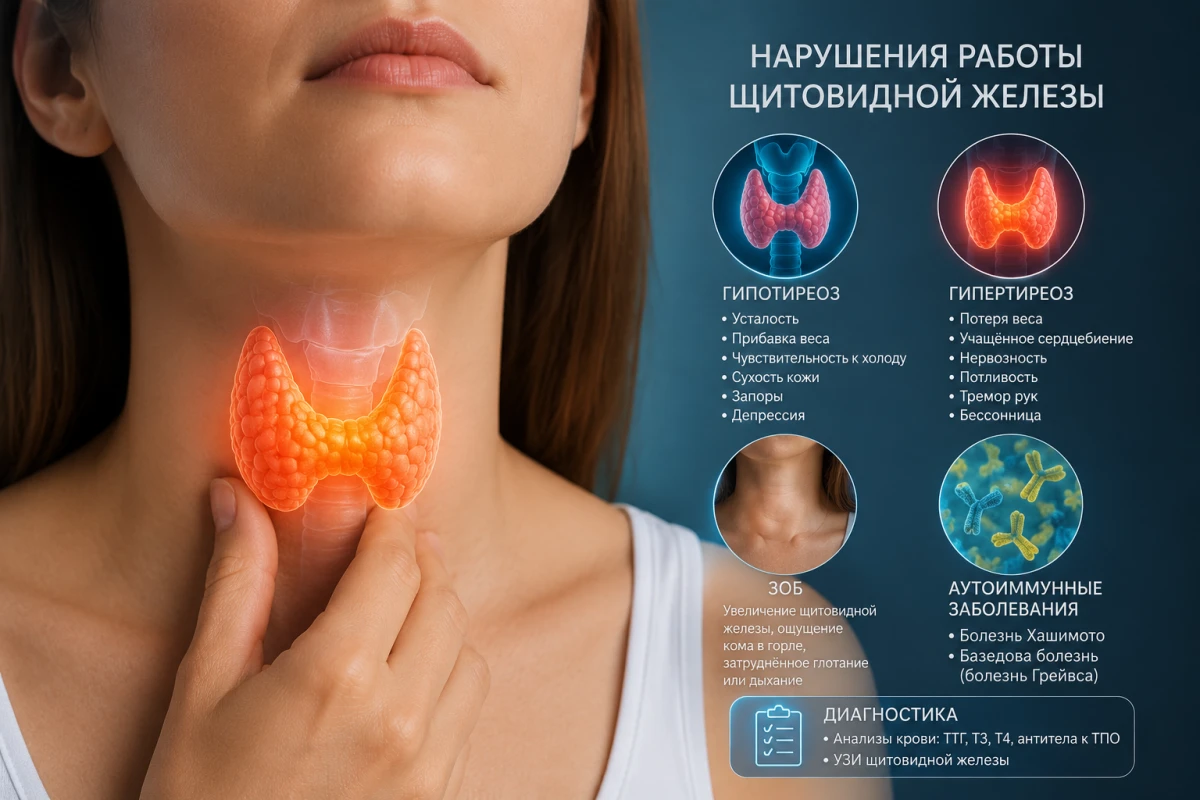
Hair loss, constant fatigue, apathy, and unexplained weight gain may be related not only to stress or age but also to thyroid dysfunction. Specialists explained which test helps to first identify potential problems with the endocrine system.
The main suspect
The main suspect is the thyroid gland. This small butterfly-shaped organ is a true thermostat and speed regulator for the entire body. It produces the hormones thyroxine (T4) and triiodothyronine (T3), which determine how quickly processes will occur in each of your cells — from burning calories to renewing skin and hair growth, reports Doctorpiter.
When the function of the thyroid gland decreases (a condition called "hypothyroidism"), the entire body switches to energy-saving mode. Imagine that you have set all the systems in your house to economy mode: heating to a minimum, light only in one room, movement slowed down. This is exactly what happens inside you.
Which test to take
Laboratories offer dozens of options: T3, T4, TSH, antibodies... How to avoid overspending on check-ups and not take unnecessary tests? The answer is clear: the first and most important test should be the thyroid-stimulating hormone (TSH). Why this one? TSH is produced not by the thyroid gland itself, but by the pituitary gland — the main gland in the brain.
The pituitary gland acts like a smart sensor-regulator. It constantly scans the level of thyroid hormones in the blood. If the thyroid is not functioning well and there are low levels of hormones (T4 and T3), the pituitary gland immediately reacts: "Urgently increase production!" — and releases a large amount of TSH into the blood to stimulate the gland. TSH is like a smoke detector: it signals a problem even before you see the actual flame. However, for a comprehensive assessment of thyroid function, monitoring free T4 and free T3 tests, the concentration of antibodies to the thyroid gland, and ultrasound are also required. All these results will provide a complete picture and help assess the functions of the endocrine organ.
What to do
Thyroid problems are successfully treated and compensated today, but the most important and correct step when suspecting endocrine disorders is to consult an endocrinologist. Only a specialist can correlate your symptoms with test results (TSH, free T4, and T3) and prescribe the right strategy. Often, along with hormones, it is necessary to correct deficiencies in iron (ferritin) and vitamin D, without which recovery will be slow.
Thus, if you have noticed this triad (hair loss, weight gain, and apathy), your first step should be simple and inexpensive — to take a blood test starting with TSH. This indicator can save you months of visiting doctors and thousands of rubles on unnecessary hair vitamins and miracle diets, as it will point to the true cause of what is happening.
Doctors remind us that the symptoms of hypothyroidism often develop gradually and remain unnoticed for a long time. Timely checking TSH levels and consulting an endocrinologist helps to detect thyroid dysfunctions more quickly and avoid prolonged deterioration of well-being.











Leave a comment