
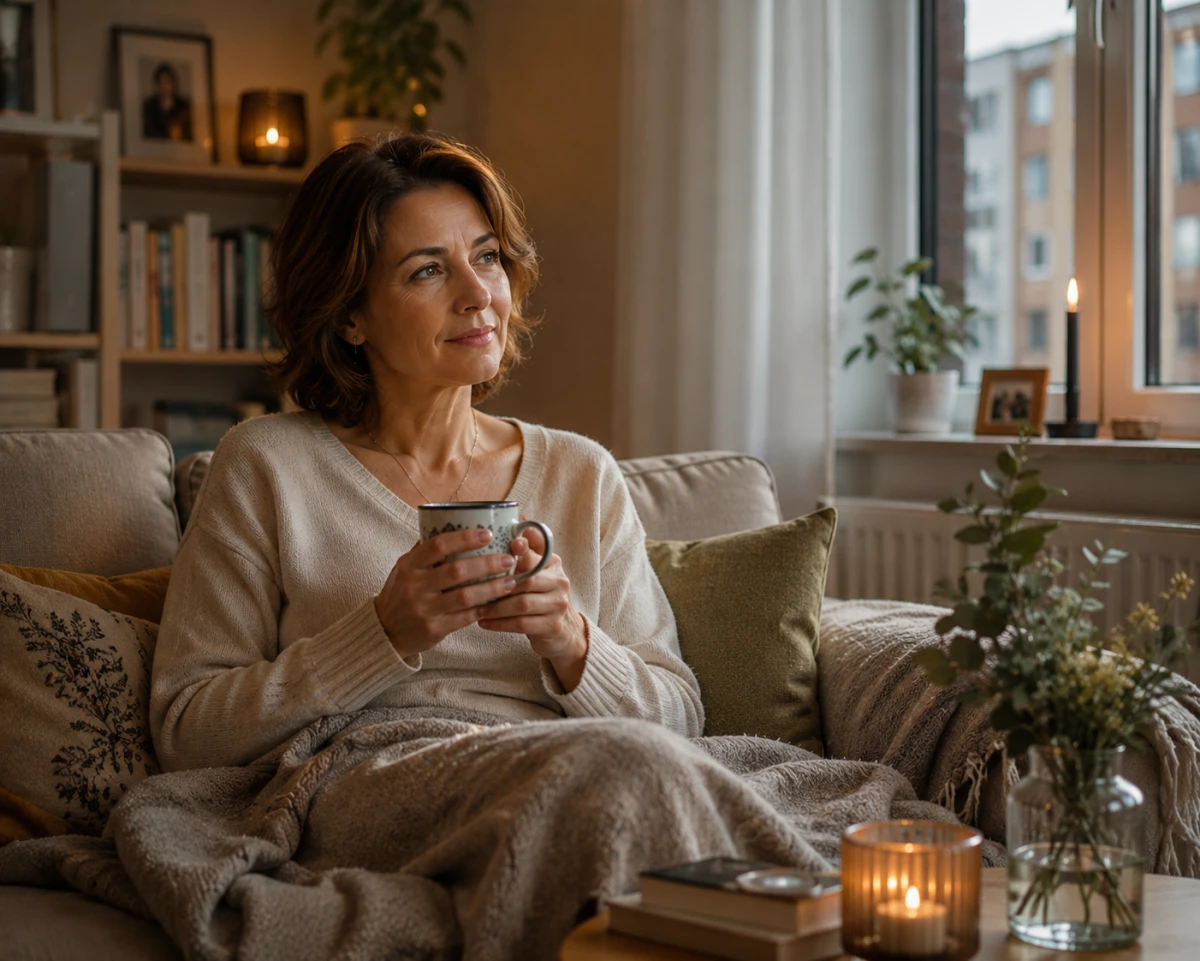
Emotional poverty is not manifested in the absence of expensive things or luxurious renovations. Much more often, the atmosphere of the home, the attitude towards the space, the habit of caring for oneself, and the ability to create a sense of coziness and safety speak about a person's inner state.
Some homes are modest, but you want to stay in them longer. Others are perfectly decorated apartments that leave a strange feeling of coldness and inner emptiness.
Because space almost always reflects not the level of income, but the state of a person. How we treat our home often shows how we treat ourselves, our loved ones, our lives, and even our own emotions.
And emotional poverty is not the absence of expensive things. Rather, it is a state in which warmth, attention, liveliness, respect for oneself and for those nearby disappear.
Here are the things that most often reveal this.
Things "for show" that no one uses
Sometimes a home turns into a decoration for someone else's gaze. Beautiful dishes sit unused for years "for special occasions," the perfect sofa cannot be touched, and the space exists not for living but for making an impression.
Behind this often lies not a love for aesthetics, but a fear of appearing insufficiently successful. When a person cares more about making an impression than actually living in their home, the space gradually loses its sense of warmth and authenticity.
Complete lack of coziness — even in small details
It’s not about expensive renovations, but about the atmosphere. A blanket, a favorite mug, soft light, photographs, books, the smell of food, living details — all those things that make a space "human."
Sometimes a home has everything except the feeling of life. And this often indicates inner emotional burnout or a habit of existing in a state of constant tension.
Demonstrative luxury with inner emptiness
There are people who literally "scream" their status through their interior. Everything must look expensive, fashionable, perfect — but at the same time, there is no individuality, warmth, or character in the space.
Psychologically, this is often linked to an attempt to compensate for inner insecurity through external symbols of significance. When a person desperately needs to prove their worth through things, the home begins to resemble a showcase more than a place for living.
Atmosphere of constant irritation
Even the most beautiful interior does not hide the main thing — the emotional background of the home.
If there is a constant feeling of tension, fear of making mistakes, irritation, shouting, or cold alienation in the space, it gradually becomes part of the atmosphere. And people pick up on this almost instantly, even if everything looks fine on the surface. A home always retains the emotional imprint of those who live in it.
Disregard for things and space
It’s not about perfect cleanliness or perfectionism. It’s about the general feeling: a person doesn’t care what condition they live in.
Broken things, chaos, dirt, accumulated years of unnecessary items sometimes reflect an inner state — fatigue, apathy, emotional neglect.
Because caring for the space is often a form of caring for one’s own psyche.
Complete absence of something "alive"
Plants, books, creativity, traces of interests, memories, things with a history. Sometimes a home looks as if no one truly lives in it — just sleeps.
A space without individuality often creates a feeling of emotional emptiness. Because a home becomes an extension of a person only when it contains traces of their inner world.
A home where it’s impossible to relax
This is the main sign. Sometimes an apartment is expensive, beautiful, and "correct," but the body remains tense. You don’t want to sit freely, take something, make noise, laugh, or be yourself.
At that moment, it becomes clear: the problem is not in the interior, but in the atmosphere of control, judgment, or emotional coldness.
Because a true home is not a place where everything is perfect. It’s a place where the psyche stops defending itself.
Psychologists believe that a home often reflects a person's emotional state. According to the editorial team, what truly makes a space cozy is not the cost of the furniture or the trendy interior, but the feeling of warmth, calmness, and the ability to be oneself without fear and tension.















Leave a comment