After 50, the female body begins to lose muscle mass, energy, and bone strength faster. Experts increasingly call protein one of the main nutrients for healthy aging, well-being, and maintaining activity.
Why protein becomes the main nutrient for women after 50
After the age of 30, the body naturally begins to lose muscle mass, about half a kilogram of muscle annually. Once, protein was primarily associated with gyms, fitness shakes, and the diets of professional athletes. But today, nutritionists increasingly say that protein can become one of the key elements of healthy aging for women.
As explained by Woman’s World, after 50, the body starts to lose muscle mass significantly faster, along with energy, metabolic activity, and even bone strength. And it is sufficient protein intake that helps slow down these processes.
Today, a high-protein lifestyle is no longer about strict diets, but about longevity, strength, energy, and quality of life. The female body changes with age, and these changes are significantly more profound than just numbers on a passport. After 30, the body naturally begins to lose muscle mass. Muscles are not only about body shape; they directly affect metabolism, bone density, energy levels, mobility, and the body’s ability to efficiently use nutrients.
These changes become especially noticeable after menopause when hormonal fluctuations alter the way the body absorbs protein.
The critical importance of protein
Protein is essentially the "building material" of the body. It is necessary for muscles, skin, hormones, enzymes, and the immune system. But the main point is that protein helps maintain a feeling of fullness, stable energy levels, weight control, and a healthy metabolism.
And that is why, after 40-50 years, sufficient protein intake becomes not just a recommendation, but a basic need of the body.
If protein is lacking
Protein deficiency often masquerades as "ordinary fatigue" or age-related issues. In reality, a lack of protein can lead to:
-
loss of muscle mass;
-
slowed metabolism;
-
constant hunger;
-
cravings for sweets;
-
weight gain;
-
weakness;
-
deterioration of hair and nails;
-
slower healing;
-
decreased immunity.
This becomes especially dangerous for women after 50, when the body naturally loses strength faster.
Why muscles "melt" faster after 50
After 50, the process of sarcopenia — age-related muscle loss — accelerates. That is why it is important to combine sufficient protein intake, strength training, and regular physical activity.
At 60+, the need for protein remains high, as the body uses it less efficiently than in youth.
And after 70, protein becomes important not only for body shape but also for maintaining independence, preventing falls, healing, and immune system function.
The need for protein depends on age, weight, physical activity, and health status. But the main trend is clear: with age, the need for protein does not decrease; on the contrary, it increases. It is important not just to "eat more" but to choose quality sources of protein that are easily absorbed by the body.
How to add more protein to your diet
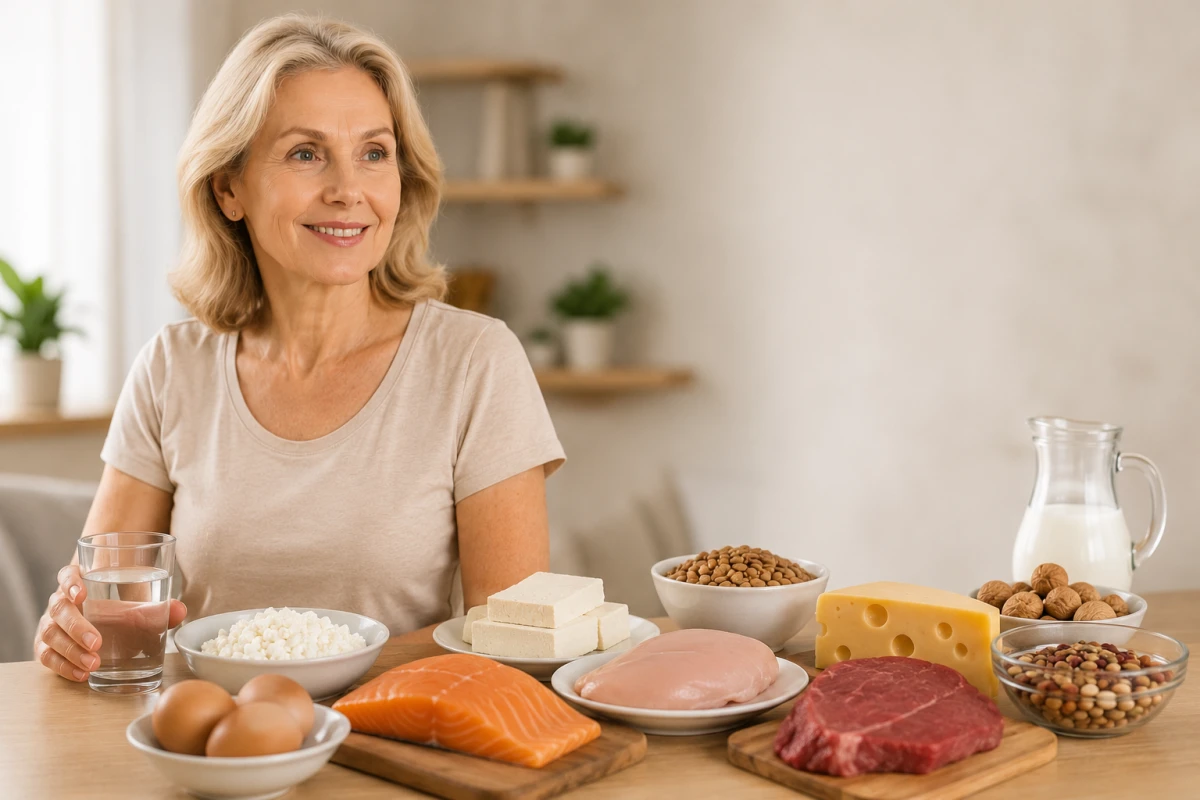
Start meals with protein. One of the simplest hacks is to make protein the foundation of every meal. For example, add egg whites to oatmeal, use Greek yogurt in smoothies, add chicken or lentils to salads, and choose protein snacks.
Small changes work better than strict diets. Even minor substitutions can yield results; eat high-protein pasta, chia seeds, Greek yogurt, eggs, fish, and legumes.
Note that protein intake can fluctuate and even lead to excess, which can indeed put a strain on the kidneys, especially with certain chronic conditions. However, most women today are more likely to be under-consuming protein than over-consuming it.
Sufficient protein intake helps provide more energy, less hunger and cravings for sweets, better body tone, stronger muscles, healthy skin, and strong hair and nails. In the long term, it supports bones, improves metabolism, and positively affects quality of life.
Modern health trends are increasingly moving away from strict diets and more towards supporting the body. And protein is becoming one of the main elements of this new self-care system. After 50, it is no longer just about "helping to lose weight"; it supports muscles, energy, bones, mobility, and the body’s ability to remain strong.
Thus, with age, the body's need for protein does not decrease; on the contrary, it increases. Sufficient protein intake helps maintain muscles, metabolism, energy levels, and bone health, as well as prolonging activity and quality of life.