
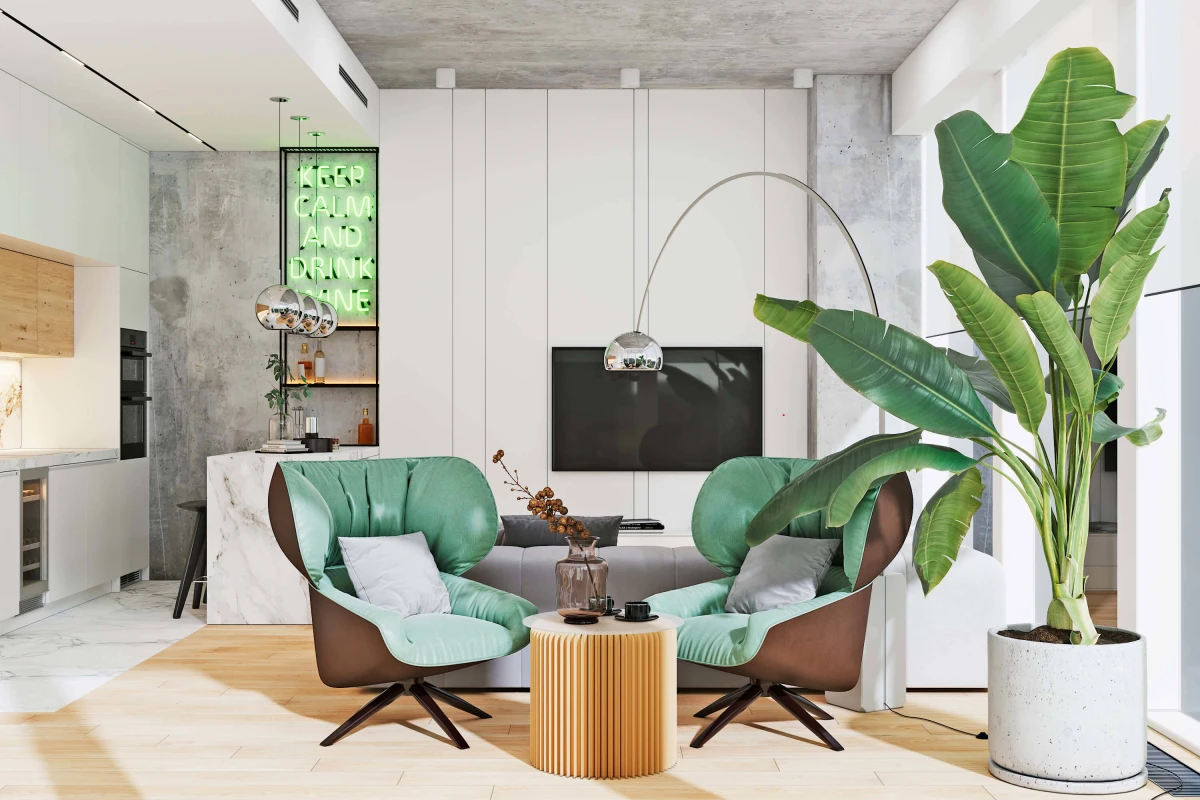
The space in which a person lives directly affects their emotional state, stress levels, and even sleep quality. The modern field of neuroarchitecture studies how interior interacts with the brain and what solutions help make a home more comfortable and "supportive" for mental health.
What is Neuroarchitecture
Neuroarchitecture is a field at the intersection of design and neuroscience that explains why some spaces evoke a sense of calm while others create tension. Research shows that the brain evaluates the environment almost instantly and reacts to shape, light, and materials, forming a sense of safety or anxiety.
Soft Shapes vs. Sharp Angles
One of the key factors in perceiving space is geometry. Smooth lines and rounded shapes are perceived by the brain as safe and comfortable, while sharp angles can trigger subconscious tension.
Experts explain this by noting that the areas of the brain responsible for responding to threats are activated more quickly when perceiving harsh shapes. Therefore, it is recommended to use in interiors:
-
round tables and mirrors
-
soft furniture with smooth lines
-
textiles that soften the space
Such elements make the environment visually and psychologically calmer.
Light and Biological Rhythms
Lighting plays a key role in regulating internal biological clocks. A lack of bright light in the morning can increase stress levels and worsen sleep quality, while proper lighting helps the body function in its natural rhythm.
Experts recommend:
-
maximizing natural light in the first half of the day
-
avoiding darkening rooms in the morning
-
switching to warm lighting in the evening
This approach supports circadian rhythms and promotes deeper rest.
Space and the Feeling of Freedom
The parameters of a room also affect perception. People feel more comfortable in spaces with sufficient ceiling height and good light access.
If real conditions are far from ideal, visual techniques can be used:
-
vertical lines (curtains, doors, light fixtures)
-
mirrors opposite windows
-
minimizing clutter in the space
These solutions help create a sense of airiness and spaciousness even in small rooms.
Natural Materials and Tactility
Materials in the interior affect not only the appearance but also the emotional state. Natural surfaces—wood, stone, linen—help reduce anxiety and create a sense of stability.
Even small elements—such as textiles or wooden details—can enhance comfort and reduce cognitive load.
Biophilic Design and Contact with Nature
One of the most important principles of neuroarchitecture is the connection with nature. Live plants, images of landscapes, and natural textures help the brain relax more quickly.
Studies show that even visual contact with natural images can reduce stress levels and improve concentration.
Why This Matters
Neuroarchitecture views the home not just as a place of residence but as a tool for influencing mental state. A well-organized space can:
-
reduce anxiety levels
-
improve sleep
-
enhance concentration
-
accelerate recovery from stress
Thus, even small changes in the interior can significantly impact quality of life. The key is to consider not only aesthetics but also how the space is "felt" at the perceptual level.















Leave a comment