
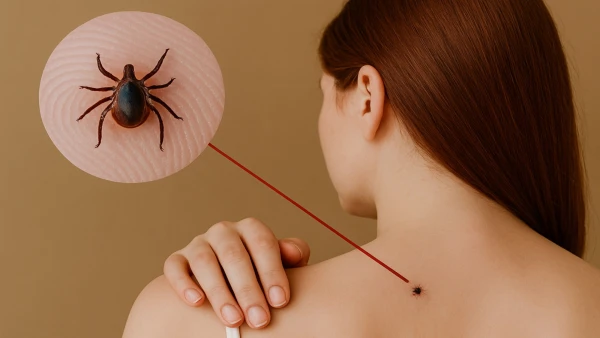
The tick activity season has already begun in Latvia and will last until deep autumn. Experts warn that the peak of their aggressiveness is expected in spring and then again in early autumn.
The tick activity season is already in full swing, with peak periods expected in May-June and again in September-October. It is important to remember that these dangerous parasites are found not only in forests but also in urban areas – in parks and on regular lawns. Following simple safety rules and using special repellents significantly reduces the risk of bites.
Where Does the Danger Lurk?
The danger of a tick bite is not only present during forest walks. These bloodsuckers are increasingly found in urban parks, on lawns, and even in the yards of residential buildings. Ticks do not jump from trees or chase people, but they easily get onto the body when in contact with grass or bushes.
How to Reduce the Risk of a Bite?
Doctors strongly recommend adhering to basic safety rules. Whenever possible, avoid walks in the forest and stick to central paths. Clothing should be as covered as possible: choose light-colored garments with long sleeves and pants to notice the parasite more quickly.
Pants should always be tucked into socks, and never sit or lie down on the grass. Additional protection can be provided by repellents, and while outdoors, check yourself and your companions at least every two hours.
Effective Protective Measures
Experts advise using only proven repellents. They should contain at least one of the following active ingredients: DEET, picaridin, IR3535, oil of lemon eucalyptus (OLE), PMD, 2-undecanone, or permethrin. It is important to strictly follow the application instructions and regularly refresh the protective layer to maintain maximum effectiveness.
What to Do After Returning Home?
Upon returning home, it is necessary to thoroughly inspect your entire body in good lighting, starting from your feet and moving upwards. Doctors recommend taking a shower immediately and washing and cleaning all clothing. Pay special attention to areas where ticks most often attach: the scalp, behind the ears, under the collar, under the breasts, on the abdomen, in the groin, behind the knees, and under the socks.
What to Do If a Tick Bites?
If a tick has attached itself, it should be removed as quickly as possible. Use a special tweezers or go to the emergency room immediately. Remember: never pour alcohol or oil on the parasite!
After removal, the bite site should be treated with an antiseptic, and hands should be thoroughly washed. There is no need to submit the tick for analysis. For several weeks, monitor your health closely.
If you experience a fever or redness, consult a doctor immediately. If the tick has been on the body for more than 36 hours, preventive treatment for Lyme disease may be required.













Leave a comment