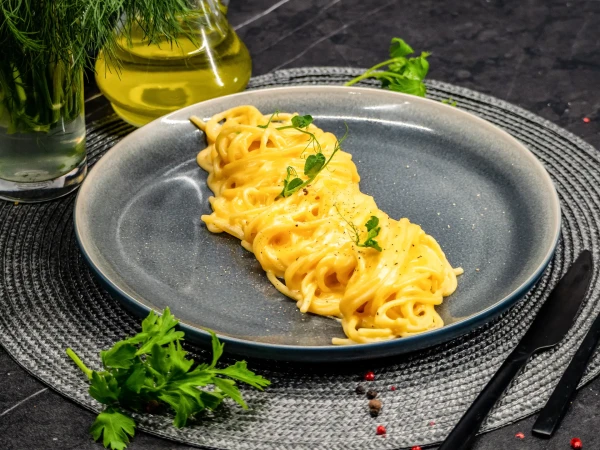
Pasta with cheese is one of the simplest yet most demanding dishes in Italian cuisine. Despite the minimal set of ingredients, achieving the perfect taste and texture is not always successful. The key to success lies in the details of preparation and the correct selection of products.
Minimalism That Requires Precision
Classic Italian recipes for pasta with cheese are based on the principle of minimalism. For example, the famous Roman pasta cacio e pepe includes only a few ingredients — pasta, cheese, and pepper, but it is the cooking technique that determines the result.
The main task is to achieve the right texture of the sauce. The cheese should not curdle or turn into lumps: it should combine with the water from cooking the pasta to form a smooth, creamy emulsion.
Why Pasta Water Is Important
One of the key secrets is the use of the water in which the pasta was cooked. It contains starch, which helps bind the fats and cheese, turning the mixture into a homogeneous sauce. Culinary sources note that it is the gradual addition of this water that allows for the desired consistency, rather than simply melting the cheese. Ignoring this step is one of the most common mistakes that results in a dry or separated sauce.
Choosing Cheese: Not Just Parmesan
Different types of cheese are suitable for making pasta — from classic Parmesan and Pecorino to softer and creamier options.
Depending on the recipe, the following are used:
-
Hard cheeses (Parmesan, Pecorino) — for a rich flavor;
-
Soft and creamy — for a more delicate texture;
-
A combination of several types — for depth of flavor.
This approach is the basis for popular dishes like "four cheese," where a complex balance of aromas is created.
Temperature — The Main Enemy
One of the most frequent mistakes is overheating. If cheese is added to a pan that is too hot, it will start to curdle and lose its texture. Professional chefs recommend slightly cooling the pasta before adding cheese or working over low heat while constantly stirring the mixture. It is the control of temperature that allows for that "velvety" sauce associated with restaurant cuisine.
Sauces and Variations
While basic recipes remain relevant, there are many variations of pasta with cheese:
-
With the addition of cream — for a softer and richer flavor;
-
With herbs and spices — for brightness;
-
With vegetables or meat — for a heartier option.
However, experts emphasize: the simpler the recipe, the higher the demands on the cooking technique.
...Pasta with cheese is an example of a dish where the simplicity of ingredients is deceptive. It is the technique, attention to detail, and the correct sequence of actions that allow a basic set of products to be transformed into a full-fledged gastronomic dish. By mastering the basic principles — temperature control, the use of pasta water, and the right choice of cheese — one can easily reproduce the taste of authentic Italian cuisine at home.