Some specialists call the kitchen the most contaminated place in the house. Here, raw meat, a trash can, and constantly changing temperatures due to cooking coexist. All of this creates a favorable environment for bacteria to multiply, so it is important to pay attention to even the small details.
The kitchen is a space where we spend a significant amount of time: cooking, gathering with the family for dinner, and hosting guests. That’s why we want it to be not only cozy but also as safe as possible in terms of hygiene.
Typically, hostesses thoroughly wash the sink, clean the stove, rewash the dishes, and tidy up the refrigerator. However, if cleaning is postponed or approached carelessly, the risk of food poisoning increases. Bacteria from raw meat thrive in warm and humid environments.
Experts have compiled a list of key areas that need to be kept clean at all times.
Cutting Boards and Knives
These items are used daily, so one set is not enough. This is not only inconvenient but also unsafe.
It is recommended to have separate boards and knives for:
- raw meat and fish;
- foods that do not require cooking (cheese, sausage, butter);
- strongly scented foods;
- vegetables, fruits, and bread.
It is important to monitor the condition of the boards: they should not have cracks, as food residues and bacteria can accumulate in the damages.
Kitchen Towels, Sponges, and Rags
These items quickly become a source of microbes, as they are used constantly and come into contact with various products.
Towels should be regularly washed in hot water. Sponges and rags should be replaced at least once a week, even if they appear clean.
Sink
The sink is used for thawing meat, cleaning vegetables, and washing dirty dishes — it is an ideal breeding ground for microorganisms.
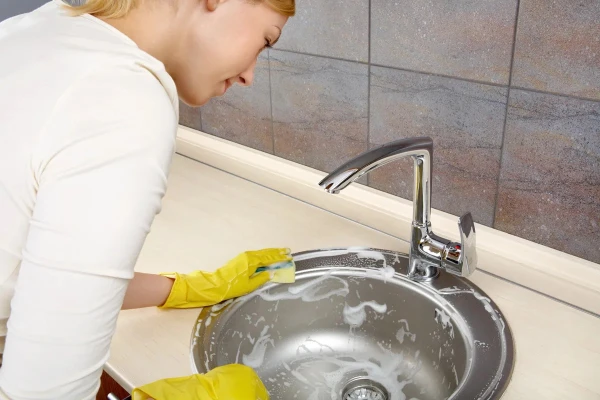
After each meal preparation, the sink should be washed with detergent, food residues removed, and dried thoroughly. It is also important to dry dishes before storing them to prevent bacterial growth.
Countertop and Kitchen Table
Work surfaces must be thoroughly washed after each meal preparation. Cutting boards should be additionally treated with disinfectants and rinsed with hot water.
Refrigerator Contents
First, products past their expiration date should be discarded without regret.
Second, it is important to properly distribute products on the shelves:
- top shelf — ready meals, drinks, sauces;
- middle — dairy products, eggs, sausages, cheeses;
- bottom — raw meat, fish, and poultry;
- drawers — vegetables and fruits.
Prepared food should not be stored next to raw products. Hot dishes should only be placed in the refrigerator after completely cooling down; otherwise, the temperature inside rises and condensation forms, which promotes bacterial growth.
Maintaining cleanliness in the kitchen is not only a matter of order but also an important condition for the health of the entire family.