
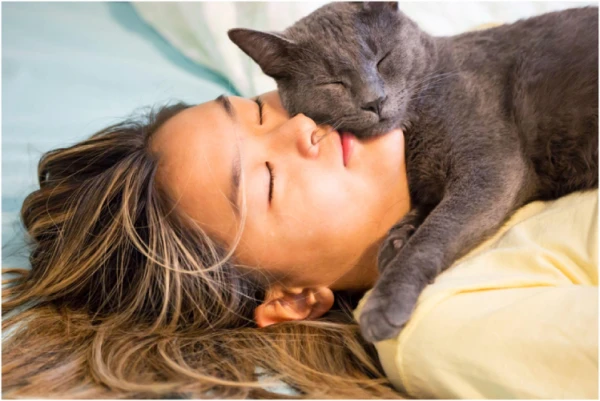
When a cat settles on your chest, stomach, or lap, it seems like just a display of affection. But in reality, this behavior has several reasons — from basic instincts to emotional attachment. Let's explore what lies behind this common behavior for cat owners.
Manifestation of Affection and Trust
The most obvious and common reason is the emotional bond with a person. A cat lies on its owner to show affection and receive attention in return. Despite the stereotype of "independence," these animals need to feel contact with humans. This behavior is a way of saying, "you are mine." Additionally, by lying on a person, the cat demonstrates a high level of trust — after all, at that moment, it is at its most vulnerable.
Warmth and Comfort
Cats love warmth — this is one of the key factors. The human body acts as a "living heater" for them. This is especially relevant:
-
in cold weather
-
for kittens and elderly animals
-
for breeds with short or no fur
Essentially, lying on a person is almost the same for a cat as wrapping itself in a warm blanket.
Sense of Security
Even domestic cats remain cautious animals. They need a sense of protection. If a pet comes and lies on you, it may mean:
-
it is scared or tense
-
it is seeking calmness
-
it perceives you as a safe place
In this case, the owner becomes an "anchor of stability" in the environment.
Territorial Instinct and "Marking"
Cats actively use scents to mark their territory. When an animal lies on a person, rubs against them, or "kneads" with its paws, it:
-
leaves its scent
-
"claims" you as part of its territory
-
demonstrates dominance over other animals
This is especially noticeable in homes with multiple pets.
Need for Contact and Attention
Sometimes a cat lies on a person simply because it lacks interaction. This can happen if:
-
the owner is away for a long time
-
the pet feels lonely
-
there is little tactile contact
In such cases, this is not only a manifestation of love but also a request for attention.
Reaction to Your State
Cats are sensitive to human moods. They can pick up on changes in voice, scent, and behavior. If you are tired, anxious, or unwell, the pet may lie next to you or right on you. This is related to:
-
the desire to be close
-
reaction to warmth (inflamed areas are warmer)
-
the intention to "calm" you
Although ideas about "healing" with cats lack strict evidence, their purring and warmth can indeed reduce stress.
Why a Cat Chooses Different Places
Interestingly, the choice of "location" is also intentional:
-
On the chest — closer to the heart, where the heartbeat can be heard (calming)
-
On the stomach — warmth and softness
-
On the legs — comfortable and safe, especially while sleeping
-
On the head or neck — maximum contact and scent
Each area provides the cat with a different level of comfort and sensations.
When to Pay Attention
In most cases, this behavior is completely normal. However, you should be cautious if:
-
the cat suddenly becomes too clingy
-
the behavior is accompanied by lethargy or changes in appetite
-
signs of stress appear
This may signal discomfort or health issues.
...When a cat lies on you, it is almost always a good sign. It is a mix of affection, instincts, and the search for comfort. Simply put, if a pet has chosen you as its "favorite sleeping spot" — you are a source of warmth, safety, and trust for it.
















Leave a comment