
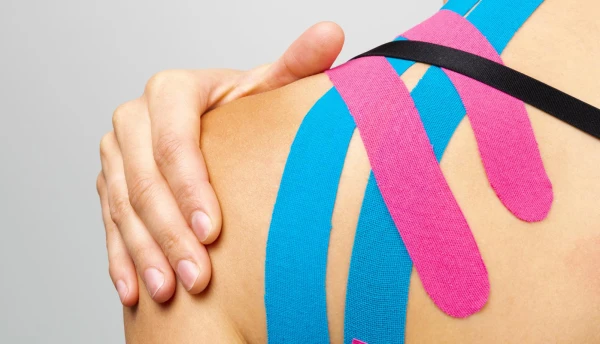
Kinesiology taping has long become a popular way to combat pain and discomfort in muscles and joints. Bright strips of tape can be seen on both professional athletes and people far from sports. However, scientific data shows that the effect of this method may not be as significant as commonly believed.
Short-Term Relief
According to the results of large studies, the use of tapes can indeed provide a small positive effect immediately after application. There is a moderate reduction in pain sensations and a slight improvement in mobility.
However, this effect is generally short-lived and quickly disappears.
No Evidence of Long-Term Results
When assessing the long-term impact of kinesiology taping, researchers found no convincing evidence of its effectiveness. In the long term, tapes do not have a significant impact on the condition of muscles, joints, or recovery from injuries.
This means that one should not expect a lasting therapeutic effect from tapes.
The Role of Psychology and Perception
Researchers note that part of the positive effect may be related to psychological mechanisms. The feeling of support, attention to the body, and the expectation of improvement can enhance the subjective perception of relief.
This is why tapes may "work" on a sensory level, even if the physiological effect is minimal.
Safety and Reasonable Use
Despite their limited effectiveness, kinesiology taping is considered a safe method when applied correctly. It can be used as an adjunctive tool, for example, to provide temporary relief from discomfort.
What is Important to Remember
Experts emphasize that tapes should not replace comprehensive treatment, physical therapy, and regular activity. In cases of pain and injuries, diagnosis, exercises, and physician recommendations still play a key role.
Kinesiology taping can be an additional tool, but not a universal solution to the problem.















Leave a comment