
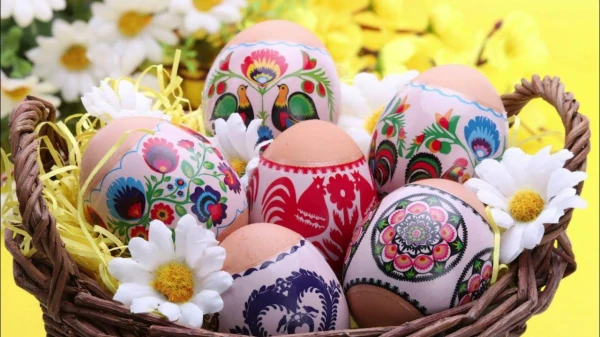
Dyed chicken eggs are an indispensable attribute of Easter celebrations. Let's explore how this tradition originated, when to dye eggs, and what can be done besides the traditional boiling in onion skins.
Why do we dye eggs for Easter?
Colorful eggs are an essential attribute of the "breaking of the fast" and one of the main decorations of the family festive table at Easter. The tradition of giving each other eggs at Easter carries deep symbolic meaning. According to legend, the stone that closed the tomb of Jesus Christ had the shape of an egg. For Christians, the Easter egg is a reminder of the Resurrection of Jesus Christ, and the red color, in which eggs are most often dyed, symbolizes suffering.
There is a legend that Mary Magdalene presented a chicken egg to the Roman Emperor Tiberius with the words "Christ is Risen!" The emperor replied that it was more likely for the egg to turn red than for someone to rise from the dead. After these words, a miracle occurred: the white egg turned red. Since then, Christians have embraced this symbol and began dyeing eggs for Easter.
When to dye eggs for Easter
Waiting until the last moment is a bad idea. According to church traditions, eggs should be dyed on the eve of Easter, on Holy Thursday. In 2026, Easter will be celebrated on April 5, and Holy Thursday will fall on April 2. However, Monday, Tuesday, and Wednesday of Holy Week (the last 6 days of Lent) will also be suitable. The main thing is not to do it on Good Friday or Holy Saturday.















Leave a comment