
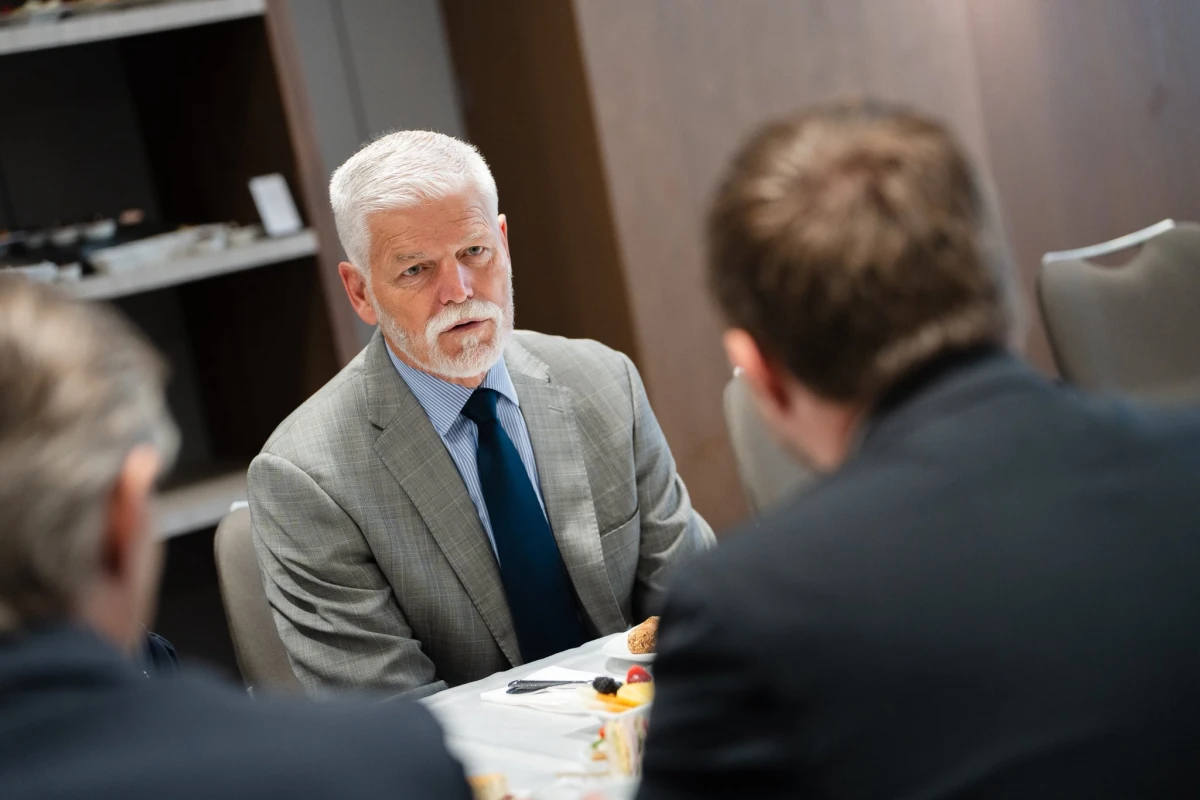
The President of the Czech Republic, Petr Pavel, stated that NATO should move towards a tougher and asymmetric response to Russia's actions. According to him, Moscow is testing the limits of the alliance's reaction and primarily understands the "language of strength."
The President of the Czech Republic, Petr Pavel, urged NATO countries to respond more decisively to Russia's actions, including airspace violations and other provocative steps.
In an interview with The Guardian, the Czech leader stated that the alliance should consider "quite decisive, potentially even asymmetric" measures in response to Moscow's actions.
According to Pavel, the lack of a tough response could push Russia towards further escalation.
Among the possible retaliatory steps, the President of the Czech Republic mentioned restricting Russia's access to the internet and satellite systems, disconnecting Russian banks from the international financial system, as well as destroying aircraft that violate NATO's airspace.
Pavel believes that Russia is deliberately operating below the level of direct military confrontation to test the alliance's tolerance boundaries.
"After the annexation of Crimea, Russia developed a model of pressure without transitioning to open conflict," he noted.
In the opinion of the Czech president, Moscow uses such "gray zones" — cyberattacks, drones, provocations in the air and at sea — to gradually increase pressure on NATO countries.
In recent months, the topic of drones and airspace violations has been particularly actively discussed in the Baltic states, where several incidents involving drones near the borders have already occurred.
Pavel also stated that Russia primarily understands strength, not diplomatic warnings. He suggested that if airspace violations continue, NATO may in the future consider the possibility of shooting down not only drones but also manned aircraft.
Such statements come against the backdrop of rising tensions between Russia and NATO countries due to the war in Ukraine and the increasing number of incidents near the alliance's borders.
Additionally, the President of the Czech Republic expressed dissatisfaction with the insufficient toughness of the U.S. position towards Russia.
Pavel has previously repeatedly advocated for increased support for Ukraine and a more active policy of deterring Moscow. His current statement may serve as yet another signal that discussions within NATO are intensifying regarding the need for a tougher response to hybrid threats from Russia.



Leave a comment