
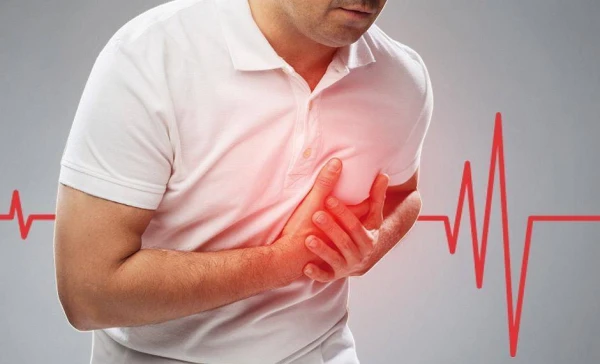
When talking about a myocardial infarction, people often envision severe pain in the chest area that may radiate to the left arm, shoulder, or half of the body. However, in reality, this is just one possible manifestation of a heart attack. Sometimes a heart attack occurs quite differently and masquerades as other conditions, causing a person to not immediately understand the seriousness of what is happening.
Classic and Additional Symptoms
In addition to chest pain, a heart attack may present other signs. Among them are sudden weakness, dizziness, cold sweat, shortness of breath, nausea, or vomiting. Often, there is intense anxiety, a feeling of impending danger, and even a fear of death.
The classic pain variant, which doctors call anginal, is indeed the most common, especially in young and middle-aged individuals during the first attack. However, the absence of severe pain does not rule out a heart attack.
Why a Heart Attack May Occur Without Pronounced Pain
Sometimes the heart hardly hurts, or the pain is felt very weakly. This can happen for various reasons. For example, after a previous heart attack, part of the heart tissue is replaced with connective tissue, leading to sclerosis and reduced sensitivity.
Additionally, nerve conduction may be impaired due to comorbidities, such as diabetes. In such cases, the typical pain signal may simply not occur.
In women, a heart attack often manifests less obviously than in men. Instead of severe pain, early weakness, increased fatigue, shortness of breath, and an inability to perform usual daily activities may occur.
A Heart Attack That Resembles Heartburn or Food Poisoning
Sometimes the symptoms resemble stomach problems. If the pain in the heart area is weakly expressed, it can be mistaken for heartburn. This is because the heart is located close to the stomach.
At the same time, weakness, nausea, and vomiting may be present, which further confuses the situation and leads a person to think of food poisoning or gastritis.
Symptoms Similar to an Arrhythmia Attack
During a heart attack, the heart rhythm is often disrupted. In some cases, this manifests as strong palpitations, irregularities, or a sensation of pauses in the heart's work.
A person may experience weakness, dizziness, cold sweat, and even lose consciousness. If there is no pronounced pain, this condition is referred to as the arrhythmic variant of a heart attack.
An Attack That Resembles Asthma
Sometimes a heart attack manifests as severe shortness of breath and coughing. This occurs with the development of left ventricular heart failure, when blood circulation in the left ventricle is impaired.
In such cases, there is a feeling of suffocation, choking attacks, and a painful cough with frothy pink sputum. Due to the similarity of symptoms, this condition can be confused with an asthma attack.
Symptoms Similar to a Stroke
Sometimes a heart attack is accompanied by a severe headache that occurs suddenly and feels as if "something has exploded" inside. It may appear after physical exertion and decrease after taking angina medications.
This form is called cephalgic. It is also characterized by photophobia, dizziness, and increased blood pressure.
A Heart Attack That Resembles Fainting
In extensive heart damage, a severe complication can develop — cardiogenic shock. In this state, the heart stops effectively pumping blood.
If the pain is weakly expressed, bystanders may think that the person has simply lost consciousness. At the same time, there is a sharp drop in blood pressure, severe weakness, pale skin, cold hands and feet, swelling, and pronounced fatigue.
Without timely medical assistance, this condition poses a serious threat to life.
Can a Heart Attack Occur Without Symptoms
Sometimes a heart attack indeed occurs almost unnoticed. This variant is called painless or asymptomatic. Despite the absence of pronounced signs, it remains very dangerous, as a person may not even suspect the damage to the heart that has occurred.
Most often, such heart attacks are discovered accidentally — for example, during an electrocardiogram or ultrasound of the heart. However, the risk of a repeated attack remains high.
When to Seek Help Urgently
If suspicious symptoms appear — severe weakness, chest pain, shortness of breath, heart rhythm disturbances, or sudden deterioration of well-being — it is important not to delay seeking medical help.
Even if there is no complete certainty that it is a heart attack, it is better to call for an ambulance. A medical professional can assess the condition, perform an electrocardiogram, and if necessary, take the patient to the hospital.
In the case of a heart attack, time is of the essence, and timely assistance can save a life.















Leave a comment