
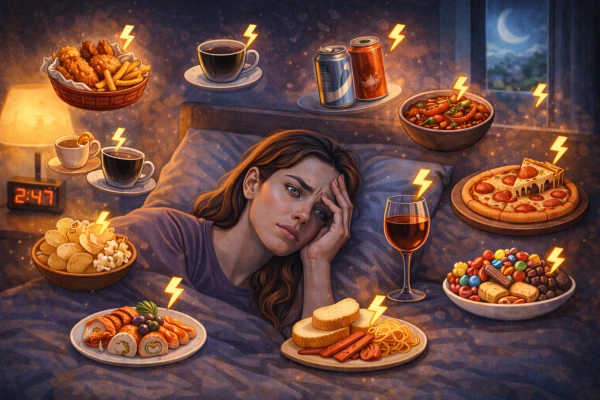
Sometimes insomnia arises not from stress or gadgets, but from the food we choose for dinner. Some popular dishes can stimulate the nervous system, raise blood sugar levels, or cause digestive problems — ultimately hindering a peaceful night's sleep.
Nutrition experts note that a balanced dinner should include vegetables, proteins, complex carbohydrates, and healthy fats. This principle helps maintain stable energy levels and does not overload the body before sleep.
Certified dietitian Roxana Ehsani discusses this, with recommendations featured in Real Simple.
Which Foods Can Worsen Sleep
Fried Foods
Fried chicken, French fries, and other high-fat dishes take longer to digest and can cause heaviness in the stomach.
Snacks
Chips, popcorn, and salty snacks contain a lot of salt. This can cause fluid retention and discomfort at night.
Caffeinated Beverages and Foods
Coffee, energy drinks, certain types of tea, and sugary sodas stimulate the nervous system and can interfere with falling asleep.
Highly Salty Foods
Excess salt can worsen sleep quality and increase thirst at night.
Refined Grains
White bread, pasta, pizza, or white rice quickly raise blood sugar levels and can trigger hunger at night.
Spicy Foods
Dishes with chili peppers and spicy seasonings can sometimes cause heartburn and digestive issues.
Sweets
A large amount of sugar can stimulate the body and hinder relaxation before sleep.
Sour Foods
Sour foods can provoke heartburn and acid reflux, especially if lying down immediately after eating.
Alcohol
Despite common belief, alcohol does not improve sleep. It can disrupt sleep phases and worsen sleep quality.
What to Eat in the Evening
Dietitians recommend a light and balanced dinner:
- vegetables
- sources of protein
- complex carbohydrates
- healthy fats
This combination helps maintain stable blood sugar levels and promotes a more peaceful onset of sleep.
Experts also advise avoiding heavy meals 2–3 hours before bedtime to allow the body to digest the food.















Leave a comment