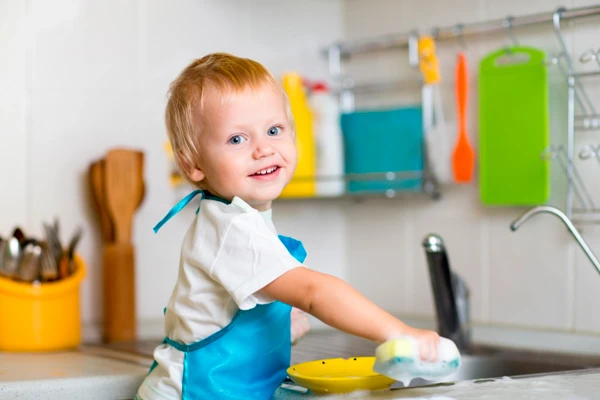
Manageable household chores for children are not only a way to maintain order but also a tool for nurturing important life qualities: responsibility, organization, and time management skills. Psychologists and educators emphasize that children's participation in family responsibilities benefits their mental health and development when approached thoughtfully and with consideration of the child's age.
Experts emphasize that it is best to start teaching a child to perform manageable tasks with small, adapted chores — from cleaning up toys and clothes to helping with simple tasks in the kitchen. This fosters a sense of responsibility and confidence in their own abilities.
Psychologists note that such activities strengthen attention concentration skills, help develop planning and task distribution abilities — qualities that are useful not only in household chores but also in studies and everyday life.
It is important to approach this process without coercion and pressure. Incorporating play elements, creating positive associations, and encouraging the child's efforts help make cleaning and assisting at home enjoyable and motivating rather than a punishment.
Modern research in child development confirms that participation in household chores is associated with improved self-organization, responsibility, and cooperation skills. Children who perform manageable duties from an early age tend to view the family as a team and often develop greater self-confidence.
Parents are also advised to consider the child's age: toddlers can participate in simple tasks such as sorting toys or watering plants, while older children are capable of helping with more complex responsibilities, such as washing dishes or preparing family meals.
...Household duties are not only a way to maintain order in the home but also a valuable part of upbringing. Manageable work develops skills in children that will be useful in adult life, strengthens family bonds, and contributes to emotional well-being. With an approach based on support, play, and respect for the child's developmental stage, such responsibilities become a beneficial and natural part of their growth.