
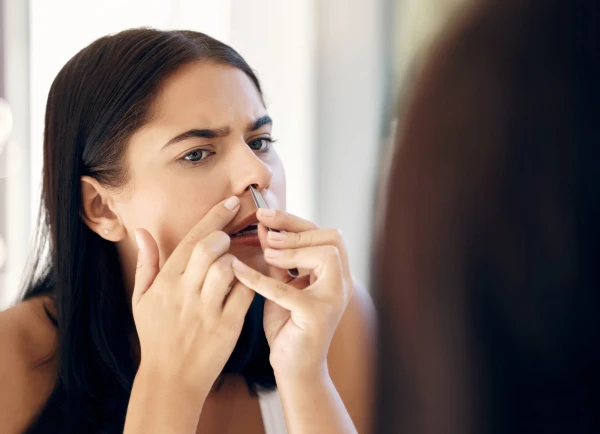
Many are irritated by hairs protruding from the nostrils. Therefore, they rush to remove them — with wax, tweezers, or depilatory creams. However, such a procedure can lead to serious health problems.
Otolaryngologist Olga Shtabrovskaya explains: hair in the nose is not an aesthetic flaw, but an important protective system of the body.
This is the first line of immune defense
Nasal hairs (vibrissae) trap dust, allergens, and bacteria, preventing them from penetrating deeper into the respiratory tract. If they are completely removed, harmful particles can easily enter the lungs.
Risk of Infection and the 'Triangle of Death'
The area of the nose and the nasolabial triangle has a shared blood supply with the brain. When a hair is pulled out, a micro-injury occurs, through which bacteria (such as staphylococcus) can enter the bloodstream.
Using wax, sugar, or tweezers often leads to damage to the mucous membrane. This can cause swelling, pain, inflammation, and even boils. In severe cases, the infection can spread further.
Pain and Bleeding
The nasal mucosa is well supplied with blood. Even a small injury can lead to bleeding and prolonged, unpleasant healing.
Disruption of Air Humidification
Hairs help retain moisture and protect the mucosa from drying out. Without them, dryness, irritation, and a tendency to runny nose occur more frequently.
How to Do It Right
- Carefully trim only visible hairs.
- Use a trimmer or small manicure scissors with rounded tips.
- Do not pull out hairs "to the root."
Sometimes what seems like a cosmetic defect is actually a well-thought-out natural defense system. It is worth intervening in it as cautiously as possible.











Leave a comment