
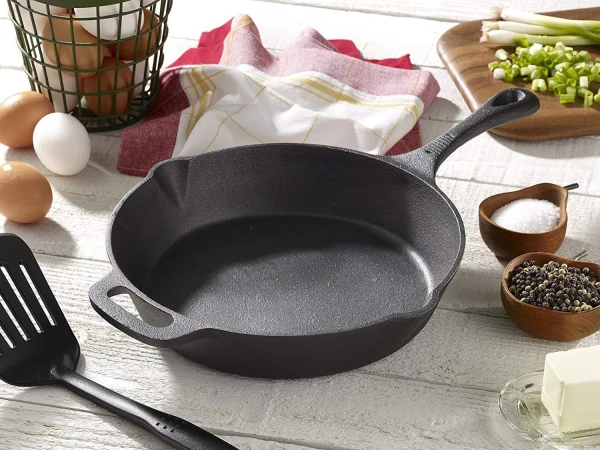
Choosing a frying pan is not just a purchase of kitchenware, but an investment in convenience and enjoyment of cooking. To find cookware that will last for decades, it is important to understand not only the shape and diameter but also how the material, construction, and technologies affect durability and functionality. Today, we will explore the types of frying pans, how they differ, and for which tasks each of them is best suited.
Multi-layer Bottom and Cast Body — The Foundation of Durability
The main task of a good frying pan is to distribute heat evenly and quickly. This is achieved through different bottom constructions:
Multi-layer ("capsule") bottom — several layers of metal, for example, stainless steel with an aluminum core. This combination compensates for the poor thermal conductivity of steel and makes heating even, without hot spots.
Cast or forged aluminum body without layer separation — a solid piece that evenly retains heat and is less prone to deformation.
Multi-layer models are especially good on induction cooktops and are resistant to overheating and deformation, while cast bodies are known for their stable heat retention and durability. However, cast products have a drawback: they are heavier and usually more expensive, and the non-stick coating on forged aluminum wears out faster.
Natural Coating: Cast Iron and Carbon Steel
If the main goal is reliability for decades, then cast iron and carbon steel are unmatched. These materials do not have factory synthetic coatings but acquire natural non-stick properties during use.
With proper surface preparation (seasoning with oil), the metal is covered with what is called a patina — a thin polymerized film that makes frying almost oil-free possible and safe. With each use, such a surface improves, and the frying pan becomes stronger and more valuable over time.
Carbon steel heats up faster and is lighter than cast iron, but requires regular maintenance, while cast iron is bulkier but perfect for high-temperature recipes and long braising (for example, steaks or roasts).
There are also enameled cast iron frying pans. They do not require seasoning and do not rust, but lose the advantages of natural non-stickiness — food may stick without oil. Instead, such products are excellent for stewing, baking, and long cooking.
Stainless Steel and Modern Coatings
Stainless steel is strong and resistant to oxidation, but it is inferior to aluminum and cast iron in thermal conductivity. Therefore, many stainless steel frying pans are equipped with a multi-layer bottom with aluminum to compensate for the material's weakness.
Without a coating, the steel surface requires the use of oil; otherwise, food will stick. Manufacturers offer models with modern non-stick coatings (Teflon, ceramic, "granite," or composite layers).
Non-stick films make cooking and cleaning easier, but their lifespan can vary:
-
Teflon (PTFE) usually lasts 1–5 years but requires careful use and protection from overheating.
-
Ceramic layers are eco-friendly but sensitive to temperature fluctuations.
-
Reinforced coatings like "granite" or titanium-diamond have increased durability: the lifespan of the best options reaches 5–20+ years with careful handling.
It is important to understand that even the most durable coating wears out over time, and to make it last longer, it is better to choose a frying pan with a thick body — it distributes heat more evenly and reduces the risk of local overheating that destroys the protective layer.
How to Choose a Frying Pan for Different Dishes
There is no universal solution: different tasks require different properties of cookware:
-
Quick frying, steaks: Heavy cast iron models or thick-walled cast frying pans are suitable — they maintain high temperatures and create an appetizing crust.
-
Braising and stewing: Deep cast iron or Dutch ovens with lids heat the contents evenly.
-
Asian cuisine and wok: Lightweight thin-walled carbon steel frying pans heat up almost instantly, allowing for quick cooking over high heat.
-
Pancakes, omelets, delicate dishes: Aluminum or steel pans with non-stick coatings are convenient here — they are lightweight and easy to handle, especially for everyday small tasks.
In the end, a "lifetime" frying pan is not a universal model, but a set of cookware that meets each of your culinary requests. Knowing the characteristics of materials and constructions, you can choose the perfect set for any dishes and cooking conditions.









Leave a comment