
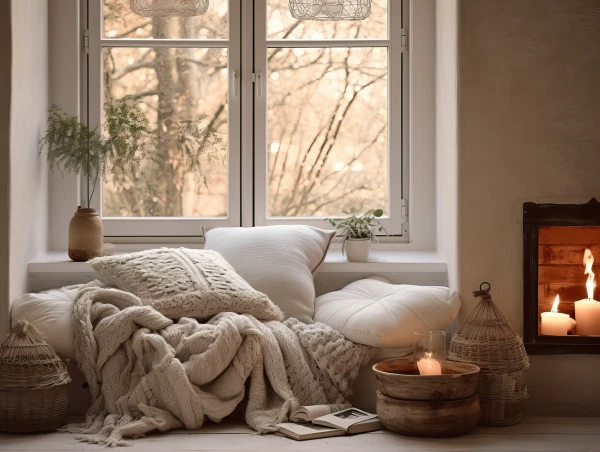
Winter is a great time to rethink your home space. With minimal changes, you can give your interior a fresh look without the effort of a major renovation.
Why Small Changes Are Enough
The human brain reacts sharply to novelty: even replacing 15% of visual elements is perceived as a significant update. Targeted interventions create the effect of a complete transformation without global changes.
Textiles: Warmth and Comfort
Changing textiles is the most accessible and effective way to refresh a space. In winter, it is beneficial to use denser and more tactile materials:
- wool blankets instead of cotton throws,
- velvet cushions,
- heavy curtains instead of light sheers.
Layering textiles adds depth and visual interest, especially when combining different textures: wool with velvet, bouclé with linen.
Light: Creating Atmosphere
The short winter day requires thoughtful artificial lighting. Brightness, as well as the temperature and distribution of light, are important:
- floor lamps with upward-directed light,
- table lamps with warm glow (2700–3000K),
- decorative garlands.
A multi-level lighting composition instantly changes the atmosphere of a room.
Accent Items: Attention to Detail
The third key detail is items that catch the eye. These can be:
- functional objects: ceramic trays, organizers,
- decorative elements: sculptures, art objects.
Especially in winter, accents with pronounced materiality—metal, stone, ceramics—create tactile variety.
The Economics of Updates
Seasonal rotations of key elements allow for maintaining the relevance of the interior without expensive renovations. Architect Marina Pavlova advises changing textiles, lighting scenarios, and accents every 5–7 years for long-term freshness of the space.
Conclusion
Small changes can radically refresh the interior. Textiles, light, and accent objects are the three main elements that shape the first impression of a room and make it cozy and modern.















Leave a comment