Sometimes reading the instructions is vital.
We often use household appliances, putting the instructions away in a drawer. However, it is important to remember that electrical devices can be extremely dangerous and even pose fire threats if warnings are not heeded. This is why appliances should be taken very seriously, writes SlashGear.
The publication notes that some devices are more dangerous than others. For example, hair dryers operate under heavy loads and heat up significantly, which already potentially increases risks. Larger systems, such as dryers, also pose serious dangers due to high temperatures. Moreover, they tend to accumulate lint, which is an additional risk because it is easily ignitable. In some cases, regular cleaning helps avoid problems, but it is not always that simple.
The article names the most dangerous household appliances and the reasons why they are considered so. Mainly, these are devices that generate a lot of heat, which means they can overheat and cause fires due to clogging, malfunction, or improper placement.
1. Washing Machines and Dryers
It is often difficult to wash and dry clothes without the help of appliances. However, it is not just about comfort. According to Whirlpool, the temperature in the dryer can reach 80 °C or more — depending on the model and setting. The National Fire Protection Association in the USA reported that over four years, starting from 2010, approximately 16,000 fires caused by washing or drying machines were recorded annually. In 8% of cases, washing machines were the cause, while about a quarter of fires related to dryers occurred due to dust, fibers, or lint.
Why is lint so dangerous? It is extremely flammable and at the same time gradually blocks airflow. As a result, heat accumulates, which can lead to a fire. It is also important to regularly clean the dryer’s ventilation ducts, as lint accumulates not only in the filter. The dryer is one of the largest and most powerful appliances in the house, so it should be used with particular caution and in accordance with the manufacturer’s instructions.
2. Electric Heaters
Electric heaters may not be the cheapest heating option, but they are accessible and effective. At the same time, these are devices that require extreme caution. Like dryers, they generate a lot of heat and pose a fire hazard. Many portable heaters have significant power, which is already a risk if the connection point is not chosen correctly.
Such devices can consume more than 1500 watts (depending on the model), which means that connecting them to an extension cord with other appliances can overload the circuit. This often leads to circuit breakers tripping, but they do not always prevent a fire. An additional danger is placing the heater too close to flammable items — blankets, furniture, curtains. Like all heat-generating devices, heaters need space to dissipate heat, and the electrical wiring should be regularly checked by professionals.
3. Coffee Makers
Coffee makers operate with very hot water, which creates a burn risk in case of improper use or malfunction. But the danger does not stop there.
The warm and humid environment inside a coffee maker is ideal for the growth of yeast and bacteria. This is especially relevant for office machines that are used frequently but rarely cleaned. Regular washing of the drip tray and water reservoir is mandatory, but equally important is thoroughly drying these elements; otherwise, mold can develop. Filters should also be changed regularly, and scale should be removed.
4. Toasters
Like lint in dryers or grease in ovens, crumbs in toasters become increasingly dangerous if not cleaned for a long time. Even if the model has a removable tray, some remnants still accumulate in hard-to-reach places. With intensive use, these small crumbs can heat up to dangerous temperatures and cause a fire.
A study by Pusan National University showed that toasters are among the largest sources of ultrafine particles among small electrical appliances with heating elements. They can contain heavy metals — copper, iron, aluminum, silver, and titanium. While further research is needed, this again reminds us that even seemingly harmless appliances can pose serious dangers. Inserting metal objects into a toaster to retrieve toast poses not only an electric shock risk but also a fire hazard.
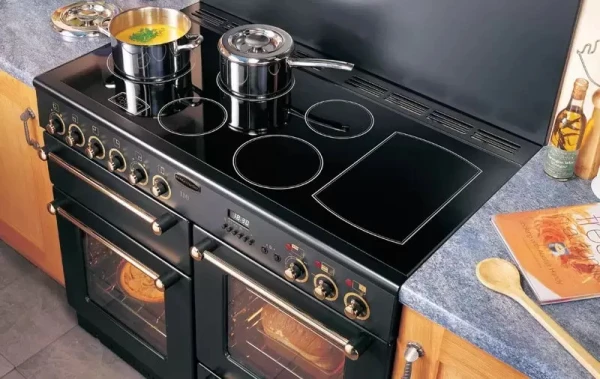
5. Ovens, Stoves, and Cooktops
Even experienced cooks can seriously burn themselves on an oven, making this central kitchen element one of the most dangerous appliances. They come in gas and electric models, and each type has its risks.
Gas models are dangerous due to open flames and potential gas leaks, while electric models pose risks related to wiring and fire hazards due to negligence while cooking.
Even without gas, electric stoves can ignite if left unattended or used at excessively high temperatures. Regular cleaning is also critically important, as burnt food can ignite. Induction cooktops reduce the risk of burns and do not use gas, but they heat cookware very quickly. The rapid heating of oil is particularly dangerous, which can lead to a fire if safety rules are not followed.