
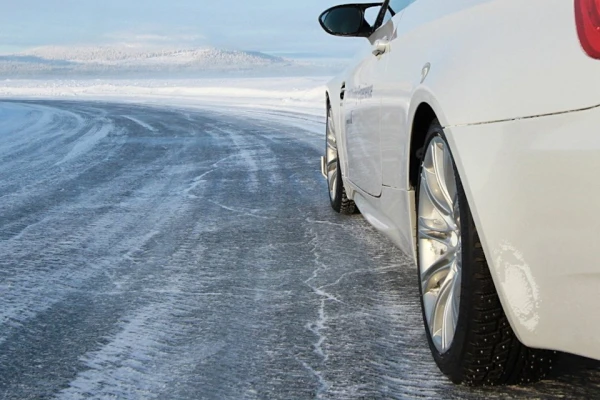
How to drive during icy conditions to avoid going off the road.
Driving on an icy road requires special skills, as any mistake can lead to an accident. Auto experts note that the success of recovering from a skid depends on the driver's actions in the first second, when it is crucial to overcome panic and not give in to false instincts.
What to Do and What Not to Do in the First Second
The most common mistake drivers make is the reflexive pressing of the brake. On ice, this only exacerbates the situation, as locked wheels completely lose traction with the road, turning the car into an uncontrollable object.
On slippery surfaces, the wheels instantly lock and lose all connection with the road, causing the car to resemble an uncontrollable roller. In this state, the vehicle simply continues to move forward due to inertia, and the driver can no longer influence where it will be thrown.
The only correct action in the first moment, experts recommend, is to instantly release the gas pedal. This will allow the engine to smoothly reduce the wheel speed and help them "grip" the surface again.
How to Stabilize a Car on a Slippery Road
After removing your foot from the accelerator, you need to act quickly but without abrupt movements. The process of stabilizing the car during a skid requires a clear sequence of actions, where each movement must be precise. To successfully navigate a critical situation, the following rules must be followed:
Avoid Braking
Until the vehicle is fully aligned and returned to its intended course, the use of the braking system is unacceptable. Any attempt to brake during a skid will deprive the driver of the remaining control over the car. Only after the vehicle becomes obedient again and stabilizes on the road can brakes be gently applied to further reduce speed.
Steering Direction Correction
The main tool for recovery is proper steering, which should be directed in line with the movement of the rear axle. If you feel the rear of the car sliding to the left, the wheels should also be turned left, and if to the right — turned right. This maneuver allows the front wheels to be aligned parallel to the direction of the skid, creating the necessary counterbalance and helping the body return to its natural position.
Control of Movement Intensity
Effective control should be quick in reaction but extremely gentle in execution. It is important to avoid chaotic jerking of the steering wheel, as excessive abruptness often leads to rhythmic skidding. In such cases, the amplitude of oscillations increases, and the car begins to sway from side to side with even greater force, significantly increasing the risk of overturning or veering off into a ditch.
Experts remind us that the best way to avoid a skid is not to allow it to happen. To do this, one should avoid any abrupt maneuvers, strictly maintain distance, and choose a speed appropriate to the road conditions. A calm mind and the absence of sudden movements with the feet or hands are the keys to safety on winter roads.
















Leave a comment