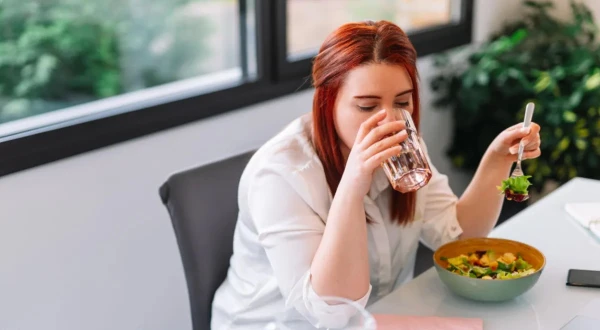
Some cannot imagine lunch or dinner without a glass of water. Some drink tea while eating. But is this safe for the body? We discuss with an expert.
“If you drink water while eating, it will dilute the digestive juices in the stomach” — have you heard this statement? There is a belief that you should first eat properly, then wait for some time, and only after that have tea with dessert.
However, doctors refute this opinion. The human body is made up of 80% water, and we need liquid for life. Dehydration kills all living things, and food is not as important compared to water.
In fact, drinking during meals is acceptable for almost everyone, says gastroenterologist Anastasia Timoshenko. Let’s delve into the details.
Let’s start with the composition of gastric juice, which is necessary for digestion. It consists of:
-
water,
-
hydrochloric acid,
-
gastric enzymes,
-
mucus,
-
organic and inorganic compounds,
-
intrinsic factor of Castle (a protein necessary for binding vitamin B12 with the incoming food).
“Eating is considered a stimulant for the production of gastric juice, and its nature and volume regulate the amount of active enzymes and hydrochloric acid produced. This regulation does not depend on the amount of water consumed, so it is very difficult to dilute gastric juice; the regulation of its production is so fine that it is practically impossible,” explains the doctor.
Various liquids leave the stomach faster than solid food. But this does not affect the process of digestion itself. That is, if you drink while eating, the liquid will first go into the intestines, and after some time, the food will follow. There is nothing dangerous in this.
Who should not drink water during meals
However, there are exceptions to every rule. According to Anastasia Timoshenko, it is better not to drink while eating in the following situations:
-
if you have gastroesophageal reflux disease (GERD, heartburn syndrome with hypersensitive esophagus);
-
with functional dyspepsia, especially in postprandial distress syndrome (a condition characterized by heaviness or nausea after eating);
-
with appetite disturbances or rapid satiety (this can occur in people with dementia, liver cirrhosis, ascites).
All these conditions can provoke bloating, nausea, loss of appetite, and other problems. So, for people with severe heartburn, it is indeed better to eat properly first and then drink water — this way, there will be less discomfort.
The gastroenterologist advises everyone else to drink after chewing food, rather than swallowing pieces of food that you cannot manage. Additionally, if you feel thirsty during a meal, choose plain water instead of sweet soda — this way, you won’t increase your calorie intake and will eat properly.
Another important rule: do not drink tea or coffee immediately after breakfast or dinner; take a short break. This way, you won’t interfere with the absorption of some important elements, such as iron or calcium.