
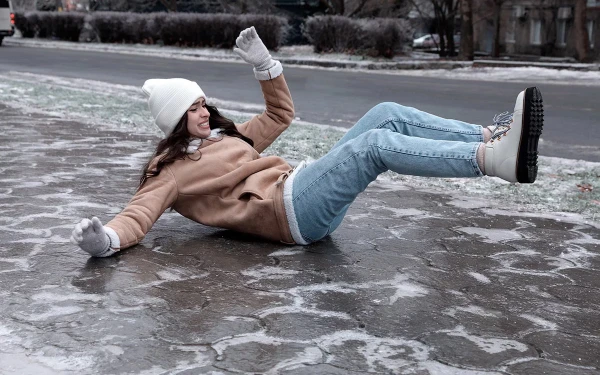
Safety techniques during the winter period.
Winter is a wonderful time of year, but… Falling on ice is an unpleasant event that can lead to serious injuries. However, there are proven ways to minimize the risk and make a fall as safe as possible, which we discussed with orthopedic trauma surgeon Dmitry Chernyshev. The main thing is to know how to act and be prepared for surprises.
Better to Prevent than to Treat
The main thing to pay attention to in winter is footwear with good traction. Choose shoes with deep treads, special winter soles, and in some cases even spikes. Wearing high-heeled shoes on icy surfaces increases the risk of injury. Be careful when walking on the street. It may sound trivial, but — watch your step! Don’t get lost in your thoughts or on your phone, especially when walking on slippery surfaces. Don’t rush, notice cracks, bumps, and areas with clear ice.
It’s better to keep your hands free, try not to carry heavy bags that can disrupt your balance. If possible, use a backpack. It’s also important to choose safe routes, preferring paths that are sprinkled with sand or salt.
If a Fall is Inevitable: Safety Techniques
Even with all precautions, a fall can happen. It’s important to know how to properly “take” it to minimize the consequences.
-
Relax — this may seem paradoxical, but a tense body is much more susceptible to injuries. Try to relax your muscles as much as possible.
-
Curl up — if you feel you are losing your balance, try to curl up. Pull your knees to your chest and wrap your arms around them. This will reduce the height of the fall and distribute the impact over a larger area of your body.
-
Fall on your side — this is the safest option. Try to land on the side of your thigh and buttocks.
-
Protect your head and neck — when falling, instinctively try to cover your head with your hands, tuck your chin to your chest. Do not extend your hands forward to “push off” from the ice — this can lead to wrist or forearm fractures.
-
Don’t try to get up immediately — after a fall, lie still for a few seconds to assess your condition. If you feel pain, dizziness, or other alarming symptoms, don’t rush to get up.
-
Get up carefully — if you feel fine, rise slowly and cautiously. Support yourself on your hands, then on your knees, and only then stand up.
How to Protect Yourself from Injuries
Icy conditions are the cause of many injuries. The most vulnerable are children and the elderly. Explain to them the rules of safe behavior on ice and how to fall correctly.
"Adults should take measures to ensure their child's safety and choose appropriate footwear by checking the weather forecast in advance. Teach your loved ones the basic rules of behavior on ice: don’t rush, avoid sudden movements, constantly watch your feet, and if you need to look around, don’t do it while walking — it’s better to stop. Your legs should be slightly relaxed, bent at the knees, and your torso slightly leaned forward; do not keep your hands in your pockets, as this is dangerous — if you fall, you won’t be able to get them out and grab onto something," explains orthopedic trauma surgeon Dmitry Chernyshev.
The expert recommends planning routes away from roadways, and it is not advisable to walk near building walls where icicles may form. When moving on stairs, place your foot along the step.
"Get the right gear. Knee pads, elbow pads, thick jackets, and other protective gear are necessary to protect you in case of falls and collisions," recommends the trauma surgeon.
















Leave a comment