

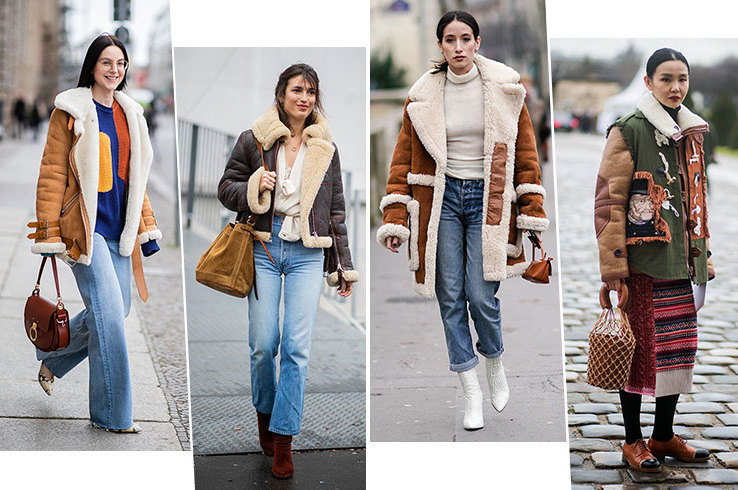
A down jacket adds volume, while a sheepskin coat adds texture. The bag next to this duo should not argue but rather complete the look: maintain the line, not crumple the top, and withstand wet snow without problems.
Let's Start with Shape
In winter, models with character win. A rigid rectangular bag does not get lost against the backdrop of a down jacket: the frame maintains a straight line at the hip, making the look neater. With a sheepskin coat, such a bag provides the necessary geometry to the fluffy edge — a contrast that works. A flat rectangular shoulder bag on a wide strap sits closer to the body, does not "roll" on the down, and does not slide back while walking; it looks neat on a sheepskin coat and does not distort the shoulder. A messenger bag follows the same idea, only with a larger useful volume: the wide strap distributes the weight across layers, and the body does not twist.
If you want softness, opt for a half-moon bag. With a sheepskin coat, it sounds natural; with a down jacket — choose a medium size so that the bag does not seem like a decorative trinket next to the top. A bucket bag with a sturdy bottom balances the bulky top and adds verticality, while a bag with a short handle solves two tasks at once: the handle provides structure, and the long strap allows for freedom of hands outdoors. On slushy workdays, a lightweight nylon shoulder bag comes to the rescue: practical, unafraid of droplets, and dries quickly.
An anti-example to note: very soft, unstructured models and micro formats get visually lost next to a down jacket and often crumple the fabric of the shoulder. For an evening at home — yes, but for the street in the snow — inconvenient.
About Materials
-
Smooth leather is beautiful but capricious: scratches and water spots are visible on it.
-
Textured leather with a protective coating behaves more calmly — signs of wear are less noticeable, just wipe it with a napkin and go on.
-
Laminated fabrics and coated canvas are generally designed for "wipe and go."
-
Nylon with a water-repellent treatment is the champion of routine: lightweight, does not pull on the shoulder, and dries quickly.
-
Suede and nubuck are beautiful on frosty dry days, but in slush require discipline: treatment, gentle wear, no puddles.
A small detail that saves in winter: zippers are more reliable than magnets, and feet on the bottom prevent placing the bag directly in the slush, while a light lining helps find keys in a dark bag.
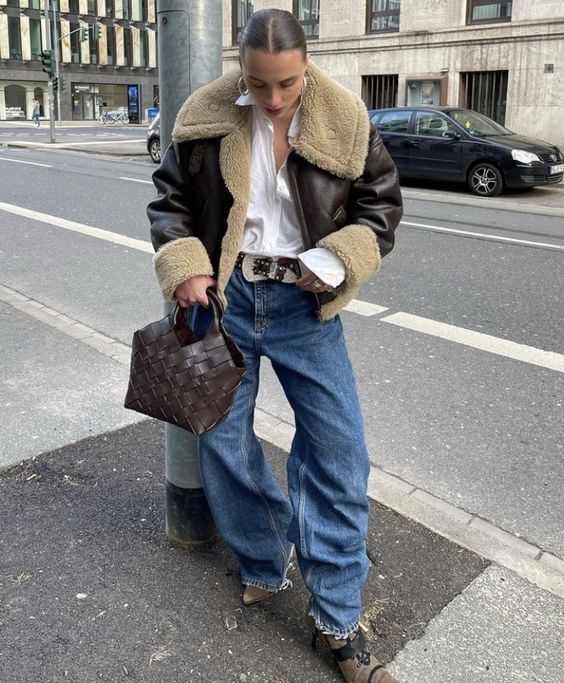
The Strap — The Main Winter Regulator
Let's try it on layers: put on the down jacket/sheepskin coat, cross the bag over your body, and find the support point — the upper part of the hip. The body should not bounce while walking and dig into the down. The wider, the more comfortable: a strap made of dense textile or leather distributes the weight and does not cut into the shoulder. Move the buckle one notch — often this is enough for the bag to "sit."
Short underarm straps love thin coats, but often conflict with bulky down jackets — save them for warmer days. And don’t forget the winter life hack: many models have removable straps — you can put on a wider strap or chain under outerwear.
Color Hints for Gray Days
The simplest way is to "repeat in two points": a bag in the color of shoes or gloves immediately makes the look fresher and more interesting. A warm palette — chocolate, mahogany, burgundy — goes well with both black down jackets and camel coats. Olive and khaki softly highlight gray and blue bases, looking calmer than bright neon but not boring.
Metal also matches: if you wear gold earrings and buckles, support this with the bag's hardware.
How It Sounds in Life
-
A weekday morning: a quilted down jacket with a dropped shoulder, jeans, a camera bag on a wide strap — the line of the body holds, hands are free for coffee and phone.
-
Friday evening: an aviator sheepskin coat, knee-high boots, and a structured tote in hand — clear geometry balances the fur edge.
-
Saturday slush: a nylon crossbody, strap one notch longer, droplets quietly roll off — you go about your business without thinking "where to put the bag."

Care to Make It Last Longer
If the leather gets wet — blot it with a napkin (without rubbing), let it dry away from the radiator, then treat as needed. Nylon just needs to be wiped and air-dried. Treat suede and nubuck with protection beforehand and brush them after a walk. And yes, in winter, the bag rests on a shelf or in a bag, not on a radiator.
Winter loves clear lines and practical surfaces. Choose one right shape for your outerwear, adjust the strap, and add a calm color — your favorite down jacket or sheepskin coat will look neat every day. There’s no need to change your wardrobe: a bag that understands the season is enough.













Leave a comment