
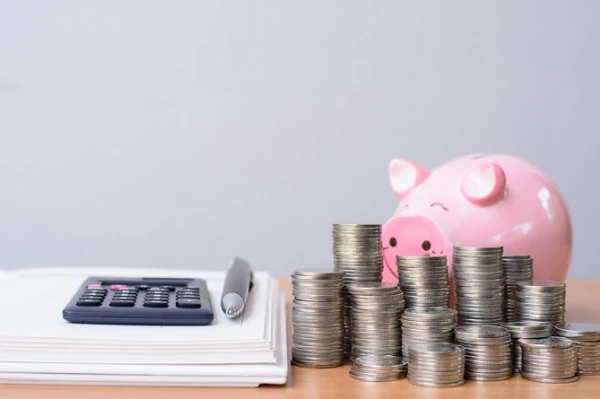
Even if you are barely making ends meet, try to set aside at least a modest amount for your financial safety net.
Prices for everything continue to rise rapidly. Many people are literally living paycheck to paycheck, spending all they earn in a month.
However, having an emergency fund for unforeseen situations is a sensible decision. It can significantly ease your life if you suddenly lose your job, fall ill, or find yourself in a situation where you need to urgently find money.
Let’s figure out how much you actually need to keep in reserve for a rainy day and how to find that money.
Grab Your Calculator
Of course, the amount of your savings largely depends on how much you can realistically set aside from your salary without compromising your living standards. However, certified financial planning specialist Anthony Fuller recommends creating a reserve fund equal to six months of expenses, plus a small additional amount if possible.
However, for some people, it makes sense to save even more. For example, if your income is generally unstable or if you have dependents, such as elderly parents or children.
If you cannot set aside such a large amount, try to gather at least enough funds to cover three months.
To calculate how much you specifically need to save for six months, add up all your mandatory payments: mortgage and utility bills, food, and medical expenses.
Practical Tips
Such a financial goal may seem daunting and unattainable. You don’t need to try to gather the entire amount in one month. It is much more reasonable to build your "emergency fund" piece by piece, writes Metro.
Experts advise setting up an automatic payment: let a certain amount, even a very small one, be transferred from your card to your savings account each month. Over time, the size of your savings will increase.
Additionally, experts recommend implementing the principle of "pay yourself first" into your life: save not by the principle of "I’ll set aside what’s left after all expenses," but by the principle of "money in reserve is a mandatory expense."
Analyze your usual spending habits and consider: do you have the ability to save painlessly? You may think you are already moderate in your spending. However, some people may pay for subscriptions they don’t use for years or overpay for mobile services and the Internet simply because they haven’t even tried to look for better rates.
Remember, even small savings are better than none. In a difficult situation, any amount will be helpful.













Leave a comment