
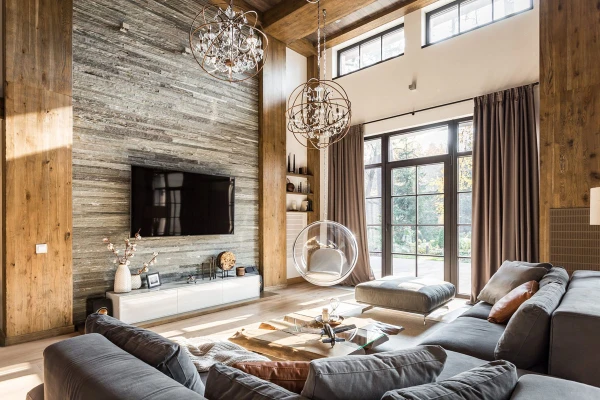
Interior design has long ceased to be just a matter of taste – today it is directly related to psychological comfort. The space in which a person lives can amplify anxiety or, conversely, help to calm down and recover. And while designers used to think about layout and wall color, they now effectively work with emotional states.
1. Color – The Main Regulator of State
Color can literally affect pulse and mood. Rich shades, especially red, bright yellow, or acid green, stimulate the nervous system – and with prolonged exposure, they can cause fatigue and irritability.
For relaxation, warm neutral tones are suitable: powdery, sandy, gray-beige, milky, olive. They create a soft background, do not overload vision, and provide a sense of safety.
If it’s boring without color, it’s better to introduce accents in moderation: for example, one item in deep blue or terracotta. These colors provide a sense of stability and grounding.
2. Lighting – Therapy Without Words
Harsh white light makes the interior feel office-like and hinders relaxation. A cold shade of lighting is particularly contraindicated for anxious states – it intensifies internal tension.
At home, it’s advisable to use warm diffused light, and from several sources: ceiling, table lamp, floor lamp, bedside lighting. Different lighting scenarios help the body “understand” that it’s time to rest.
Dimmers and adjustable light temperature are one of the simplest solutions to make the space therapeutic.
3. Materials and Tactility
In times of anxiety, it’s important that the interior not only looks cozy but also feels that way. Smooth cold surfaces – glass, metal, gloss – should be balanced with warm textures: wood, textiles, wool, linen.
A soft blanket, thick curtains, a rug underfoot – this is not about “decor,” but about the bodily sensation of comfort. Tactility directly affects the level of anxiety: the body should feel pleasant in the space.
4. Order – A Form of Psychological Hygiene
Things lying around without a system create a sense of chaos and intensify internal tension. This is not perfectionism, but a fact: visual clutter is perceived by the brain as a task that needs to be solved.
Storage should be as organized as possible, but without the feeling of a “showcase.” Baskets, closed cabinets, neutral colors – anything that visually simplifies the space helps the nervous system to relax.
5. Personal Accents and a Sense of Control
Anxiety increases when a person feels they do not control their space. Therefore, it’s important that the interior includes elements of personal choice: photos, books, a painting bought spontaneously.
Such items help create an emotional connection with the space and enhance the feeling of stability.
6. Minimum Stimuli – Maximum Air
Interiors that have “too much going on” quickly become tiring. An excess of decor, textures, and visual accents is a source of sensory overload.
It’s better to have less, but of higher quality: one poster instead of a gallery, one accent piece instead of a dozen small items. A space with “air” allows the brain to rest and reduces the level of internal noise.












Leave a comment